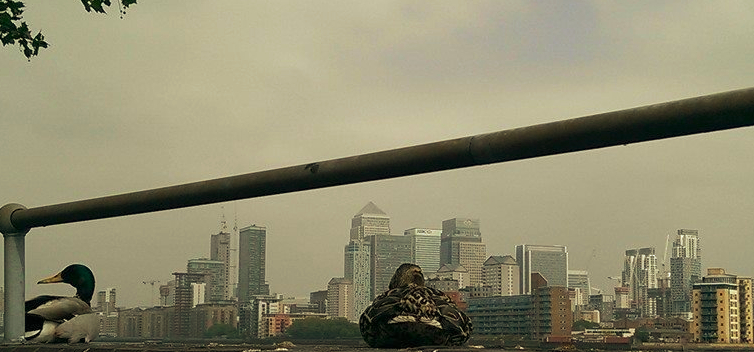
Revolutionary time

I don’t recall when was the last time I slept throughout the night. The barricades are almost literally under my window; the fact I am between two occupied faculties means I spend most nights at one of the blockades, then being woken up intermittently by garbage trucks (which are sent to clear out the road blocks) and the police (which comes to break the blockades, beat and arrest people). There is also the general noise of a protest movement – whistles, cheers, slogans. I generally let the bin people do their work (in Serbia, these kinds of workers often don’t have a choice), not the police. I got used to the sound of protest, though not sufficiently to not wake up.

A month or even a few weeks ago, this would have been a problem.

For a long time, I’ve been reluctant to write about Serbia, or even answer questions about what is going on. For ethical reasons, I believe in platforming people who are on the ground, and while I am from Serbia – and from Belgrade – I have not lived there for a long time. I resisted being pinned down (domained, as I’ve called it a lifetime ago when I still cared about things such as knowledge production) as being ‘from Serbia’ or a ‘Balkans expert’ or even a ‘post-socialism scholar’ (despite the fact I’ve written a book on Yugoslavia and its successors). Whenever someone asked me for an interpretation or an opinion, I kindly pointed to people who are actually in the region and who I thought knew what they were talking about.

Almost equally importantly, I believe the usefulness of ‘interpretation’ is very limited. The intellectual tendency to focus on knowledge production – on writing, publishing, speaking – in crisis can contribute to the perpetuation of status quo; this isn’t to endorse a simplistic ‘words vs. deeds’ dichotomy nor to elevate action beyond the status of questioning (after all, we must think about what we are doing), but to note that, for most of the past decade, most contexts I have encountered have had an overabundance of critique, and a corresponding dearth of action. I have, in fact, written about that too – a whole PhD and some – but in the past year(s), I’ve become very reluctant to offer any interpretations, and have instead focused on calling upon people to act.

Now I must, though, not because I have an investment into the position of an ‘intellectual’ (you can read about my departure from that position here and here), but because the situation calls for it. Not because it needs interpretation, but because it exceeds it.

So, confession number one: this situation has exceeded my interpretative capacity.

I’m conversant in roughly five disciplines, so this isn’t for a lack of options. Sure, I can give you political philosophy names for what’s going on, and sure, I can also give you a Marxist perspective, or maybe a slightly longer-durée historical/political economy explanation. I can waffle on about semi-periphery, extractivism, necropolitics like a champion (I have). Like a retired lute player, my mind occasionally touches the floating signifiers of the concepts others have used: Badiou’s ‘event’…Žižek’s working through of Lacan’s subjective destitution with a ‘radical act’…Butler’s performative theory of assembly…Honig’s morphing of inoperativity (Agamben) and power of assembly (Butler)…and Clover, Osterweil, everyone on riot.

Unimportant.

None of the concepts match stuff I have seen.

Here, another confession.

Yes, as far as identities are concerned, I am an anarchist, and yes, I am an anthropologist, and yes, I am also a Buddhist, but I have always been ambivalent about the idea that people are inclined to do good in situations of crisis. I believe people are inherently capable of acting in any number of ways – selfish, altruistic, appropriative, non-proprietary, exploitative, generous – and that it is a complex set of circumstances and evaluations decides how they will act in specific situations. Hell, my current research – Uncategorical imperatives – was motivated by the belief we’d better find out how we tend to act (or: morally reason about action) in crises before climate change-driven exploitation and wars collapse into global disorder.

Whoops.

But (trigger warning: a Bladerunner ‘time to die’ monologue)

What I have seen on the barricades (blockades) in Belgrade surpasses what I know about social movements, informal organisation, or human behaviour. Don’t get me wrong – I was in protests since my mid-teens, including in 1996/7, 2000, and many, many other. I have been in protests in Budapest, the UK, the US. I also visited the occupied faculties in Belgrade this winter. I’ve been in protests in early June. I’ve watched, half-crazed with worry, the footage of the 15th March and 28th June protests.

This is different.

I have seen examples of mutual aid, solidarity, restraint, and self-organisation that go beyond what textbooks on mutual aid, self-organising, and community building tell you. I have seen examples of courage, protection of the weak, and having each other’s back that I have only seen intermittently before, except that they are now sustained and unquestioned. I have seen or heard, narrated, first-hand, forms of creativity, ingenuity, and resistance that I have read about, but never thought possible. I have seen anarchist theory, in practice.

Confession number three. I never thought this could happen.

Yes, I read the reports, and for a long time, all of that was encouraging, but not impossible. Everything fit the predictable range of human behaviour, one that follows identifying a common enemy, and organising around a similar cause. There was a foreseeable scope of outcomes.

This is different.

Please don’t try to explain, as I still can get angry. It’s different.

One of the things I remember reading (can’t recall the reference – might’ve been Rosa Luxemburg?, and it anyway no longer matters) is that the revolution does not involve only changing the system; it involves changing you. You will, literally, not be the same person after the revolution. We are no longer the same selves, and this is coming from someone who already believes identities are an illusion, and not a very interesting one.

But it is still tangibly different.

I know people tend to lose themselves in historical moments. (Here is Badiou’s event again). I’ve read endless accounts of transformative experiences, from 1917 and 1968 (both in Yugoslav republics – also, my mum participated in it – and beyond), to Occupy, to first environmental protests, Seattle, Gezi Park, Tahrir, you name it. I understand that. But this isn’t a ‘change’, be it ‘regime’ or ‘social’, or even ‘system’. I’ve witnessed happenings – some personal, like love, some interpersonal, like death, some communal, like concerts, some spiritual – that have come close to transcendence. This is not it.

It is also not the (a)voidance of doubt, of incertitude, or anything that seems like discomfort. It is the realisation that this is what we do now. This is how we live. There is no ‘end’ or ‘goal’ or even ‘victory’. There is no teleology.

This is revolutionary time.  

Confession number four. I am afraid.

Some days ago – I do not recall when, where, with whom – I was in a protest, and, as is my habit, tried to get the person with me to shift to the fringes. You see, I am uncomfortable in crowds, and my strategy – for close to 30 years now – is to avoid being kettled, so I can quickly run if the cops descend. It has kept me mostly safe, with one small exception.

Now I stand. Not because “the movement” or “the revolution” is transcendent, worth sacrificing for, or because I’ve lost myself in the adrenaline of the crowd. Because this is a choice. A choice that came earlier, and slightly differently, than I expected (I honestly thought I’d die fighting masked government agents in the UK or the US, but here we are). I stand because this is what we do now, and in perpetuity.

P.S. Thought it important to add a few remarks, lest people start thinking I’ve completely lost critical capacity: (no, I’m just very underslept :)) – critical in the sense of critical friend, not as someone who is looking to form an intellectual position. These are meant to highlight some of the areas for further work, especially if/when the blockades morph into more long-term forms of organising:

  • the fact homophobic language (crowds occasionally chant or spray “gay” as derogatory term for Vučić) regularly makes an appearance should be addressed immediately. homophobia is not funny, not even as a throwback to that mid-90s high-school playground vibe. the country should really move on from there, not only because nobody wants to go back to mid-90s, but also because homophobic violence is still alive in Serbia.
  • the resurgence of ethnic nationalism, not only in terms of rhetoric (which, even if it is your thing – it certainly isn’t mine – is entirely and utterly politically useless, given that the only national(ist) project Serbia could conceivably pursue entails trying to reclaim Kosovo, which no-one in their right mind would want to do), but also in terms of (again) shouts and slurs; e.g. shouting the derogatory term for Kosovar Albanians at police (reminder, the predecessors of those forces were actually engaged in committing crimes against Kosovar Albanians, so the slur is not only racist/chauvinist, it is self-defeating). Same goes for shouting at police to “go to Kosovo” – it should really go without saying that organising against police repression in your own country makes little sense if you are at the same time encouraging the police to go and repress the people in another.
  • glorifying masculinism and masculinity – while elements of this tend to be prominent in all protest movements that feature substantial physical labour/force (e.g., flipping over heavy garbage bins, etc.), it tends to erase (a) the fact that most of this work is *also* done collaboratively (in fact, the most recent one I’ve witnessed was performed by a very gender-mixed team) and (b) the relevance of organisational, logistical, and communication labour, most of which seems to be performed by women and non-binary folk. this has been accompanied by an unprecedented platforming of men (as ‘heroes’, speakers, leaders, experts, commentators, whatnot), often with names, while women mostly appear as generic category (“young women [devojke]”, “student [studentkinja]”). While there are good reasons to stick to anonymity in times like these, this should be equal across the board. There is a good lesson to learn from the Zapatistas here, whose ‘Revolutionary law of women’ was the first and integral part of the Chiapas rebellion, not an afterthought.

Three ghosts of British higher education

[These are the more-or-less unedited notes for my speech at the event Multiple Crises of Higher Education, held on 20 May 2025 at Queen Mary's Mile End Institute, and organised by the fantastic Accounting and Accountability Research Group. Queen Mary's branch of UCU have also been at the forefront of fighting and writing about redundancies in the sector, and maintain an excellent and well-organised webpage, so give them a follow alongside AARG (the best acronym in the sector?)]

To start, as philosophers do, from examining a concept, a crisis means a point of shattering; sense of rupture; breaking point, crack in the fabric of reality. To say something has reached a crisis is to recognise that from this point there is a division into multiple paths. From a personal perspective, to reach a crisis means we can no longer go on as before, or as usual; a crisis usually invokes a reconsideration of what the project (whatever project we are committed to – a movement; an ideology; a job; a relationship; an idea) is, and whether it is still worth doing or living.

So when we start from the diagnosis that higher education is in crisis, we are in fact acknowledging that multiple facets of what we thought higher education is are no longer viable. Some of these (also mentioned in the description for this event) include the sector’s funding model; its approach to academic labour, including benefitting from precarity (insecure, temporary contracts) and competition (for research funding, for prestige); and its relationship to other important sectors of society (government, the military, industry, and so on). But where do we go from here?

To foreground the question of where we go from here is also to acknowledge – or argue – that turning back is no longer possible. This is the starting point for my remarks today. I draw inspiration from Adam Phillips’ On Giving Up (am currently reading the book, but the link is to the – open access – essay in the LRB), which opens with Kafka’s Zürau Aphorisms: “from a certain point there is not more turning back. That is the point that must be reached”. To say we are in crisis, among other things, is to say that we have reached that point. From here, Phillips asks: what are we willing to give up in order to go on living?  

Philips’ question reframes giving up as a fundamental element of worth. As worth is the key of valuation and as such of any kind of counting, including acc-counting (sorry), I believe it is tantamount to understanding how we talk about value. In this sense, I intend to perform an analysis that sketches in more explicit terms this intersection between moral and economic; between what we give (and expect to receive in return), and what we give up on.

Giving up/going on

I want to argue that any analysis of a ‘crisis’ that harbours the illusion that turning back is a possibility is one that is fundamentally committed to maintenance of the status quo, and thus counterperformatively denies the very diagnosis is purports to establish. Indeed, it is quite possible to argue – in analogy with how some Marxist critics have described the 2008 economic crisis – that there is, in fact, no crisis at all, and that the system is working exactly as intended. The major thing I will be arguing we need to give up on, in this consideration, then, is our commitment to the system as it is, given that as it is it is a system working as intended.

So from there, we need to reorient ourselves, perhaps towards a different system, perhaps towards one working towards different ends. To do this, however, we need to rid ourselves of three ghosts. Three ghosts, a bit like in Dickens’ The Christmas Carol.

The first ghost is the ghost of the Empire. Now, some of you may be surprised by the appearance of this ghost. After all, haven’t we comprehensively purged this ghost by decolonising our curricula, by extensively renaming our halls and libraries, even – gasp! – in some cases, by enquiring into our links with slavery?

But this ghost rests barely disguised in the ideal of the superiority of British higher education, the idea of higher education as an ‘export’, and the almost unquestioned assumption that we should reap profit from international students. For what is the source of appeal of British higher education for (most) foreign students today if not the accessibility and usefulness of an education in English (the language of global trade, the fact we owe to the British Empire) combined with the opportunity to take endless photos in front of different vestiges, artefacts and similes of that very empire, from the Big Ben to Harry Potter-esque halls in Oxford, Cambridge and Durham? What is the ambition to be on top of league tables if not a transmogrification of the desire to sustain a hierarchy that was built on a monopoly on trade routes and cotton mills, and now continues through degree mills? Finally, what is the belief in the ‘superiority’ of British higher education but an inflated ego projection of our own (yes, I am British now) colonial past, which in turn enables if not validates the racialised and classed hierarchy of the UK immigration system, the system that requires people to prove their ‘worth’ in order to be exploited as much as (or more than) British nationals?

The second ghost is the ghost of welfare state. Now, quite contrary to the previous, the ghost of the Empire, this one is the kind of ghost we repeatedly and obsessively summon. We do this in ritual invocations of the famed social contract that created the NHS, or in the postwar (meaning WWII) expansion of higher education, enabled by the Education Act in 1944 but usually attributed to the Robbins report (1963), which opened higher education to “all who qualify, by ability or attainment”.  

The most important contribution of the report, perhaps less visible because it was bordering on the obvious, was to, for the first time, conceptualise higher education as a system and thus a distinct domain of public policy. In 1964, the University Grants Committee officially became part of the newly created Department of Education and Science (DES). Instead of a set of disparate universities and colleges, with their histories, traditions (or lack thereof), and institutional trajectories, higher learning became a matter for the nation-state – and, consequently, its development deemed relevant for the well-being of its citizens (citizen-subjects) on the whole, not just for the (still small) proportion of those who attended the (equally relatively small) number of institutions. This is how the massification of higher education became the main ‘lever’ for state intervention into university governance. The essence of the ‘social compact’ between the university and the state, thus, was always a tradeoff between expansion and funding.

It is important to note that this social compact intentionally excluded international students, who were exempt from no tuition fees since 1962. It is also important to understand/acknowledge how it occurred in the first instance. The expansion of higher education was not some benevolent act of enlightenment (well, neither was the Enlightenment a benevolent act of enlightenment, after all 😊); it was a strategic investment into upskilling the workforce so as to enable UK – no longer an empire, at least by its own lights, though still very much keeping overseas territories – to compete in industrial production, including that of weapons and surveillance technologies. This is explicitly acknowledged in EP Thompson’s edited Warwick University Ltd., which documents the analyses and reactions to the revelations made during the student occupation of the Registry of the University of Warwick in 1970. The files students found revealed widespread labour surveillance and military contracting, including to Bristol Sideley Engines, the predecessor to British Aerospace Limited, which which provides jet engines to Saudi Arabia and Israel (if you’d like to see the continuing links between universities in the UK and arms manufacture/trade, I strongly recommend this). This critique, however – just like Thompson himself – stopped short of reimagining higher education that would not be beholden to national (and, increasingly, offshored) industry, even if that means arms industry.

This also tells us something about the vestigial dream of a Labour government restoring this ghost of a welfare state to its former glory. Recent policies suggest Labour has no intention of dusting off this model of the social compact. More importantly, however, it tells us something about the ethical tradeoff involved in the dream of higher education as part of a welfare state – whose welfare?

The third ghost, and this is going to be most difficult for some of you to hear, is the ghost of social mobility.

From this post.

This brings me to the diverging (or converging, if you’re a fan of strict visual metaphors) rates of graduate debt and graduate premium.

There are different policy solutions proposed to address this, and today we have heard some of them. What we fail to comprehend, however, is that the graduate premium itself is based on the idea that there should be an exploited and underpaid class of (under)labourers. It makes sense to remember that the concept of ‘social mobility’ assumes that there is a class to escape from (move out from), usually the working class, and a class to aspire to, usually the middle class.

The fact that the ‘graduate premium’ is stagnating or decreasing apart from in a few professions/sectors (and we know what those sectors are – finance, fossil fuels, big tech) tells us little about the intrinsic ‘value’ of higher education (as if there were a thing such as intrinsic value) and more about wage suppression across sectors.

After all, in an equal society, where we would all be paid the same, what would be the reason to have a graduate premium?

So that people can pay off debt; and this brings me to ‘the system is not in crisis, it is working as intended’.

Why should we expect a graduate premium?

Not long ago, I encountered the same question in a session on cooperatives.

It was run in the local community/anarchist centre, and I came by to hear what people thought setting up a cooperative would really be like. When it came to the distribution of income, I mentioned that I thought it fair that people be paid the same kind of money for the same kind of work, and that that was the principle I tried to institute in one of the collectives I had been part of (The Philosopher).

But what would people with PhDs do? Asked one participant.

Be paid as everyone else, I said. Independently of qualification? They asked. Of course, I said. (They did not know I had a PhD – two, in fact).

But why would people with PhDs agree to that, they protested. After all, they paid so much for their education, they surely have to earn more to pay that off!

And that, my friends, is why we cannot have nice things.

Because as long as we cannot accept – or even conceive – that knowledge (by which we mean tokens or credentials of knowledge) should not bestow material privilege, as long as we accept inequalities in employment, as long as we cannot even imagine that a ‘professor’ could be earning the same as a ‘lecturer’ and as a ‘teaching assistant’; let alone as a cleaner or a nurse, or, if we want to bring this closer to university contexts, as an IT technician – we are both naturalising and reproducing this hierarchy. This hierarchy tells us that of course higher education should confer a privilege, and of course there should be an (over)exploited and (under)paid class, and of course British higher education bestows that privilege (particularly luxuriously), so of course we have the right to ask people to pay for it, and foreigners to pay even more. Unless we are willing to give that up, we are not only tacitly but, what is I hope by now obvious, explicitly accepting that higher education is an instrument that serves to reproduce and maintain the status quo. If anything, it is intended to maintain graduates tied to low-paid, precarious, and exploitative jobs – think Starbucks – that they cannot get out of, even if they would want to, because they have too much debt. And there is one thing people like that are unlikely to do: create any kind of meaningful, longer-lasting, opposition.

So what we need to give up, in order to go on, is the fantasy of exceptionalism – institutional, sectoral, or personal. That universities (as institutions), higher education (as a sector), or the fact we are in them, makes us special. And even if we are committed to status quo – and it remains my belief that many academics who would call themselves ‘radical’ or ‘progressive’ are, in fact, deeply committed to it, not least because they cannot imagine alternatives – it is clearly breaking down. So we cannot go back. The question is, where shall we go forward?

P.S. Some people asked me about other stuff I had written on the topic. Most academic publications are listed (in chronological order) under Articles and books; I also blog and write invited op-eds. Some of the stuff directly relevant for this one are:

On the relationship between academic freedom, autonomy, and the state:

On political economy of higher education, including the relationship between extractivism and knowledge production:

On the relationship between social change, social inequalities, political subjectivities, and education policy:

and, of course, my book:

Bacevic, J. 2014. From Class to Identity: Politics of Education Reforms in Former Yugoslavia. Budapest and New York, NY: Central European University Press.

Knowing neoliberalism

(This is a companion/’explainer’ piece to my article, ‘Knowing Neoliberalism‘, published in July 2019 in Social Epistemology. While it does include a few excerpts from the article, if using it, please cite and refer to the original publication. The very end of this post explains why).

What does it mean to ‘know’ neoliberalism?

What does it mean to know something from within that something? This question formed the starting point of my (recently defended) PhD thesis. ‘Knowing neoliberalism’ summarizes some of its key points. In this sense, the main argument of the article is epistemological — that is, it is concerned with the conditions (and possibilities, and limitations) of (human) knowledge — in particular when produced and mediated through (social) institutions and networks (which, as some of us would argue, is always). More specifically, it is interested in a special case of that knowledge — that is, what happens when we produce knowledge about the conditions of the production of our own knowledge (in this sense, it’s not ‘about universities’ any more than, say, Bourdieu’s work was ‘about universities’ and it’s not ‘on education’ any more than Latour’s was on geology or mining. Sorry to disappoint).

The question itself, of course, is not new – it appears, in various guises, throughout the history of Western philosophy, particularly in the second half of the 20th century with the rise (and institutionalisation) of different forms of theory that earned the epithet ‘critical’ (including the eponymous work of philosophers associated with the Frankfurt School, but also other branches of Marxism, feminism, postcolonial studies, and so on). My own theoretical ‘entry points’ came from a longer engagement with Bourdieu’s work on sociological reflexivity and Boltanski’s work on critique, mediated through Arendt’s analysis of the dichotomy between thinking and acting and De Beauvoir’s ethics of ambiguity; a bit more about that here. However, the critique of neoliberalism that originated in universities in the UK and the US in the last two decades – including intellectual interventions I analysed in the thesis – lends itself as a particularly interesting case to explore this question.

Why study the critique of neoliberalism?

  • Critique of neoliberalism in the academia is an enormously productive genre. The number of books, journal articles, special issues, not to mention ‘grey’ academic literature such as reviews or blogs (in the ‘Anglosphere’ alone) has grown exponentially since mid-2000s. Originating in anthropological studies of ‘audit culture’, the genre now includes at least one dedicated book series (Palgrave’s ‘Critical University Studies’, which I’ve mentioned in this book review), as well as people dedicated to establishing ‘critical university studies‘ as a field of its own (for the avoidance of doubt, I do not associate my work within this strand, and while I find the delineation of academic ‘fields’ interesting as a sociological phenomenon, I have serious doubts about the value and validity of field proliferation — which I’ve shared in many amicable discussions with colleagues in the network). At the start of my research, I referred to this as the paradox of the proliferation of critique and relative absence of resistance; the article, in part, tries to explain this paradox through the examination of what happens if and when we frame neoliberalism as an object of knowledge — or, in formal terms, epistemic object.
  • This genre of critique is, and has been, highly influential: the tropes of the ‘death’ of the university or the ‘assault’ on the academia are regularly reproduced in and through intellectual interventions (both within and outside of the university ‘proper’), including far beyond academic neoliberalism’s ‘native’ context (Australia, UK, US, New Zealand). Authors who present this kind of critique, while most frequently coming from (or being employed at) Anglophone universities in the ‘Global North’, are often invited to speak to audiences in the ‘Global South’. Some of this, obviously, has to do with the lasting influence of colonial networks and hierarchies of ‘global’ knowledge production, and, in particular, with the durability of ‘White’ theory. But it illustrates the broader point that the production of critique needs to be studied from the same perspective as the production of any sort of knowledge – rather than as, somehow, exempt from it. My work takes Boltanski’s critique of ‘critical sociology’ as a starting point, but extends it towards a different epistemic position:

Boltanski primarily took issue with what he believed was the unjustified reduction of critical properties of ‘lay actors’ in Bourdieu’s critical sociology. However, I start from the assumption that professional producers of knowledge are not immune to the epistemic biases to which they suspect their research subjects to be susceptible…what happens when we take forms and techniques of sociological knowledge – including those we label ‘critical’ and ‘reflexive’ – to be part and parcel of, rather than opposed to or in any way separate from, the same social factors that we assume are shaping epistemic dispositions of our research subjects? In this sense, recognising that forms of knowledge produced in and through academic structures, even if and when they address issues of exploitation and social (in)justice, are not necessarily devoid of power relations and epistemic biases, seems a necessary step in situating epistemology in present-day debates about neoliberalism. (KN, p. 4)

  • This, at the same time, is what most of the sources I analysed in my thesis have in common: by and large, they locate sources of power – including neoliberal power – always outside of their own scope of influence. As I’ve pointed out in my earlier work, this means ‘universities’ – which, in practice, often means ‘us’, academics – are almost always portrayed as being on the receiving end of these changes. Not only is this profoundly unsociological – literally every single take on human agency in the past 50-odd years, from Foucault through to Latour and from Giddens through to Archer – recognizes ‘we’ (including as epistemic agents) have some degree of influence over what happens; it is also profoundly unpolitical, as it outsources agency to variously conceived ‘others’ (as I’ve agued here) while avoiding the tricky elements of own participation in the process. This is not to repeat the tired dichotomy of complicity vs. resistance, which is another not particularly innovative reading of the problem. What the article asks, instead, is: What kind of ‘purpose’ does systematic avoidance of questions of ambiguity and ambivalence serve?

What does it aim to achieve?

The objective of the article is not, by the way, to say that the existing forms of critique (including other contributions to the special issue) are ‘bad’ or that they can somehow be ‘improved’. Least of all is it to say that if we just ‘corrected’ our theoretical (epistemological, conceptual) lens we would finally be able to ‘defeat neoliberalism’. The article, in fact, argues the very opposite: that as long as we assume that ‘knowing’ neoliberalism will somehow translate into ‘doing away’ with neoliberalism we remain committed to the (epistemologically and sociologically very limited) assumption that knowledge automatically translates into action.

(…) [the] politically soothing, yet epistemically limited assumption that knowledge automatically translates into action…not only omit(s) to engage with precisely the political, economic, and social elements of the production of knowledge elaborated above, [but] eschews questions of ambiguity and ambivalence generated by these contradictions…examples such as doctors who smoke, environmentalists who fly around the world, and critics of academic capitalism who nonetheless participate in the ‘academic rat race’ (Berliner 2016) remind us that knowledge of the negative effects of specific forms of behaviour is not sufficient to make them go away (KN, p. 10)

(If it did, there would be no critics of neoliberalism who exploit their junior colleagues, critics of sexism who nonetheless reproduce gendered stereotypes and dichotomies, or critics of academic hierarchy who evaluate other people on the basis of their future ‘networking’ potential. And yet, here we are).

What is it about?

The article approaches ‘neoliberalism’ from several angles:

Ontological: What is neoliberalism? It is quite common to see neoliberalism as an epistemic project. Yet, does the fact that neoliberalism changes the nature of the production of knowledge and even what counts as knowledge – and, eventually, becomes itself a subject of knowledge – give us grounds to infer that the way to ‘deal’ with neoliberalism is to frame it as an object (of knowledge)? Is the way to ‘destroy’ neoliberalism to ‘know it’ better? Does treating neoliberalism as an ideology – that is, as something that masses can be ‘enlightened’ about – translate into the possibility to wield political power against it?

(Plot spoiler: my answer to the above questions is no).

Epistemological: What does this mean for ways we can go about knowing neoliberalism (or, for that matter, any element of ‘the social’)? My work, which is predominantly in social theory and sociology of knowledge (no, I don’t work ‘on education’ and my research is not ‘about universities’), in many ways overlaps substantially with social epistemology – the study of the way social factors (regardless of how we conceive of them) shape the capacity to make knowledge claims. In this context, I am particularly interested in how they influence reflexivity, as the capacity to make knowledge claims about our own knowledge – including knowledge of ‘the social’. Enter neoliberalism.

What kind of epistemic position are we occupying when we produce an account of the neoliberal conditions of knowledge production in academia? Is one acting more like the ‘epistemic exemplar’ (Cruickshank 2010) of a ‘sociologist’, or a ‘lay subject’ engaged in practice? What does this tell us about the way in which we are able to conceive of the conditions of the production of our own knowledge about those conditions? (KN, p. 4)

(Yes, I know this is a bit ‘meta’, but that’s how I like it).

Sociological: How do specific conditions of our own production of knowledge about neoliberalism influence this? As a sociologist of knowledge, I am particularly interested in relations of power and privilege reproduced through institutions of knowledge production. As my work on the ‘moral economy’ of Open Access with Chris Muellerleile argued, the production of any type of knowledge cannot be analysed as external to its conditions, including when the knowledge aims to be about those conditions.

‘Knowing neoliberalism’ extends this line of argument by claiming we need to engage seriously with the political economy of critique. It offers some of the places we could look for such clues: for instance, the political economy of publishing. The same goes for networks of power and privilege: whose knowledge is seen as ‘translateable’ and ‘citeable’, and whose can be treated as an empirical illustration:

Neoliberalism offers an overarching diagnostic that can be applied to a variety of geographical and political contexts, on different scales. Whose knowledge is seen as central and ‘translatable’ in these networks is not independent from inequalities rooted in colonial exploitation, maintaining a ‘knowledge hierarchy’ between the Global North and the Global South…these forms of interaction reproduce what Connell (2007, 2014) has dubbed ‘metropolitan science’: sites and knowledge producers in the ‘periphery’ are framed as sources of ‘empirical’, ‘embodied’, and ‘lived’ resistance, while the production of theory, by and large, remains the work of intellectuals (still predominantly White and male) situated in prestigious univer- sities in the UK and the US. (KN, p. 9)

This, incidentally, is the only part of the article that deals with ‘higher education’. It is very short.

Political: What does this mean for different sorts of political agency (and actorhood) that can (and do) take place in neoliberalism? What happens when we assume that (more) knowledge leads to (more) action? (apart from a slew of often well-intended but misconceived policies, some of which I’ve analysed in my book, ‘From Class to Identity’). The article argues that affecting a cognitive slippage between two parts of Marx’s Eleventh Thesis – that is, assuming that interpreting the world will itself lead to changing it – is the thing that contributes to the ‘paradox’ of the overproduction of critique. In other words, we become more and more invested in ‘knowing’ neoliberalism – e.g. producing books and articles – and less invested in doing something about it. This, obviously, is neither a zero-sum game (and it shouldn’t be) nor an old-fashioned call on academics to drop laptops and start mounting barricades; rather, it is a reminder that acting as if there were an automatic link between knowledge of neoliberalism and resistance to neoliberalism tends to leave the latter in its place.

(Actually, maybe it is a call to start mounting barricades, just in case).

Moral: Is there an ethically correct or more just way of ‘knowing’ neoliberalism? Does answering these questions enable us to generate better knowledge? My work – especially the part that engages with the pragmatic sociology of critique – is particularly interested in the moral framing and justification of specific types of knowledge claims. Rather than aiming to provide the ‘true’ way forward, the article asks what kind of ideas of ‘good’ and ‘just’ are invoked/assumed through critique? What kind of moral stance does ‘gnossification’ entail? To steal the title of this conference, when does explaining become ‘explaining away’ – and, in particular, what is the relationship between ‘knowing’ something and framing our own moral responsibility in relation to something?

The full answer to the last question, unfortunately, will take more than one publication. The partial answer the article hints at is that, while having a ‘correct’ way of ‘knowing’ neoliberalism will not ‘do away’ with neoliberalism, we can and should invest in more just and ethical ways of ‘knowing’ altogether. It shouldn’t warrant reminding that the evidence of wide-spread sexual harrassment in the academia, not to mention deeply entrenched casual sexism, racism, ableism, ethnocentrism, and xenophobia, all suggest ‘we’ (as academics) are not as morally impeccable as we like to think we are. Thing is, no-one is. The article hopes to have made a small contribution towards giving us the tools to understand why, and how, this is the case.

I hope you enjoy the article!

——————————————————-

P.S. One of the rather straightforward implications of the article is that we need to come to terms with multiple reasons for why we do the work we do. Correspondingly, I thought I’d share a few that inspired me to do this ‘companion’ post. When I first started writing/blogging/Tweeting about the ‘paradox’ of neoliberalism and critique in 2015, this line of inquiry wasn’t very popular: most accounts smoothly reproduced the ‘evil neoliberalism vs. poor us little academics’ narrative. This has also been the case with most people I’ve met in workshops, conferences, and other contexts I have participated in (I went to quite a few as part of my fieldwork).

In the past few years, however, more analyses seem to converge with mine on quite a few analytical and theoretical points. My initial surprise at the fact that they seem not to directly engage with any of these arguments — in fact, were occasionally very happy to recite them back at me, without acknowledgement, attribution or citation — was somewhat clarified through reading the work on gendered citation practices. At the same time, it provided a very handy illustration for exactly the type of paradox described here: namely, while most academics are quick to decry the precarity and ‘awful’ culture of exploitation in the academia, almost as many are equally quick to ‘cite up’ or act strategically in ways that reproduce precisely these inequalities.

The other ‘handy’ way of appropriating the work of other people is to reduce the scope of their arguments, ideally representing it as an empirical illustration that has limited purchase in a specific domain (‘higher education’, ‘gender’, ‘religion’), while hijacking the broader theoretical point for yourself (I have heard a number of other people — most often, obviously, women and people of colour — describe a very similar thing happening to them).

This post is thus a way of clarifying exactly what the argument of the article is, in, I hope, language that is simple enough even if you’re not keen on social ontology, social epistemology, social theory, or, actually, anything social (couldn’t blame you).

PPS. In the meantime, I’ve also started writing an article on how precisely these forms of ‘epistemic positioning’ are used to limit and constrain the knowledge claims of ‘others’ (women, minorities) etc. in the academia: if you have any examples you would like to share, I’m keen to hear them!

The paradox of resistance: critique, neoliberalism, and the limits of performativity

The critique of neoliberalism in academia is almost as old as its object. Paradoxically, it is the only element of the ‘old’ academia that seems to be thriving amid steadily worsening conditions: as I’ve argued in this book review, hardly a week goes by without a new book, volume, or collection of articles denouncing the neoliberal onslaught or ‘war’ on universities and, not less frequently, announcing their (untimely) death.

What makes the proliferation of critique of the transformation of universities particularly striking is the relative absence – at least until recently – of sustained modes of resistance to the changes it describes. While the UCU strike in reaction to the changes to the universities’ pension scheme offers some hope, by and large, forms of resistance have much more often taken the form of a book or blog post than strike, demo, or occupation. Relatedly, given the level of agreement among academics about the general direction of these changes, engagement with developing long-term, sustainable alternatives to exploitative modes of knowledge production has been surprisingly scattered.

It was this relationship between the abundance of critique and paucity of political action that initially got me interested in arguments and forms of intellectual positioning in what is increasingly referred to as the ‘[culture] war on universities’. Of course, the question of the relationship between critique and resistance – or knowledge and political action – concerns much more than the future of English higher education, and reaches into the constitutive categories of Western political and social thought (I’ve addressed some of this in this talk). In this post, however, my intention is to focus on its implications for how we can conceive critique in and of neoliberal academia.

Varieties of neoliberalism, varieties of critique?

While critique of neoliberalism in the academia tends to converge around the causes as well as consequences of this transformation, this doesn’t mean that there is no theoretical variation. Marxist critique, for instance, tends to emphasise the changes in working conditions of academic staff, increased exploitation, and growing commodification of knowledge. It usually identifies precarity as the problem that prevents academics from exercising the form of political agency – labour organizing – that is seen as the primary source of potential resistance to these changes.

Poststructuralist critique, most of it drawing on Foucault, tends to focus on changing status of knowledge, which is increasingly portrayed as a private rather than a public good. The reframing of knowledge in terms of economic growth is further tied to measurement – reduction to a single, unitary, comparable standard – and competition, which is meant to ensure maximum productivity. This also gives rise to mechanisms of constant assessment, such as the TEF and the REF, captured in the phrase ‘audit culture‘. Academics, in this view, become undifferentiated objects of assessment, which is used to not only instill fear but also keep them in constant competition against each other in hope of eventual conferral of ‘tenure’ or permanent employment, through which they can be constituted as full subjects with political agency.

Last, but not least, the type of critique that can broadly be referred to as ‘new materialist’ shifts the source of political power directly to instruments for measurement and sorting, such as algorithms, metrics, and Big Data. In the neoliberal university, the argument goes, there is no need for anyone to even ‘push the button’; metrics run on their own, with the social world already so imbricated by them that it becomes difficult, if not entirely impossible, to resist. The source of political agency, in this sense, becomes the ‘humanity’ of academics, what Arendt called ‘mere’ and Agamben ‘bare’ life. A significant portion of new materialist critique, in this vein, focuses on emotions and affect in the neoliberal university, as if to underscore the contrast between lived and felt experiences of academics on the one hand, and the inhumanity of algorithms or their ‘human executioners’ on the other.

Despite possibly divergent theoretical genealogies, these forms of critique seem to move in the same direction. Namely, the object or target of critique becomes increasingly elusive, murky, and de-differentiated: but, strangely enough, so does the subject. As power grows opaque (or, in Foucault’s terms, ‘capillary’), the source of resistance shifts from a relatively defined position or identity (workers or members of the academic profession) into a relatively amorphous concept of humanity, or precarious humanity, as a whole.

Of course, there is nothing particularly original in the observation that neoliberalism has eroded traditional grounds for solidarity, such as union membership. Wendy Brown’s Undoing the Demos and Judith Butler’s Notes towards a performative theory of assembly, for instance, address the possibilities for political agency – including cross-sectional approaches such as that of the Occupy movement – in view of this broader transformation of the ‘public’. Here, however, I would like to engage with the implications of this shift in the specific context of academic resistance.

Nerdish subject? The absent centre of [academic] political ontology

The academic political subject, which is why the pun on Žižek, is profoundly haunted by its Cartesian legacy: the distinction between thinking and being, and, by extension, between subject and object. This is hardly surprising: critique is predicated on thinking about the world, which proceeds through ‘apprehending’ the world as distinct from the self; but the self  is also predicated on thinking about that world. Though they may have disagreed on many other things, Boltanski and Bourdieu – both  feature prominently in my work – converge on the importance of this element for understanding the academic predicament: Bourdieu calls it the scholastic fallacy, and Boltanski complex exteriority.

Nowhere is the Cartesian legacy of critique more evident than in its approach to neoliberalism. From Foucault onwards, academic critique has approached neoliberalism as an intellectual project: the product of a ‘thought collective’ or a small group of intellectuals, initially concentrated in the Mont Pelerin society, from which they went on to ‘conquer’ not only economics departments but also, more importantly, centres of political power. Critique, in other words, projects back onto neoliberalism its own way of coming to terms with the world: knowledge. From here, the Weberian assumption that ideas precede political action is transposed to forms of resistance: the more we know about how neoliberalism operates, the better we will be able to resist it. This is why, as neoliberalism proliferates, the books, journal articles, etc. that somehow seek to ‘denounce’ it multiply as well.

Speech acts: the lost hyphen

The fundamental notion of critique, in this sense, is (J.L Austin‘s and Searle’s) notion of speech acts: the assumption that words can have effects. What gets lost in dropping the hyphen in speech(-)acts is a very important bit in the theory of performativity: that is, the conditions under which speech does constitute effective action. This is why Butler in Performative agency draws attention to Austin’s emphasis on perlocution: speech-acts that are effective only under certain circumstances. In other words, it’s not enough to exclaim: “Universities are not for sale! Education is not a commodity! Students are not consumers!” for this to become the case. For this begs the question: “Who is going to bring this about? What are the conditions under which this can be realized?” In other words: who has the power to act in ways that can make this claim true?

What critique bounces against, thus, is thinking its own agency within these conditions, rather than trying to paint them as if they are somehow on the ‘outside’ of critique itself. Butler recognizes this:

“If this sort of world, what we might be compelled to call ‘the bad life’, fails to reflect back my value as a living being, then I must become critical of those categories and structures that produce that form of effacement and inequality. In other words, I cannot affirm my own life without critically evaluating those structures that differentially value life itself [my emphasis]. This practice of critique is one in which my own life is bound up with the objects that I think about” (2015: 199).

In simpler terms: my position as a political subject is predicated on the practice of critique, which entails reflecting on the conditions that make my life difficult (or unbearable). Yet, those conditions are in part what constitutes my capacity to engage in critique in the first place, as the practice of thinking (critically) is, especially in the case of academic critique, inextricably bound up in practices, institutions, and – not least importantly – economies of academic knowledge production. In formal terms, critique is a form of a Russell’s paradox: a set that at the same time both is and is not a member of itself.

Living with (Russell) paradoxes

This is why academic critique of neoliberalism has no problem with thinking about governing rationalities, exploitation of workers in Chinese factories, or VC’s salaries: practices that it perceives as outside of itself, or in which it can conceive of itself as an object. But it faces serious problems when it comes to thinking itself as a subject, and even more, acting in this context, as this – at least according to its own standards – means reflecting on all the practices that make it ‘complicit’ in exactly what it aims to expunge, or criticize.

This means coming to terms with the fact that neoliberalism is the Research Excellence Framework, but neoliberalism is also when you discuss ideas for a super-cool collaborative project. Neoliberalism is the requirement to submit all your research outputs to the faculty website, but neoliberalism is also the pride you feel when your most recent article is Tweeted about. Neoliberalism is the incessant corporate emails about ‘wellbeing’, but it is also the craft beer you have with your friends in the pub. This is why, in the seemingly interminable debates about the ‘validity’ of neoliberalism as an analytical term, both sides are right: yes, on the one hand, the term is vague and can seemingly be applied to any manifestation of power, but, on the other, it does cover everything, which means it cannot be avoided either.

This is exactly the sort of ambiguity – the fact that things can be two different things at the same time – that critique in neoliberalism needs to come to terms with. This could possibly help us move beyond the futile iconoclastic gesture of revealing the ‘true nature’ of things, expecting that action will naturally follow from this (Martijn Konings’ Capital and Time has a really good take on the limits of ‘ontological’ critique of neoliberalism). In this sense, if there is something critique can learn from neoliberalism, it is the art of speculation. If economic discourses are performative, then, by definition, critique can be performative too. This means that futures can be created – but the assumption that ‘voice’ is sufficient to create the conditions under which this can be the case needs to be dispensed with.


Is there such a thing as ‘centrist’ higher education policy?

OOOresearch
Object-oriented representation of my research, Cambridge, December 2017

This Thursday, I was at the Institute of Education in London, at the launch of David Willetts’ new book, A University Education. The book is another contribution to what I argued constitutes a veritable ‘boom’ in writing on the fate and future of higher education; my research is concerned, among other things, with the theoretical and political question of the relationship between this genre of critique and the social conditions of its production. However, this is not the only reason why I found it interesting: rather, it is because it sets out what may  become Conservatives’ future  policy for higher education. In broader terms, it’s an attempt to carve a political middle ground between Labour’s (supposedly ‘radical’) proposal for the abolition of fees, and the clear PR/political disaster that unmitigated marketisation of higher education has turned out to be. Differently put: it’s the higher education manifesto for what should presumably be the ‘middle’ of UK’s political spectrum.

The book

Critics of the transformation of UK higher education would probably be inclined to dismiss the book with a simple “Ah, Willetts: fees”. On the other hand, it has received a series of predominantly laudatory reviews – some of them, arguably, from people who know or have worked in the same sector as the author. Among the things the reviewers commend is the book’s impressive historical scope, as well as the additional value of ‘peppering’ with anecdotes from Willetts’ time as Minister for Universities and Science. There is substance to both: the anecdotes are sometimes straightforwardly funny, and the historical bits well researched, duly referencing notable predecessors from Kingsley Amis, through C.P. Snow and F.R. Leavis, to Halsey’s “Decline of Donnish Dominion” (though, as James Wilsdon remarked at the event, less so the more recent critics, such as Andrew McGettigan). Yet, what clearly stood out to me, on first reading, is that both historical and personal parts of the narrative are there to support the main argument: that market competition is, and was, the way to ‘solve’ problems of higher education (and, to some degree, the society in general); and that the government is uniquely capable of instituting such a market.

The development of higher education in Britain, in this sense, is told as the story of slow movement against the monopoly (or duopoly) of Oxford and Cambridge, and their selective, elitist model. Willetts recounts the struggle to establish what he (in a not particularly oblique invocation) refers to as ‘challenger’ institutions, from colleges that will become part of the University of London in the 19th century, all the way until Robbins and his own time in government. Fees, loans, and income-contingent repayment are, in this sense, presented as a way to solve the problem of expansion: in other words, their purpose was to make university education both more accessible (as admittance is no longer dependent on inherited privilege) and fairer (as the cost is defrayed not through all taxpayers but only through those who benefit directly from university education, and whose earnings reflect it).

Competition, competition, competition

Those familiar with the political economy of higher education will probably not have problems locating these ideas as part of a neoliberal playbook: competition is necessary to prevent the forming of monopolies, but the government needs to ensure competition actually happens, and this is why it needs to regulate a sector – but from a distance. I unfortunately have no time to get into this argument ; other authors, over the course of the last two decades, have engaged with various assumptions that underpin it. What I would like to turn to instead is the role that the presumably monopolistic ‘nature’ of universities plays in the argument.

Now, engaging with the critique of Oxford and Cambridge is tricky as it risks being interpreted (often, rightly) as a thinly veiled apology of their elitism. As a sociologist of higher education with first-hand experience of both, I’ve always been very – and vocally – far from uncritical endorsement of either. Yet, as Priyamvada Gopal noted not long ago, Oxbridge-bashing in itself constitutes an empty ritual that cannot replace serious engagement with social inequalities. In this sense, one of the reasons why English universities are hierarchical, elitist, and prone to reproducing accumulated privilege is because they are a reflection of their society: unequal, elitist, and fascinated with accumulated privilege (witness the obsession with the Royal Family). Of course, no one is blind to the role which institutions of higher education, and in particular elite universities, play in this. But thinking that ‘solving’ the problem of elite universities is going to solve society’s ills is, at best, an overestimation of their power, and at worst a category error.

Framing competition as a way to solve problems of inequality is, unfortunately, one of the cases where the treatment may be worse than the disease. British universities have shown a stubborn tendency to reproduce existing hierarchies no matter what attempts were made to challenge them – the abolition of differences between universities and polytechnics in 1992; the introduction of rankings and league tables; competitive research funding. The market, in this sense, acts not as “the great leveler” but rather as yet another way of instituting hierarchical relationships, except that mechanisms of reproduction are channeled away from professional (or professorial, in this case) control and towards the government, or, better still, towards supposedly independent and impartial regulatory bodies.

Of course, in comparison with Toby Young’s ‘progressive’ eugenics and rape jokes, Willetts’ take on higher education really sounds rather sensible. His critique of early specialisation is well placed; he addresses head-on the problem of equitable distribution; and, as reviews never tire of mentioning, he really knows universities. In other words: he sounds like one of us. Much like Andrew Adonis, on (presumably) other side of the political spectrum, who took issue with vice chancellors’ pay – one of the rare issues on which the opinion of academics is virtually undivided. But what makes these ideas “centrist” is not so much their actual content – like in the case of stopping Brexit, there is hardly anything wrong with ideas themselves  – as the fact that they seek to frame everything else as ‘radical’ or unacceptable.

What ‘everything else’ stands for in the case of higher education, however, is rather interesting. On the right-hand side, we have the elitism and high selectivity associated with Oxford and Cambridge. OK, one might say, good riddance! On the left, however – we have abolishing tuition fees. Not quite the same, one may be inclined to note.

There ain’t gonna be any middle anymore

Unfortunately, the only thing that makes the idea of abolishing tuition so ‘radical’ in England is its highly stratified social structure. It makes sense to remember that, among OECD countries, the UK is one with the lowest public and highest private expenditure on higher education as percentage of GDP. This means that the cost of higher education is disproportionately underwritten by individuals and their families. In lay terms, this means that public money that could be supporting higher education is spent elsewhere. But it also means something much more problematic, at least judging from the interpretation of this graph recently published by Branko Milanovic.

Let’s assume that the ‘private’ cost of higher education in the UK is currently mostly underwritten by the middle classes (this makes sense both in terms of who goes to university, and who pays for it). If the trends Milanovic analyses continue, not only is the income of middle classes likely to stagnate, it is – especially in the UK, given the economic effects of Brexit – likely to decline. This has serious consequences for the private financing of higher education. In one scenario, this means more loans, more student debt, and the creation of a growing army of indebted precarious workers. In another, to borrow from Pearl Jam, there ain’t gonna be any middle anymore: the middle-class families who could afford to pay for their children’s higher education will become a minority.

This is why there is no ‘centrist’ higher education policy. Any approach to higher education that does not first address longer-term social inequalities is unlikely to work; in periods of economic contraction, such as the one Britain is facing, it is even prone to backfire. Education policies, fundamentally, can do two things: one is to change how things are; the other is to make sure they stay the same. Arguing for a ‘sensible’ solution usually ends up doing the latter.