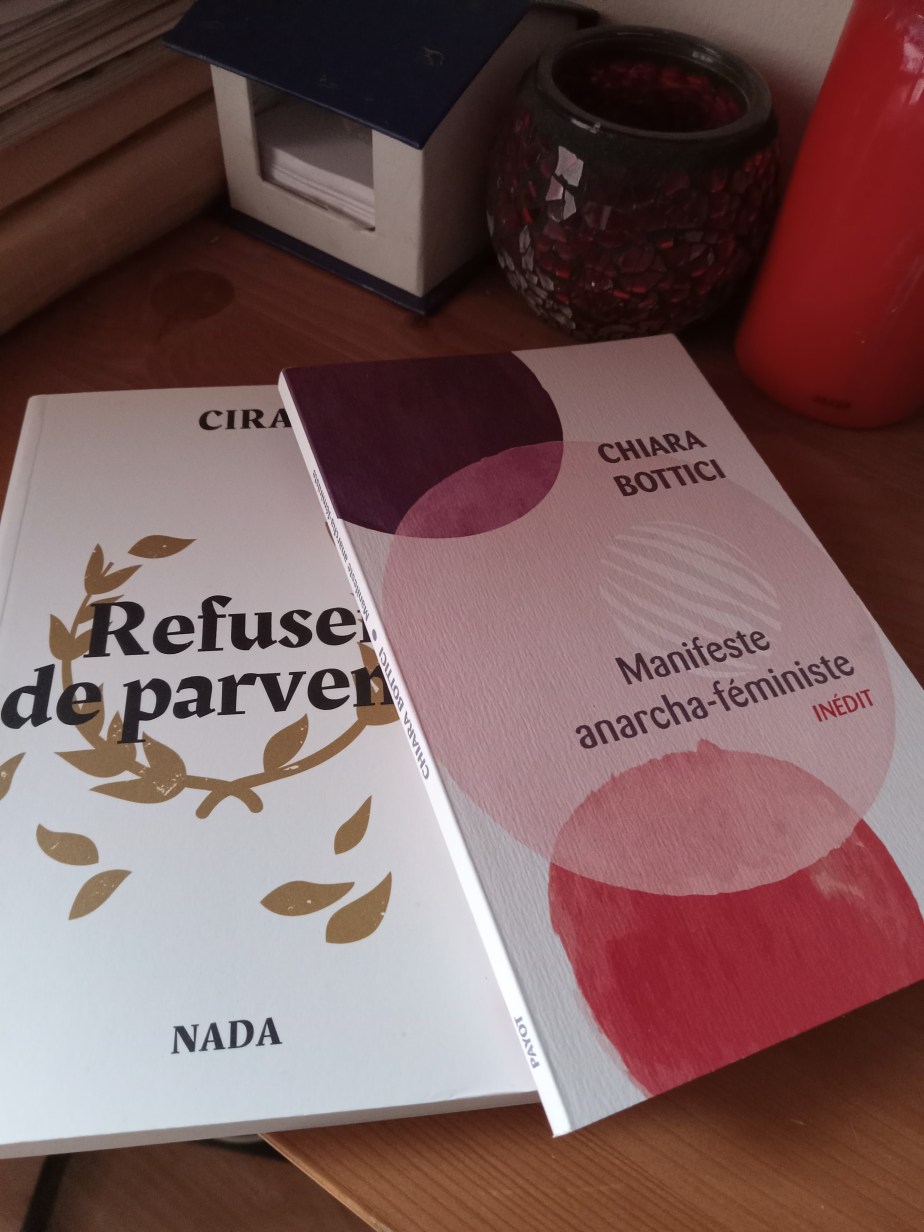
On refusing to be a spectator

I had a dream.

No, no the Martin Luther King kind of dream, by which I mean I do not think this one will be used to retroactively construct a politics of reconciliation where none are due.

A real dream, like, sleeping n’all. To clarify at the outset, this isn’t in and of itself a matter of particular exceptionality: I do dream relatively regularly, as long as I am not extremely stressed, which now happens rarely and only for very brief periods.

I also pay attention to dreams. This started when I was a child, and reading Freud‘s “Interpretation of dreams” gave me a sense that there is a world beyond our own that we are, nonetheless, (almost) unique authors of. This fascinated me, as it opened the question of existence and multiple planes of reality in ways different than fairytales and fantasy had, and also in ways different than physics (here’s something I’ve written on relational ontology in dreams).

I can also lucid-dream (this isn’t intentional, just something I picked up along the way, mostly as a way of waking myself up from nightmares).

I also learned to ask dreams for guidance.

Yet, my sleep has been surprisingly dream-free of lately. I noticed this about a week ago; I first attributed it to being on holiday (= in Britain, the accepted expression for an out-of-office email responder), which means I have more time for free-flowing thoughts and thus less processing ‘backlog’ to do while asleep, but then I realised it’s probably been close to a month, if not two.

Then I attributed it to the intensity of the events in Belgrade earlier in June (as I’ve described, this did involve a week of severely disrupted sleep), but that in and of itself should only increase the backlog, and thus the quantity of material for processing. More to the point (did I mention I can ask dreams for guidance?), I can ask – by which I mean induce (no, no drugs involved, in case this is what you’re thinking) – dreams, and my subconscious delivers. So I did.

Nada.

Until last night.

The second thing to note is that nothing happens in my dreams – they are usually elements of a conversation or interaction, fragments of a feeling, observations, but there is no major “plot”. I dream of the weather, of course – of storms, hurricanes, floods – but even that is increasingly rare; whatever prophetic meaning those dreams had has been either fulfilled or rendered obsolete. Now, we can talk about whether climate change is an “event” in the Badiousian sense, but at any rate it does not involve (in my dreams, at least) a large amount of conscious agency (I cannot control the weather, for instance).

Most of the time.

Jonathan Lear’s (2006) “Radical hope: Ethics in the face of cultural devastation” opens with these words of Plenty Coups, a Crow elder:

When the buffalo went away the hearts of my people fell to the ground and they could not lift them up again. After this nothing happened.

Lear is exceptional (I mean by standards of white men in the Angloamerican academia) insofar as he refuses to see this as an expression of something else – a reflection of ‘depression’, a metaphor – and asks: what would it mean to take Plenty Coups’ words seriously? In other words, what does it mean for nothing to happen?

What kind of ontological disaster erases the possibility of history?

***

In this dream, I am queuing in a coffee shop. It is a nice place, one of the sort of places people like me tend to feel naturally good in – it’s decked out in wood, spacious, with lots of light & lots of plants. As I approach the counter, though, I realise I am signing up for a petition to obstruct/block a theatre performance – the petition is on a paper napkin and I am signing it in ink, but I already see a few other names (not clear which) above mine. I move back to the front room, as I learn that the venue/café workers are on strike. The tables on the front room are covered with sandwiches – stacks of white subs, mostly wrapped in clear film; these are here to avoid crossing the picket line by getting something from the café.

I don’t know if anything else happens in the dream; my recollection of it ends there.

At first, I was perplexed. I am not a huge fan of theatre – I occasionally see plays but it has certainly not played a major part of my life in any meaningful sense, real (compared to cinema or gigs/concerts, for instance) or symbolic (certainly, I’ve written on performativity and I’ve read my Shakespeare and blah blah but I do not, in fact, see the world – including the social world – as a “stage”).

Sure, I was able to recognise elements of direct organising, but sandwiches?

Digging into the associative chain, sandwiches reminded me of the food redistribution service I was part of while in San Diego; last night, I observed a similar street sleeper distribution service on the rainy, blustery streets of Belfast. Which brought to mind a question:

–> Why have we not organised something similar at Durham University, with food redistribution on the streets of Durham/Newcastle?

Sure, many people take part in different similar initiatives (e.g. Community Kitchen) across the region, but why are we not using the institution as a hub for this kind of thing? It would be a faster, better way to redistribute privilege than either vague gesturing at “widening participation” or feeling upset or guilty about the fact the social composition of the university is at odds with that of the town (something that, by the way, conveniently entirely erases ‘international’ students, who are apparently classless).

Which brought me to the following question:

What would it really mean to interrupt the performance?

–> What if we refused to reproduce the university in response to the human rights violations we see every day?

When students in universities across the UK last summer declared occupations in response to the institutional and national complicity in genocide, there has been some (in my mind, insufficient) support among university staff; but, for most part, the business of the university continued as usual.

What if we stopped the performance?

What if, instead of politely queuing to get our coffees and then sitting back and observing the show, we brought the whole damn thing to a halt?

What if nothing stopped happening, and something happened instead? Would our hearts lift off the ground? (I think so).

***

For a while, there has been – on and off – talk about ‘boycotting the REF’, but it seems that the principal reason (most) people would end the REF is because they do not like it, rather than because ranking and ordering is itself a practice run for ranking and ordering human beings.

Like grading (I’m sorry, Brits, marking).

Like “undeserving migrants”.

Like “sure, Gaza is so sad, but I have to worry about my kids’ scholarships and my mortgage and I’m afraid of getting it wrong if I say something, I mean, this cancel culture has really gone too far and and and”

Which, really, brings me to the following question:

-> Why have we not declared indefinite strike and refused the reproduction of the university (which, of course, is the means of reproduction of classed, gendered [increasingly, with the new legislation, exclusively cis-gendered] subjects for inclusion into mechanisms and institutions for the (re)production of the militarised state which, as we can so clearly observe, is the guarantor/guardian of the continued extraction of capital, human, fossil, financial, near and far, at no matter what cost?

But anyway, that’s just analysing a dream.

***

One of the usual anarchist/organising principles is to respond with “well, why don’t you do it yourself”. Two observations.

  1. Not everyone is equally positioned to act: as a migrant (and migrant rep), and someone who only recently acquired UK citizenship, I am starkly aware of the contrast between freedoms for those who have the privilege of “full”, meaning unqualified political membership, and those who do not (for instance: most migrants on General Work visas cannot afford to lose their jobs without at the same time losing the right to remain in the UK. In this case, they would also be ineligible for benefits – see “no recourse to public funds” – so much for the myth of the migrant benefits claimant, btw). In this sense, who can afford risking to lose their job, let alone who can afford to risk arrest/conviction, depends not only on financial security, but also – and primarily – on migration status. In this context, it is a durable shock to me that my British colleagues – or others with secure status – are often the most reluctant to act, and most likely to invoke different excuses (see above).
  2. Earlier this summer, I spent a period in Serbia, where a full-scale popular anti-authoritarian revolution/movement has been happening since November (in case you missed it in the news, no idea why this would happen). The movement started as a series of student occupations, but university staff have – almost immediately, and almost unequivocally – expressed solidarity with students, including by stopping teaching (union laws are a bit different in Serbia, but I do not have time to get into this). In response, as a threat/retaliatory measure, the Serbian government (a significant chunk of public universities are financed dominantly, if not exclusively, from the budget) has stopped/curtailed their salaries (the equivalent of pay deductions in response to industrial action in the UK context). For some, this means that they have had 100% pay deductions for three months. Yes, that’s right, British comrades: not three days; not three weeks. Three months.

Excusez-moi, but this makes it a bit harder than usual to hear excuses from significantly better-paid university environments that “people just cannot afford to go on strike”.

For that matter, Serbian public universities are not composed uniquely of artistocracy (remember, we had communism) or plutocracy (they don’t work at universities, they run the country) who can safely afford to dispense with a three-month paycheck; of course, class privilege does exist, and is perhaps most obvious in higher education. What does make a difference is a more distributed/equalised access to housing (not necessarily equitable as such, but nothing compared to the classed horror that is British housing), more affordable childcare and, of course, a strategic and solidaristic approach: choosing when, who, and how can take risks, and of what sort, is a vital part of ensuring any action bears results.

But don’t mind me, I’m just recounting a dream.

***

Let me leave you with the words of CrimethInc, rather than my own:


For the civilian born in captivity and raised on spectatorship and submission, direct action changes everything. The morning she arises to put a plan into motion, she awakens under a different sun-if she has been able to sleep at all, that is- and in a different body, attuned to every detail of the world around her and possessed of the power to change it. She finds her companions endowed with tremendous courage and resourcefulness, equal to monumental challenges and worthy of passionate love. Together, they enter a foreign land where outcomes are uncertain but anything is possible and every minute counts.

***

This, for those of you who keep asking, is what it means to stop the performance. This is what it means to refuse to be a spectator, of your own life, of others’, or of deaths, others’ as well as, inevitably and eventually, your own.

All I am saying is: there should be more names on that sign-up sheet.

Three ghosts of British higher education

[These are the more-or-less unedited notes for my speech at the event Multiple Crises of Higher Education, held on 20 May 2025 at Queen Mary's Mile End Institute, and organised by the fantastic Accounting and Accountability Research Group. Queen Mary's branch of UCU have also been at the forefront of fighting and writing about redundancies in the sector, and maintain an excellent and well-organised webpage, so give them a follow alongside AARG (the best acronym in the sector?)]

To start, as philosophers do, from examining a concept, a crisis means a point of shattering; sense of rupture; breaking point, crack in the fabric of reality. To say something has reached a crisis is to recognise that from this point there is a division into multiple paths. From a personal perspective, to reach a crisis means we can no longer go on as before, or as usual; a crisis usually invokes a reconsideration of what the project (whatever project we are committed to – a movement; an ideology; a job; a relationship; an idea) is, and whether it is still worth doing or living.

So when we start from the diagnosis that higher education is in crisis, we are in fact acknowledging that multiple facets of what we thought higher education is are no longer viable. Some of these (also mentioned in the description for this event) include the sector’s funding model; its approach to academic labour, including benefitting from precarity (insecure, temporary contracts) and competition (for research funding, for prestige); and its relationship to other important sectors of society (government, the military, industry, and so on). But where do we go from here?

To foreground the question of where we go from here is also to acknowledge – or argue – that turning back is no longer possible. This is the starting point for my remarks today. I draw inspiration from Adam Phillips’ On Giving Up (am currently reading the book, but the link is to the – open access – essay in the LRB), which opens with Kafka’s Zürau Aphorisms: “from a certain point there is not more turning back. That is the point that must be reached”. To say we are in crisis, among other things, is to say that we have reached that point. From here, Phillips asks: what are we willing to give up in order to go on living?  

Philips’ question reframes giving up as a fundamental element of worth. As worth is the key of valuation and as such of any kind of counting, including acc-counting (sorry), I believe it is tantamount to understanding how we talk about value. In this sense, I intend to perform an analysis that sketches in more explicit terms this intersection between moral and economic; between what we give (and expect to receive in return), and what we give up on.

Giving up/going on

I want to argue that any analysis of a ‘crisis’ that harbours the illusion that turning back is a possibility is one that is fundamentally committed to maintenance of the status quo, and thus counterperformatively denies the very diagnosis is purports to establish. Indeed, it is quite possible to argue – in analogy with how some Marxist critics have described the 2008 economic crisis – that there is, in fact, no crisis at all, and that the system is working exactly as intended. The major thing I will be arguing we need to give up on, in this consideration, then, is our commitment to the system as it is, given that as it is it is a system working as intended.

So from there, we need to reorient ourselves, perhaps towards a different system, perhaps towards one working towards different ends. To do this, however, we need to rid ourselves of three ghosts. Three ghosts, a bit like in Dickens’ The Christmas Carol.

The first ghost is the ghost of the Empire. Now, some of you may be surprised by the appearance of this ghost. After all, haven’t we comprehensively purged this ghost by decolonising our curricula, by extensively renaming our halls and libraries, even – gasp! – in some cases, by enquiring into our links with slavery?

But this ghost rests barely disguised in the ideal of the superiority of British higher education, the idea of higher education as an ‘export’, and the almost unquestioned assumption that we should reap profit from international students. For what is the source of appeal of British higher education for (most) foreign students today if not the accessibility and usefulness of an education in English (the language of global trade, the fact we owe to the British Empire) combined with the opportunity to take endless photos in front of different vestiges, artefacts and similes of that very empire, from the Big Ben to Harry Potter-esque halls in Oxford, Cambridge and Durham? What is the ambition to be on top of league tables if not a transmogrification of the desire to sustain a hierarchy that was built on a monopoly on trade routes and cotton mills, and now continues through degree mills? Finally, what is the belief in the ‘superiority’ of British higher education but an inflated ego projection of our own (yes, I am British now) colonial past, which in turn enables if not validates the racialised and classed hierarchy of the UK immigration system, the system that requires people to prove their ‘worth’ in order to be exploited as much as (or more than) British nationals?

The second ghost is the ghost of welfare state. Now, quite contrary to the previous, the ghost of the Empire, this one is the kind of ghost we repeatedly and obsessively summon. We do this in ritual invocations of the famed social contract that created the NHS, or in the postwar (meaning WWII) expansion of higher education, enabled by the Education Act in 1944 but usually attributed to the Robbins report (1963), which opened higher education to “all who qualify, by ability or attainment”.  

The most important contribution of the report, perhaps less visible because it was bordering on the obvious, was to, for the first time, conceptualise higher education as a system and thus a distinct domain of public policy. In 1964, the University Grants Committee officially became part of the newly created Department of Education and Science (DES). Instead of a set of disparate universities and colleges, with their histories, traditions (or lack thereof), and institutional trajectories, higher learning became a matter for the nation-state – and, consequently, its development deemed relevant for the well-being of its citizens (citizen-subjects) on the whole, not just for the (still small) proportion of those who attended the (equally relatively small) number of institutions. This is how the massification of higher education became the main ‘lever’ for state intervention into university governance. The essence of the ‘social compact’ between the university and the state, thus, was always a tradeoff between expansion and funding.

It is important to note that this social compact intentionally excluded international students, who were exempt from no tuition fees since 1962. It is also important to understand/acknowledge how it occurred in the first instance. The expansion of higher education was not some benevolent act of enlightenment (well, neither was the Enlightenment a benevolent act of enlightenment, after all 😊); it was a strategic investment into upskilling the workforce so as to enable UK – no longer an empire, at least by its own lights, though still very much keeping overseas territories – to compete in industrial production, including that of weapons and surveillance technologies. This is explicitly acknowledged in EP Thompson’s edited Warwick University Ltd., which documents the analyses and reactions to the revelations made during the student occupation of the Registry of the University of Warwick in 1970. The files students found revealed widespread labour surveillance and military contracting, including to Bristol Sideley Engines, the predecessor to British Aerospace Limited, which which provides jet engines to Saudi Arabia and Israel (if you’d like to see the continuing links between universities in the UK and arms manufacture/trade, I strongly recommend this). This critique, however – just like Thompson himself – stopped short of reimagining higher education that would not be beholden to national (and, increasingly, offshored) industry, even if that means arms industry.

This also tells us something about the vestigial dream of a Labour government restoring this ghost of a welfare state to its former glory. Recent policies suggest Labour has no intention of dusting off this model of the social compact. More importantly, however, it tells us something about the ethical tradeoff involved in the dream of higher education as part of a welfare state – whose welfare?

The third ghost, and this is going to be most difficult for some of you to hear, is the ghost of social mobility.

From this post.

This brings me to the diverging (or converging, if you’re a fan of strict visual metaphors) rates of graduate debt and graduate premium.

There are different policy solutions proposed to address this, and today we have heard some of them. What we fail to comprehend, however, is that the graduate premium itself is based on the idea that there should be an exploited and underpaid class of (under)labourers. It makes sense to remember that the concept of ‘social mobility’ assumes that there is a class to escape from (move out from), usually the working class, and a class to aspire to, usually the middle class.

The fact that the ‘graduate premium’ is stagnating or decreasing apart from in a few professions/sectors (and we know what those sectors are – finance, fossil fuels, big tech) tells us little about the intrinsic ‘value’ of higher education (as if there were a thing such as intrinsic value) and more about wage suppression across sectors.

After all, in an equal society, where we would all be paid the same, what would be the reason to have a graduate premium?

So that people can pay off debt; and this brings me to ‘the system is not in crisis, it is working as intended’.

Why should we expect a graduate premium?

Not long ago, I encountered the same question in a session on cooperatives.

It was run in the local community/anarchist centre, and I came by to hear what people thought setting up a cooperative would really be like. When it came to the distribution of income, I mentioned that I thought it fair that people be paid the same kind of money for the same kind of work, and that that was the principle I tried to institute in one of the collectives I had been part of (The Philosopher).

But what would people with PhDs do? Asked one participant.

Be paid as everyone else, I said. Independently of qualification? They asked. Of course, I said. (They did not know I had a PhD – two, in fact).

But why would people with PhDs agree to that, they protested. After all, they paid so much for their education, they surely have to earn more to pay that off!

And that, my friends, is why we cannot have nice things.

Because as long as we cannot accept – or even conceive – that knowledge (by which we mean tokens or credentials of knowledge) should not bestow material privilege, as long as we accept inequalities in employment, as long as we cannot even imagine that a ‘professor’ could be earning the same as a ‘lecturer’ and as a ‘teaching assistant’; let alone as a cleaner or a nurse, or, if we want to bring this closer to university contexts, as an IT technician – we are both naturalising and reproducing this hierarchy. This hierarchy tells us that of course higher education should confer a privilege, and of course there should be an (over)exploited and (under)paid class, and of course British higher education bestows that privilege (particularly luxuriously), so of course we have the right to ask people to pay for it, and foreigners to pay even more. Unless we are willing to give that up, we are not only tacitly but, what is I hope by now obvious, explicitly accepting that higher education is an instrument that serves to reproduce and maintain the status quo. If anything, it is intended to maintain graduates tied to low-paid, precarious, and exploitative jobs – think Starbucks – that they cannot get out of, even if they would want to, because they have too much debt. And there is one thing people like that are unlikely to do: create any kind of meaningful, longer-lasting, opposition.

So what we need to give up, in order to go on, is the fantasy of exceptionalism – institutional, sectoral, or personal. That universities (as institutions), higher education (as a sector), or the fact we are in them, makes us special. And even if we are committed to status quo – and it remains my belief that many academics who would call themselves ‘radical’ or ‘progressive’ are, in fact, deeply committed to it, not least because they cannot imagine alternatives – it is clearly breaking down. So we cannot go back. The question is, where shall we go forward?

P.S. Some people asked me about other stuff I had written on the topic. Most academic publications are listed (in chronological order) under Articles and books; I also blog and write invited op-eds. Some of the stuff directly relevant for this one are:

On the relationship between academic freedom, autonomy, and the state:

On political economy of higher education, including the relationship between extractivism and knowledge production:

On the relationship between social change, social inequalities, political subjectivities, and education policy:

and, of course, my book:

Bacevic, J. 2014. From Class to Identity: Politics of Education Reforms in Former Yugoslavia. Budapest and New York, NY: Central European University Press.

Five good things

The day after the Conservative Party won the 2019 UK election, I came up with a trick. It was the culmination of several weeks (if not months) of prolonged exhaustion and creeping despair, as I watched parts of the UK’s supposed ‘left’ systematically tear away at the country’s only progressive political current in years, and its only shot at creating a vaguely decent society – you know, a society that would not systematically humiliate its members – dissolve in the toxic concoction of incurable conservatism (small c, this time), parochialism rendered even more obsolete by a self-aggrandizing belief in the centrality of the UK to the world (historical or contemporaneous, irrelevant), and genuflection at the tiniest display of power, authority, or hierarchy so absolute that you would be forgiven for thinking it genetic. In other words, this set of nasty gammonish tendencies – to my surprise, seemingly equitably distributed across the political spectrum – proved a fertile ground for a campaign whose ostensible target was to prove Jeremy Corbyn was unelectable, and the actual to make sure he would not be elected. Add to this that many of us were fighting on several fronts – in one of the rare moves I explicitly disagreed with, my union (UCU) decided to run another round (third or fourth? in two years) of strike action, thus making sure we would have to split time, energy, and resources between election campaigning and picket lines (for why it is impossible to unify the two causes – even in such an obvious case – see above). For me, it was the beginning of a very dark period of five years – of fear (of what was going to happen), of anger (for the fact so many people, including those I believed I shared basic ideological affinities with, allowed it to happen), and disappointment, not so much because Corbyn didn’t get elected but because I saw, possibly for the first time, in such stark terms: most people would rather suffer in a world they know than risk the chance of building a different one. In that moment – the day after, still sniffly from the downpour I got caught in during the last desperate attempt at canvassing the evening of the election – I Tweeted something along the lines of “whatever else you do today, go out and look at some trees. Stand by the river. There are things bigger than politics. There are things older than the Conservative Party.” (I’m paraphrasing, not only because I have no desire to log back into Twitter but also because the actual formulation is not particularly important.)

I remember being slightly surprised by the volume of positive reactions (kindness and self-care, to put it politely, not being exactly my default style of interaction on social media back in the day – the platform has its own dynamics and patriarchy failed spectacularly at instilling in me the tendency to please other people), but mostly because what seemed to me amalgamated commonsensical advice – decenter your own feelings; step away from social media; in times of great turmoil, seek solace in things you know are eternal – seemed to strike a chord with so many people. It was probably the first time I truly understood how many people were never taught basic self-soothing and regulation skills, but also how much of a difference prior experience of system breakdown/state collapse made in terms of knowing how to cope (together with a group of other ex-Yu scholars, we reflected on this here).

Five years later, I know better than to offer unsolicited advice :). I am also aware that people, especially people in the US, have long traditions (obviously, most of these reaching way before settler colonialism) of sacralization and reverence for nature. Hence, it is not my intention to share this particular trick, not least because I tend to think people who are receptive to this mode of relating to the world either already do it and practice in similar (even if superficially or nominally different) ways, or would otherwise need to change perception in order to avoid this becoming yet another ‘trick’ to allow them to stay, in fact, deeply plugged into the circuit of capitalist (over)production, including affective (a bit like fintechbros using mindfulness to continue building extractive infrastructures whereas being actually ‘mindful’ would inevitably lead to the realisation your mode of living is directly harmful to many beings). However, the memory of many positive reactions to that original Tweet in 2019 – at a time that was a time of anger, and disappointment, and despair for many in the UK – made me want to share a different technique, one that I hope can not only help people dealing with anger and despair but which I also believe will come in handy in knowing how to orient ourselves in the future, especially as the world burns.

Why this isn’t a practice of gratitude

The technique is a related one, but different in terms of its orientation. It is called ‘five good things’, and, true to its name, it asks you to think of five things. Do not be tempted, however, to think this is about your life, or what you have, or ‘things’ in the sense of material objects. In other words, you are not meant to name ‘things’ such as “well, I at least have a job” or “my child is healthy” or “I ate a really good burrito yesterday”. All of these examples – while important – are either cases that are meant to invoke gratitude (so, basically, either outsourcing responsibility to a different/higher power, or, in some forms, acknowledging the fundamentally underdetermined nature of the universe and the role of luck – in other words, all of these things could have turned out differently) or to affirm your own capabilities, usually expressed in and measured by money or equivalents/proxies – power, prestige, admiration (under present circumstances, chances are that the burrito you ate is a burrito you bought, in which case your sense of satisfaction comes from your purchasing power. This is somewhat different if the burrito was e.g. part of a community kitchen or food-sharing event, which would hopefully lead you to recognize your relation to and interdependence with others, but this is not clear-cut either – not least because of the often disproportionate amount of cooking/caring labour performed by women in some of these settings).

Instead, think of five things that are beautiful, and good, and true.

It’s really important that they are all three. Many things are beautiful (at least by culturally dominant/conventional standards) without being either good or true. True in the sense of being true to form, rather than correspondent to the actual state of affairs; for instance, it is almost impossible for a rose as a flower to not be ‘true’ (unless it’s an artificial rose), but it is quite possible for a rose being given as a gesture to not be ‘true’ (as in not being motivated by genuine feeling). Similarly, it is possible for a plant to not be ‘good’ – for instance, if it is a plant introduced to eradicate other plants in the area, or to eliminate sources of food for diverse other organisms.

(There is, of course, a humongous philosophical background literature on defining each of these terms, and especially their interrelation/combination. If you are not familiar with it, I could probably suggest starting with Schopenhauer and Kant, or even Plato, but I do not think this is either necessary or helpful. Every human is capable of reflecting on what it means to say something is beautiful, good, and true; namedropping dead white men can sometimes distract from it, and in most cases under present circumstances turns into an exercise of academic prowess, rather than a way to think with others).

You can think about concrete instances as well as things, generically; sometimes, one will be more appropriate, sometimes the other. For instance, I tend to think that bunnies, in general, are good, and beautiful, and true; I may see a particular bunny for which I will think this, but given that bunnies in the form in which I encounter them are relatively hard to individuate, odds are I will continue thinking this for the bunny kind, rather than a particular bunny. Equally, I tend to think friendships are a good thing, but odds are that if I think of any friendship (or relationship) at any point as beautiful, good, and true, I will be thinking about a concrete relation.

(Again, masses of philosophical, theoretical, and empirical work – my own included – on how we categorise groups, genera, members, and how we form judgments based on inclusion/exclusion, derivation, and boundary categories. Much interesting if you are a social ontologist. Possibly less if you’re not).

Have you thought of five things that are beautiful, and good, and true?

Now fight like hell for those things.

Not to ‘have’ them or to keep them; but to enable them to exist in exactly that form, in their own goodness, and truth, and beauty.

If you ever find yourself in a period of despair, think of these five things. At the end of each week, see if you can come up with five. Sooner rather than later, you will begin to realize that the things worth fighting for are not those the majority of the people are taught to fight about.

I may publish my list from time to time.

Further inspiration:

Maria Popova shared at the start of this week Louise Erdrich’s poem “Resistance” – I love Erdrich but I have not read this one before. It is also related to another project I am developing, so seemed perfectly resonant.

Another element of resonance – as I was finishing this blog post I tuned into The Philosopher conversation between Isabelle Laurenzi and Lida Maxwell on Maxwell’s new book, “Rachel Carson and the Power of Queer Love“. It seems that the awe with the world that Maxwell traces in the relationship between Carson and Dorothy Freeman as well as much as their relationship to the natural world very much resonates with the feeling I hope these exercises will inspire – the combination of wonder, dedication, and a commitment to change the (human) world. I’m yet to read the book (as I found out recently, living in the UK while being temporarily in the US creates massive issues in terms of e-book licensing), but very much looking forward to it.

Speaking of books that are about the sense of wonder, this book – “A Reenchanted World: The Quest for a New Kinship With Nature” by James William Gibson (2009) – is probably among the nicest, most beautiful (both in terms of style and in terms of content) books I’ve read recently. I also learned many things (not least, that Paul Watson, the founder of Sea Shepherd, volunteered as a medic for the American Indian Movement protesters at Wounded Knee, as well as about RFK’s environmentalist past, which makes his public health policies even more bizarre); the book is a remarkable feat of sociological analysis that manages to not be condescending. This book is definitely one of the things that are beautiful, and good, and true.

Incidentally, I also ended up watching again Sarah Polley’s Women Talking (2022), which has a scene in which August is asked to make a list of good things. I think this is a good list! It is also one of the best films made about the process of turning anger and frustration into collective will/self-determination; while depicting a truly dark incident, it is a good example of things beautiful, good, and true.

Soundtrack:

Moby ft. Benjamin Zephaniah – Where is your pride?

Yasiin Bey (Mos Def) – New World Water

Reading (on) resistance

I’ve been in the US for about a week. The feeling of utter shock, panic, and disarray among people – qualitatively different from what could be discernible back when I was across the pond, qualitatively different from the previous Trump regime, qualitatively different from many previous instances of ‘unprecedentedness’ I had written on (the Covid-19 pandemic, the Brexit referendum, Trump’s 2016 election victory, the breakup of former Yugoslavia) – is tangible. Good centrist liberals and their projections are falling like planes out of the sky, the latter, by the way, not a metaphor at all.

It is easy to be both dismayed and cynical, but both are, ultimately, defense mechanisms. To give into collective panic/despair is (I guess) to at least temporarily redistribute anxiety by letting it dissolve into a collective feeling. To knowingly smirk with a “we have, in fact, told you so” may be easy for someone like me, who works on the politics of non-prediction, and is relatively protected from dismissal, deportation, or incarceration, but it is a way of insulating yourself from the collapse that is very real, and very present, for a lot of people. Given that I am, for better or worse, in a plethora of social networks that are dominated by academics, and give that academics are more

likely to be like this

than like this

let alone like this

the least I can do, then, is to offer some resources for resistance, from the perspective I have (east-central European/transnational, UK-domiciled migrant; woman*; educated, middle-class; some experience of movement, organising, etc.) and with the resources (and constraints) I currently have. None of this is meant to be exhaustive (maybe just exhausted :)) and hopefully only adds to the bountiful and excellent resources, networks and initiatives comrades in the US have been building for years.

The Emperor is truly naked – but still an Emperor

I think what most people are experiencing now is best described as cognitive dissonance about the state. On the one hand, they are becoming rapidly aware that what they believed are the stalwarts of liberal democracy (the rule of law, checks & balances, accountability and the like) are barely scarecrows that can be blown away overnight, and the crows are no longer scared. On the other hand, they are beginning to realise — if they had not before — what truly unchecked power looks like. (Every leader, potentially, is a dictator; the fact the US has a presidential system, with high weighting on executive power, just makes it more likely there will eventually be one not bound by convention to hide it). This means that, for a lot of people, the state is simultaneously all of a sudden very absent (FAA being just the most obvious, and immediately high-risk, case) *and* very present (both in terms of intrusion into domains most Americans are taught to associate with ‘privacy’ – finances – and in terms of threats of further deportation, incarceration, and retaliatory dismissal).

For those lucky enough to be able to think about (rather than just react to) these developments, this poses a problem because it places them in the uncomfortable zone most people have been politely educated out of: thinking about what to do when the state fails in a way that does not entail asking for more state. Surprise! There is a whole group of political theories that engages with exactly this problem. It starts with an A, ends with an M, and is not animism. Even better, many of the classical (and more recent) works in this line of thinking just end up being magically available, online, for free. Two particularly good websites for this are here and here. I know, wild. Worth thinking about, if nothing else, because it also turns out many of these will probably give you good ideas for how to face the next couple of years.

In addition to or beyond this, or if you just want to get the hang of self-organising without having to confront your own ideological limits (but if you do: try here, here, or here), these are some of the handy reading tools I’ve selected a few from the list of my favourite books in 2024, and added a few I believe to be most useful for the present situation.

  1. For brief inspiration: To change everything (CrimethInc)
  2. To see the work done by collectives across the world, including during the previous Trump administration: Constellations of care: anarchafeminism in practice (ed. by Cindy Barukh Milstein)
  3. To remember that anti-neoliberalism does not equal nationalist protectionism: Fields, factories and workshops (Petr Kropotkin)
  4. To learn from organisers who have been doing it for a long time: Shut it down: stories from a fierce, loving resistance (Lisa Fithian)
  5. To learn how to organise and not burn out (and also not be terrible to other people if you do!): Let this radicalize you: organizing and the revolution of reciprocal care (Kelly Hayes & Mariame Kaba)
  6. To not forget that there is no way to address a political crisis without addressing the climate crisis (and, of course, capitalism as the root cause) – but that there are so many ways (already tried and tested) to do it: The solutions are already here: strategies for ecological revolution from below (Peter Gelderloos)
  7. To recall that some people have, in fact, foreseen this: The Parable of the Sower & The Parable of the Talents (Octavia Butler)
  8. To acknowledge that when you say “someone should do something” that someone is, in fact, you: Mass Action (Rosa Luxemburg)
  9. To remember that there are many other places where this, and worse, had been true for a long time: We are not pawns, we are people who rose against the regime (Jwana Aziz)
  10. Again, CrimethInc: tools and tactics

This should be more than enough to start from. Get reading.

*I realized, upon reflection, that this term is a bit inaccurate – I am comfortable with ‘woman’ or ‘she’ in languages where gender is primarily grammatical (so where chairs, stones, and concepts have a ‘gender’), both for convenience and because it is more difficult (but not impossible) to associate grammatical gender with hierarchical difference; but I have never felt any degree of affinity with the cluster of ideas around supposed feminine ‘essence’, even if they do not veer into biological determinism, reductionism, or transphobia. It is thus that in these languages – and contexts, UK being one of them – that I tend to use ‘they’ or ‘she/they’.

On books and hope (2024)

This is the continuation of the habit I have kept for a few years, which is to write a post on books I have read that year. That said, “habit” is hardly a deserving name for something I did two years I a row – in 2021 and 2022 – and then dropped in 2023: the year had been too filled, both with ups and downs, and the context in which I read some of those books too convoluted; it is also possible I read more than I usually would (having been on research leave in spring) – or less. I wouldn’t know, as I gave up on keeping a list; I gave up on many other things, including possibly the last vestiges of ego-investment in the academia, which also meant I gave up on reading for competitive, pedagogical, or perfunctory reasons. In this context, coming up with a list of all the books I have read would have seemed a bit counterperformative; not least, the time I would have normally spent writing up this post – the quiet days after the end of term, as Xmas and New Year drag themselves over the hill – was spent flat out from Covid (which I finally caught, one and so far only time) and the ongoing pressure at work.

This year, I am coming back to this, but in order to share the books that brought me hope. This may seem like an odd choice for someone whose approach to knowledge always emphasised the ethical and political responsibility of recognising tendencies in the present that may lead to harmful and disastrous futures – even if that entailed coming to terms that, in not-insignificant ways, our present (in)action may be rendering certain kinds of futures impossible. This, for most of my life – starting with the rather famous moment when, aged eight, I argued to my father that Yugoslavia will fall apart – meant having the courage to be a ‘killjoy’, not only (or primarily) in terms of disrupting the cozy consensus that scaffolds some of the most odious things about contemporary social life – consumerism, patriarchy, xenophobia and racism – but also by pointing out, ceaselessly, that bleating starry-eyed about the revolution to come was, in very real ways, preventing us from bringing it about.

To toss the concept of ‘hope’ about might, from this perspective, seem at best a concession to sentimentality, in the same way in which I dutifully bellow ‘Merry Xmas’ back at people; at worst, like capitulation to the abscondence from the daily work of not reproducing the same systems that we (so eloquently) critique, which intellectuals of my sort are prone to, especially when we reach a certain career (st)age. I, at least, have always swatted away questions of hope or ‘exit’ (as one of my PhD examiners exasperatedly sighed towards the end of my viva: “Then there is no Aufhebung?”), in the same way in which I used to swat away questions of the sort of ‘What is to be done?’ before I decided to start doing less of knowledge production and more of…other stuff.

Why hope, then? Put simply, one of the rare justifications I find nowadays for continuing to do “academia” is that (nominally, at least) it entails two things: time to read (one might say, an obligation) and a platform to tell others so (as well as what not to read). And everyone needs a bit of hope. This is particularly important as I see growing numbers of (even educated) people fall for trash arguments along the lines of Stephen Pinker’s ‘Better Angels’ or other kinds of Pollyanna-ish optimism that usually serves to bolster capitalist, extractivist, or neocolonial approaches to ‘business as usual’. Thus, to be able to see ‘hope’ without, at the same time, ‘unseeing’ all things that render it impossible (the war in Gaza; continuous extraction; runaway climate crisis) becomes a difficult exercise in discernment and balancing – something that, in fact, academics of my sort are uniquely trained to do.

That said, not all of the books included in this list count as ‘academic’ – and most would not But they are what sustained me over the past year. I hope they can be of service to you.

Revenant ecologies: defying the violence of extinction and conservation (Audra Mitchell)

This is a book that challenges powerfully the thinking about extinction and conservation that dominates Anglo-academia. Particular points for taking a swipe at the ‘extinction industry’ of academic writing, and the books (many of which I admit I had enjoyed!) that write about extinction from a seemingly universalist perspective. On the other hand, Revenant Ecologies seems at times to take almost excessive care to avoid this. Regardless, it is a careful, engaging, and mobilising analysis that aims to avoid the po

As we have always done: indigenous freedom through radical resistance (Leanne Betasamosake Simpson)

I’ve admired Betasamosake Simpson’s writing for a long time (and also music! How cool it is to be a social theorist who also writes and performs music). This book is a reminder that undercurrents of resistance run deep, but also that freedom is a praxis – a constant one, at that.

Our history is the future: Standing Rock vs. the Dakota Access Pipeline, and the long tradition of Indigenous resistance (Nick Estes)

QED. Well, maybe there is a bit of a theme running through this year’s reading. But in a year that felt so long, and hopeless, and dark, I needed (printed) reminders that people have lived through (and survived) worse ordeals, and that they not only did not accept but actively challenged and fought against the colonial order and its successors, including extractivism.

Ecology of wisdom (Arne Naess)

Naess is one of those people who are larger than history gives them credit for – he is usually styled as the ‘founder of the deep ecology movement’, but Naess was a philosopher (prefiguring a lot of analytical thought), an ecologist, a spiritual thinker (a Buddhist and firmly committed to nonviolent action), and a mountaineer. ‘Ecology of wisdom’ is a compendium of his writings; thanks, in part, to masterful translation, the prose just flies off the page making it more like poetry (I’ll admit that the combination of analytic philosophy, Buddhism, and ecology is particularly likely to chime with how I feel and think about the world). Nonetheless, I find it hard to think anyone would not be charmed – at least anyone who still has a heart, and soul, in some part of the magical world we inhabit.

And if you need a reminder how to (re)discover it, these two are highly recommended: Reclaiming the wild soul (Mary Reynolds Thompson) and  Enchanted life: reclaiming the magic and the wisdom of the natural world  (Sharon Blackie). I *really* like Sharon Blackie’s writing – it manages to be equal parts environmentalist, witchy, psychoanalytic and folksy without becoming too bound by conventions of any.

Foxfire, wolfskin: and other stories of shapeshifting women (Sharon Blackie) is a wonderful retelling of some of the classical European folk tales, with a gender twist that does not come across as pedagogical. I absolutely adored it – and even got it for a few friends.

A natural history of the future (Rob Dunn)

This is a great (admittedly, popular science) book on the impacts of the ongoing climate change and other human-induced changes on the biosphere. It brings in new arguments and perspectives, even if you’re a seasoned reader of the genre, and I’d say it’s informed by deep ecology whilst retaining a pleasantly matter-of-factly tone.

Claros del Bosque (Maria Zambrano)

I used the two unforeseen trips to Serbia in springtime to delve into the rich body of non-English philosophical and theoretical works in translation, something I dearly miss in bewilderingly anglo-centric UK (even major works in French or German are increasingly translated with a delay, if at all). I chanced upon the Serbian translation of Zambrano’s Claros del Bosque (forest clearings? ) in one of my favourite (independent) bookshops, but given that 2024 was also the year in which I decided to refresh my Spanish, I also got the original (the combination proving the right level for my Spanish reading skill). Zambrano (a metaphysician, essayist, and Spanish republican) was yet another ‘forgotten’ philosopher whose work I enjoyed discovering in the past two years, alongside Anne Dufourmantelle and Mari Ruti; her writing also reminded me of Clarice Lispector, with the combination of the poetic and the philosophical.

Drive your plow over the bones of the dead (Olga Tokarczuk)

I returned to reading Drive your plow…late this year, after a chance encounter on the plane this spring reminded me it was one of the (many) books I had been meaning to come back to. Let’s just say I do not regret the decision: it also linked to the research project I will be working on over the next year and a half – which just goes on to show things tend to come back at exactly the right time.

The Dawn of Everything: A new history of humanity (David Graeber & David Wengrow)

One of the wonderful things about my new research project was returning to the things that excited me about anthropology as an undergrad, including its ability to challenge large-scale (often Eurocentric) generalisations. In this vein, I’ve started reading Graeber and Wengrow’s The Dawn of Everything, which I’m currently enjoying very much; the only downside being that I am beginning to fear they may have already written the book I had been planning to write as the outcome of this research project – but yet, it’s a good problem to have, and I am sure I will still have something to contribute.  

Fields, factories, and workshops (Peter Kropotkin)

Another wonderful corollary of this research project is that it allows me to revisit multiple traditions of writing that were foundational to my thinking as an undergrad – not only anthropology, but also (classical) anarchist political theory. In this context, I am (re)reading Kropotkin’s Mutual Aid; given how much anarchist political theory has been discounted and undervalued, not only in mainstream political theory, but also among more progressive forms of reading, this will hopefully play a small part in restoring interest in it.

We do ‘till we free us: abolitionist organizing and transforming justice (Mariame Kaba)

Kaba’s writing is by now semi-legendary, but it also makes sense to remember that it is very down-to-earth, and that it arose from the lived experience of day-to-day abolitionist organising. In the UK context, in which the absence of sustained resistance to forms of exploitation old and new can be dispiriting at best, it is a reminder that forms and practice of resistance do exist elsewhere, and that it’s possible to learn from them.

Climate strike (Derek Wall)

Wall’s book is a really good primer on the relevance of labour organizing, and industrial action, in the face of climate crisis. It is also a potent reminder that problems of climate change and extractivism cannot be addressed separately from questions of labour, which is a much-needed aid in the political context where connecting the two can sometimes feel like an uphill battle.

We are ‘Nature’ defending itself: entagling art, activism, and autonomous zones (Isabelle Fremeaux and Jay Jordan)

This is the story of the French temporary autonomous zone (ZAD) developed at Notre-Dame-des-Landes to stop a proposed airport. More than that, it’s a story about resistance and resilience. It’s a story that tells us that the machine can be stopped.

Constellations of care: anarcha-feminism in practice (Cindy Barukh Milstein)

This is a great compendium of examples, texts, and experiences from different fronts of feminist, queer, and other kinds of intersectional anarchist organising. From infoshops and free libraries to community health initiatives to bike riders, these stories remind us that the world is full of examples of communities existing otherwise, sometimes for longer, sometimes for shorter periods of time, but often all it takes is a few people, a few good ideas, and a commitment to not give up ahead of even trying, to make a lasting contribution to a different world.

Radical Intimacy (Sophie K. Rosa)

I have a long-standing interest in alternative models of relationality (‘alternative’ meaning all that do not privilege heteropatriarchal, monogamous couple-based, reproduction-oriented family) so most of the arguments Rosa writes about are familiar – from Kim TallBear’s writing about non-settler-colonial-normative Indigenous modes of relating, to Sophie Lewis’s take on family abolition – but it is refreshing to see them presented in a succinct, carefully analysed, and user-friendly format. Especially for people who are new to this angle of critique, it’s a really welcome introduction; for others, it’s a handy compendium/reminder of the plethora of the ways in which humans have been relating otherwise – and a powerful primer for ongoing and future attempts to do so.

One of the last books I came to in 2024 (am, in fact, still reading) is also one of the best – Vanessa Machado de Oliveira’s Hospicing Modernity. Earlier this year, prompted, in part, by the war in Gaza and, in part, by the need to explain some of the choices I made in the course of it – including the decision to redirect more of my energy into the activities, goals and values I support – I wrote two posts [1] [2]; let’s just say that reading Machado de Oliveira’s book earlier would have saved me the labour, as she wrote it much better than I ever could.

The penultimate item on the list is not a book, but a magazine – Resurgence & the Ecologist, which I eventually got a subscription for, despite trying to talk myself out of it (youdontneedfeelgoodmagazinesubscriptionsthisisjustmorepapertheworldisonfire) – after all, it is much better than buying The Economist, even if very occasionally.

The final publication of this year, however, is a pamphlet I encountered while visiting one of the student occupations in Belgrade – it was a delight to see it both because I always enjoy CrimethInc materials (returning to reading more anarchism is probably one of the most healing things I have experienced this year) and because I think they are enormously useful for succinctly reminding people why things feel very, very wrong…and what we can do about it.

Happy New Year!

Faraway, So Close

My best friend and I used to finish every party at my place sitting by windows that were flung wide open, feet propped up on the ledge, smoking, listening to music, and waiting for the dawn to break. Staying behind to help with the dishes was, back in the day, the ultimate token of friendship: my family did not own a dishwasher (it broke down sometime in the early 1980s and it would not be until mid-2000s that political and financial stability were sufficient to buy a new one); there was always a lot of cleaning up to do after a party. These early-morning moments became our after, where we could watch the day rise, safe in the knowledge both mild ignominies and larger embarrassments of the night before were put to sleep, together with the dishes.

One of the songs we used to listen to in such moments was U2’s ‘Stay (Faraway, So Close!’). I’m not sure whether this was before U2 Sold Out or Became Uncool, or because we were just too cut off from that iteration of the ‘culture wars’, in the country still called Yugoslavia deep in the throes of an actual war, to notice or care. Or maybe we were just a little too enamoured of Wim Wenders’ ‘Das Himmel Uber Berlin’ (‘Wings of Desire’ is its English title, sadly probably one of the worst translations ever) or its eponymous sequel, for which the song was recorded.

The period between these two films was also the period during which the events that would mark our childhoods unravelled. “Wings of Desire” was shot in 1987, in a Berlin whose dividing line will soon turn to rubble. “Faraway, So Close” premiered in 1993. Longer-brewing political conflict in what was then known as the Socialist Federal Republic of Yugoslavia surfaced in 1988/9, and transformed into a full-scale war in 1991.

In 1991, Croatia and Slovenia declared independence. The first anti-Milosevic protests happen in Belgrade. Almost everyone I know is at this protest.

Yugoslav army forces enter Slovenia. Two Serb secessionist entities form in Croatia and in Bosnia. All sides are armed.

In 1992, the siege of Sarajevo begins.

It will take another three years until the Dayton Peace Agreement, and another ten until the war is effectively over. I was eight when I confidently declared to my father that I think Slovenia will secede from Yugoslavia, and twenty when the war ended. I spent most of my childhood and teens alternating between peace & anti-regime protests, and navigating the networks of violence, misogyny, and hate that conflicts like these tend to kick up. In my late twenties and early thirties, part of my career will be dedicated to dealing specifically with post-conflict environments; and so, in the broader sense, was my book.

At any rate, as we sat by the window ledge sometime between the second half of the 1990s and the first half of 2000s, the lyrics of the song precipitated the whole wide world, which was in stark contrast with the fact that sanctions, visa regimes, and plummeting economy made it exceedingly difficult to travel. Those who did mostly did it in one direction.  

Faraway, so close

Up with the static and the radio

With satellite television

You can go anywhere

Miami, New Orleans

London, Belfast and Berlin

Sometimes, we would swap ‘Belfast’ for ‘Belgrade’, just for the fun of it, but also to make clear that we considered our city, Belgrade, to be part of the world. The promise of connection, of ‘satellite television’ (watching MTV through one of the local channels). The promise that there is a world out there, and that just because we could not see it did not mean it has disappeared.

In the intervening years, I would go to London, Belfast, and Berlin (I’ve still not been to Miami or New Orleans). I would live in London – briefly – and also, more permanently, in Oxford, Budapest, Bristol, Copenhagen, Auckland, Cambridge, Durham, and Newcastle. My friend, though she will travel a bit, will remain in Belgrade.

***

It is 3 May 2023 in Belgrade, 8AM Central European Time (CET). CET is one hour ahead of British Summer Time (BST), which is the time zone in the northeast of England, where I normally live. It is also six hours ahead of EDT (Eastern Daylight Time), which is where I am, in upstate New York. I am here on my research leave – that’s sabbatical in British English – from Durham University, at Bard College. It is 2AM, and I am sound asleep.

At this time, in the entrance of an elementary (primary+lower secondary) school in Belgrade, a 13-year-old opens fire from a semi-automatic rifle, hitting and killing a security guard, injuring two students, before moving down the corridor on the right to the classroom on the left, where he opens fire again, injuring a teacher and killing another eight students. The classroom is my classroom – ‘homeroom’ between 1992 and 1996. The school is the elementary school both me and my best friend attended from 1988 to 1996.

It is 7AM EDT in Red Hook; 1 PM CET. I wake up, going through the usual routine of stretching-coffee-breakfast. I go for a run. I do not check social media, because I need to focus on the talk I am giving that afternoon. The talk is part of my fellowship at the Hannah Arendt Center for Politics and Humanities at Bard. It is on spaces and places of thought and violence.

It is 12PM EDT, and 6PM CET. I’m having lunch with Anthony, who’s a friend and also the editor of The Philosopher, the journal whose board I’m on, and another member of the editorial board.

It is 4PM EDT, and 10PM CET. I’m giving the talk. It’s entitled ‘How to think together’, and it’s a product of anything from two months to twenty years of thinking about how to coexist with others, including across political difference. [you can watch the recording here].  

It is 10PM in Red Hook. I have just come back from the post-talk dinner, buzzing from pleasant conversation and the wine. I log on to social media – I see nothing on Twitter, and then, for some reason, I log on to Facebook, which I rarely use (mostly for friends and family in Serbia).

It is 4AM on 4 May in Belgrade. Flowers have been amassed; the candles lit; the vigils held. My friends have hugged and held each other. All of them (quick check on Facebook) are safe, also their children who go to the same school. All of them are safe: none of them are OK.

And, for that matter, neither am I.

***

What is the purpose, the value of mourning at a distance? As the week unfolds, I turn this question over and over again in my head, my ethical, normative, political and affective registers crashing and collapsing against each other.

“I have no right to mourn, I wasn’t even there” to “I wish I could have been there, and I wish I could have taken at least one of those bullets”.

“These kinds of things happen in the USA all the time, why am I suddenly so impacted by this?”

From “Fantasies of self-sacrificing heroism are a wish for immortality/covert fear of death, cut it out” to “There is nothing I can do nor any use I can be of from here, feeling this way is self-indulgent”.

From “I want to go home” to “Home is the north of England, what difference would being there make?”

What right do I have to mourn from a distance?

What does distance do to a feeling?

***

Distance, proximity, detachment and engagement have been among the key themes of my thinking, writing, and, inevitably, life (this blog, for instance, was born out of exploring these themes in both theory and practice). Away is both a mode of escape or distance, and of sustaining desire: being seen but not held (too tight), acknowledged but never (fully) known, alone but never isolated. Or at least that was the ideal. As years went on, it became less and less a moral, ethical or aesthetic choice, and more a simple fact of life. Academic mobility combined with endless curiosity meant I accepted – and, to be honest, welcomed – the constant movement. I regretted that relationships broke apart because of this; I reluctantly accepted that my dislike of heteropatriarchal, monogamous, nuclear family patterns as fundamental social units meant I was likely to struggle to form new ones, especially as more and more friends were having children. A fact of life then became an adaptation strategy: to accept the impermanence of all things; to always have one foot out of the door. Ready to detach and withdraw, there for people should they need me, but not to burden them with my presence, or needs. Or feelings.

Congruent with my other beliefs, being away quietly stopped being a location, and became an answer. 

This mode of inhabiting the world resembles what Peter Sloterdijk in The Art of Philosophy frames as being “dead on holiday”, the practice of studied detachment that first came to define the social role of professional thinkers. This position entails the denial not only of bodily functions and of mortality, but also of time itself; to take up semi-permanent residence in the realm of pure forms means exiting human time as it known. The theme of exiting human space/time is, of course, common to all ‘otherworldly’ practices and belief systems – from Greek philosophy to Christianity to mysticism and whatever happened in between (or: outside, as after all, we do not have to conform to human time). This, of course, is also what both Wenders’ films are about; distance, and desire, and time.

Hannah Arendt, who engaged with this dichotomy and its implications before Sloterdijk, notes that this position – as conducive to thinking as it is – also means we remain isolated from others:

Outstanding among the existential modes of truth-telling are the solitude of the philosopher, the isolation of the scientist and the artist, the impartiality of the historian and the judge (…) These modes of being alone differ in many respects, but they have in common that as long as any one of them lasts, no political commitment, no adherence to a cause, is possible. (…) From this perspective, we remain unaware of the actual content of political life – of the joy and the gratification that arise out of being in company with our peers, out of acting together and appearing in public.

(Arendt, ‘On Politics’, 2005: 62).

Arendt argues that this is what makes the realm of thought – ‘pure speculation’ – separated from politics. Theorizing rests on the ability to distance oneself not only from the immediacy of reality (something Boltanski explores in On Critique), but also on the ability to suspend judgment; that is, to retain a sufficient degree of distance/detachment from the object (of contemplation) so as to be able to comprehend them in their entirety.

The PhD I wrote in 2019 explored this complex operation insofar as it is involved in the production of critical social theory, in particular the critique of neoliberalism as concept [a concise version, in article form, is here; I drew on Boltanski, Chiapello, Arendt, and Sloterdijk but also went beyond them]. I called it ‘gnossification’ for the tendency to turn complex, ambiguous, and affectively-loaded phenomena into objects of knowledge. This isn’t simply to ‘rationalize’ or ‘explain away’ one’s feelings: we can be blindest about our own feelings when we confront them, as it were, head-on. The point is that gnossification also performs the affective work of creating and maintaining that distance, for the mere fact that it locates our field of vision in our own interiority. It literally produces (affective, perceptive, cognitive) space. And because space is relational (or, as Einstein would have put it, relative), it both requires other objects and cannot but treat them as such.

(If you’d like to hear more about this, I’m always happy to expand 😊).

But doing theory or philosophy is not the only way one can take up semi-permanent residence in the realm of the dead. We can do it through relationship choices (or avoidance of choices). In On Not Knowing, Emily Ogden encapsulates this beautifully and succinctly:  

It is not only in death itself that we encounter the temptation to prescind from life. What it means for death to claim us is that the sterile round of our routines claims us. We no longer see the point or the possibility of a pleasant surprise…Death claims us in the passion some of us have for disposing of our lives, equally in the taking of excessive risks and the settling of marriages. And those two things are not even incompatible: it is possible to ‘sow one’s wild oats’ in the name of settling down. Put me, I beg you, in a rut.

Ogden draws extensively on the work of psychoanalyst and philosopher Anne Dufourmantelle. In In Praise of Risk, Dufourmantelle characterizes this kind of strategy as concerned with avoiding the inevitable ambiguity of existence:

the risk of ‘not yet dying’, this gamble that we will always lose in the end, but only after traversing life with more or less plenitude, joy, and most of all, intensity.

Or, of course, pain.

***

To mourn from a distance: to recognize that no amount of distance – linguistic, conceptual, geographical, emotional – can protect us from the pain of others.

To love at a distance: to know that feeling has no natural connection to proximity, and that this is not the answer but the beginning of a question or, more likely, the question: how to care for others – and to let them care for us – even if we have chosen not to be physically close to them.

To feel at a distance: to understand that it is possible to want to feel the pain, joy, and fear of others, not as a spectator, seer, or helper/healer, but because this is what love – and friendship – is.

***

Friendship, Derrida writes, is a contract with time. In friendship, we make a pact of lasting beyond death. We know our friends will remember us even after we die. And, reciprocally, we accept not only the cognitive but also the emotional task of keeping their memory alive: in simpler terms, we accept we will both remember and miss them.

To love is to accept that there are objects whose presence is felt regardless whether we have chosen them as objects of contemplation. It is to receive the reminder that things can’t be ‘switched off’, even for those of us with significant training, capacity, and experience in doing so. To love means to, essentially, live with others even if we choose not to live together. For someone whose probably most successful and effectively longest relationship was predominantly long-distance, but who was also taught to associate this tendency with narcissism and avoidance of intimacy, this is a difficult lesson.

Back in the early oughts, on a website called everything2 (think like anarchist – no, chaotic – Wikipedia, but with stories, poetry and fiction interspersed with information), there was a post written from the perspective of someone who is spending the winter in one of the research stations in the Antarctica (yes, this was a job I’d considered, and were it not for the unfortunate fact of Serbian passport, would have still very much liked to do). I can’t reproduce much of the post – I didn’t save it, and repeat attempts over the years have failed to resurface it – but I remember the line on which it ends: “I still see you, and I love you very, very much”. The point being that distance, at the end of the day (or the end of the world?), makes very little difference at all.

Being dead on holiday officially over, I begin to pack to go back to the UK, and thus also to leave – even if temporarily – the US, which now holds most of these realizations for me. Not screaming ‘Behold, I am Lazarus’, because this is not a miracle, not even a tiny one. It is more of a coincidence, a set of circumstances, though thanks will be given where thanks are due, because I owe this to so, so many people. You know who you are, and I love you.

Tár, or the (im)possibility of female genius

“One is not born a genius, one becomes a genius;”, wrote Simone de Beauvoir in The Second Sex; “and the feminine situation has up to the present rendered this becoming practically impossible.”

Of course, the fact that the book, and its author, are much better known for the other quote on processual/relational ontology – “one is not born a woman, one becomes a woman” – is a self-fulfilling prophecy of the first. A statement about geniuses cannot be a statement about women. A woman writing about geniuses must, in fact, be writing about women. And because women cannot be geniuses, she cannot be writing about geniuses. Nor can she be one herself.

I saw Tár, Todd Field’s lauded drama about the (fictional) first woman conductor of the Berlin Philharmonic Orchestra, earlier this year (most of this blog post was written before the Oscars and reviews). There were many reasons why I was poised to love it: the plot/premise, the scenario, the music (obviously), the visuals (and let’s be honest, Kate Blanchett could probably play a Christmas tree and be brilliant). All the same, it ended up riling me for its unabashed exploitation of most stereotypes in the women x ambition box. Of course the lead character (Lydia Tár, played by Blanchett) is cold, narcissistic, and calculating; of course she is a lesbian; of course she is ruthless towards long-term collaborators and exploitative of junior assistants; of course she is dismissive of identity politics; and of course she is, also, a sexual predator. What we perceive in this equation is that a woman who desires – and attains – power will inevitably end up reproducing exactly the behaviours that define men in those roles, down to the very stereotype of Weinstein-like ogre. What is it that makes directors not be able to imagine a woman with a modicum of talent, determination, or (shhh) ambition as anything other than a monster – or alternatively, as a man, and thus by definition a ‘monster’?

To be fair, this movement only repeats what institutions tend to do with women geniuses: they typecast them; make sure that their contributions are strictly domained; and penalize those who depart from the boundaries of prescribed stereotypical ‘feminine’ behaviour (fickle, insecure, borderline ‘hysterical’; or soft, motherly, caring; or ‘girlbossing’ in a way that combines the volume of the first with the protective urges of the second). Often, like in Tár, by literally dragging them off the stage.

The sad thing is that it does not have to be this way. The opening scene of Tár is a stark contrast with the closing one in this regard. In the opening scene, a (staged) interview with Adam Gopnik, Lydia Tár takes the stage in a way that resists, refuses, and downplays gendered stereotypes. Her demeanor is neither masculine nor feminine; her authority is not negotiated, forced to prove itself, endlessly demonstrated. She handles the interview with an equanimity that does not try to impress, convince, cajole, or amuse; but also not charm, outwit, or patronize. In fact, she does not try at all. She approaches the interviewer from a position of intellectual equality, a position that, in my experience, relatively few men can comfortably handle. But of course, this has to turn out to be a pretense. There is no way to exist as a woman in the competitive world of classical music – or, for that matter, anywhere else – without paying heed to the gendered stereotypes.

A particularly poignant (and, I thought, very successful) depiction of this is in the audition scene, in which Olga – the cellist whose career Tár will help and who will eventually become the object of her predation – plays behind a screen. Screening off performers during auditions (‘blind auditions’) was, by the way, initially introduced to challenge gender bias in hiring musicians to major orchestras – to resounding (sorry) success, making it 50% more likely women would be hired. But Tár recognizes the cellist by her shoes (quite stereotypically feminine shoes, by the way). The implication is that even ‘blind’ auditions are not really blind. You can be either a ‘woman’ (like Olga, young, bold, straight, and feminine); or a ‘man’ (like Lydia, masculine, lesbian, and without scruples). There is no outside, and there is no without.

As entertaining as it is to engage in cultural criticism of stereotypical gendered depiction in cinemas, one question from Tár remains. Is there a way to perform authority and expertise in a gender-neutral way? If so, what would it be?

People often tell me I perform authority in a distinctly non-(stereotypically)-feminine way; this both is and is not a surprise. It is a surprise because I am still occasionally shocked by the degree to which intellectual environments in the UK, and in particular those that are traditionally academic, are structurally, relationally, and casually misogynist, even in contexts supposedly explicitly designed to counter it. It is not a surprise, on the other hand, as I was raised by women who did not desire to please and men who were more than comfortable with women’s intellects, but also, I think, because the education system I grew up in had no problems accepting and integrating these intellects. I attribute this to the competitive streak of Communist education – after all, the Soviets sent the first woman into space. But being (at the point of conception, not reception, sadly) bereft of gendered constraints when it comes to intellect does not solve the other part of the equation. If power is also, always, violence, is there a way to perform power that does not ultimately involve hurting others?

This, I think, is the challenge that any woman – or, for that matter, anyone in a position of power who does not automatically benefit from male privilege – must consider. As Dr Autumn Asher BlackDeer brilliantly summarized it recently, decolonization (or any other kind of diversification) is not about replacing one set of oppressors with another, so having more diverse oppressors. Yet, all too frequently, this kind of work – willingly or not – becomes appropriated and used in exactly these ways.

Working in institutions of knowledge production, and especially working both on and within multiple intersecting structures of oppression – gender, ethnicity/race, ability, nationality, class, you name it – makes these challenges, for me, present on a daily basis in both theoretical and practical work., One of the things I try to teach my students is that, in situations of injustice, it is all too appealing to react to perceived slight or offence by turning it inside out, by perpetuating violence in turn. If we are wronged, it becomes easy to attribute blame and mete out punishment. But real intellectual fortitude lies in resisting this impulse. Not in some meek turning-the-other-cheek kind of way, but in realizing that handing down violence will only, ever, perpetuate the cycle of violence. It is breaking – or, failing that, breaking out of – this cycle we must work towards.

As we do, however, we are faced with another kind of problem. This is something Lauren Berlant explicitly addressed in one of their best texts ever, Feminism and the Institutions of Intimacy: most people in and around institutions of knowledge production find authority appealing. This, of course, does not mean that all intellectual authority lends itself automatically to objectification (on either of the sides), but it does and will happen. Some of this, I think, is very comprehensively addressed in Amia Srinivasan‘s The Right to Sex; some of it is usefully dispensed with by Berlant, who argues against seeing pedagogical relations as indexical for transference (or the other way around?). But, as important as these insights are, questions of knowledge – and thus questions of authority – are not limited to questions of pedagogy. Rather, they are related to the very relational nature of knowledge production itself.

For any woman who is an intellectual, then, the challenge rests in walking the very thin line between seduction and reduction – that is, the degree to which intellectual work (an argument, a book, a work of art) has to seduce, but in turn risks being reduced to an act of seduction (the more successful it is, the more likely this will happen). Virginie Despentes’ King Kong Theory, which I’m reading at the moment (shout out to Phlox Books in London where I bought it), is a case in point. Despentes argues against reducing women’s voices to ‘experience’, or to women as epistemic object (well, OK, the latter formulation is mine). Yet, in the reception of the book, it is often Despentes herself – her clothes, her mannerisms, her history, her sexuality – that takes centre stage.

Come to think of it, this version of ‘damned if you do, damned if you don’t’ applies to all women’s performances: how many times have I heard people say they find, for instance, Judith Butler’s or Lauren Berlant’s arguments or language “too complex” or “too difficult”, but on occasions when they do make an effort to engage with them reduce them to being “about gender” or “about sexuality” (hardly warrants mentioning that the same people are likely to diligently plod through Heidegger, Sartre or Foucault without batting an eyelid and, speaking of sexuality, without reducing Foucault’s work on power to it). The implication, of course, is that writers or thinkers who are not men have the obligation to persuade, to enchant readers/consumers into thinking their argument is worth giving time to.

This is something I’ve often observed in how people relate to the arguments of women and nonbinary intellectuals: “They did not manage to convince me” or “Well, let’s see if she can get away with it”. The problem is not just the casualized use of pronouns (note how men thinkers retain their proper names: Sartre, Foucault, but women slip into being a “she”). It’s the expectation that it is their (her) job to convince you, to lure you. Because, of course, your time is more valuable than hers, and of course, there are all these other men you would/should be reading instead, so why bother? It is not the slightest bit surprising that this kind of intellectual habit lends itself too easily to epistemic positioning that leads to epistemic erasure, but also that it becomes all too easily perpetuated by everyone, including those who claim to care about such things.

One of the things I hope I managed to convey in the Ethics of Ambiguity reading group I ran at the end of 2022 and beginning of 2023 is to not read intellectuals who are not white men in this way. To not sit back with your arms folded and let “her” convince you. Simone Weil, another genius – and a woman – wrote that attention is the primary quality of love we can give to each other. The quality of intellectual attention we give to pieces we read has to be the same to count as anything but a narrow, self-aggrandizing gesture. In other words, a commitment to equality means nothing without a commitment to equality of intellectual attention, and a constant practice and reflection required to sustain and improve it.

Enjoyed this? Try https://journals.sagepub.com/doi/10.1177/00113921211057609

and https://www.thephilosopher1923.org/post/philosophy-herself

Books this year

At the end of 2021, I published a list of & short commentary on the books I had read during that year, partly to amplify books written by women (and non-binary) authors, partly to highlight the persistent (and intersectional) process of devaluing, ‘forgetting’, or unknowing work written by women. This list is shorter; not all books are by women/NB authors (though most are), and I also wrote several blog posts (and articles) that engage with some of the work listed here in more detail (if you’re after that sort of thing). Judging by the length of the list, I read less (some of this has to do with general exhaustion/burnout, and some with other stuff that was happening in the year, including funding deadlines, running a new project, and leading EDI in my Department). I also like to think I read deeper.

Clare Mac Cumhaill and Rachel Wiseman, Metaphysical Animals: How Four Women Brought Philosophy Back to Life

This eagerly anticipated book not only covers some of my favourite philosophers (Anscombe; Murdoch) but also presents a carefully executed study of the social and historical setting of Oxford (‘ordinary-language’) philosophy, so 10/10.

Oh, I’ve also read the other book on the Anscombe/Foot/Midgley/Murdoch ‘quartet’ that came out, only to check whether there was any accuracy in (multiple) reviewers’ perennial tendency to ascribe analytical acumen to books written by men, and ‘biographical’ and ‘descriptive’ detail to books written by women (which is in and of itself a kind of epistemic injustice/epistemic positioning, by the way). There isn’t. Thought so.

Christine Korsgaard, Self-constitution: agency, identity, integrity

It is perhaps a truism that if you start doing moral philosophy you never stray too far from Kant. True or not, this book was probably one of the best ways to come back to it. As I’ve written in a blog post that engages with the book in slightly more detail, over the past couple of years I have become increasingly interested in problems of normative theory – something I’ve been strongly opposed to most of my career thus far (I even wrote a PhD on why we’re prone to confuse epistemic with moral and/or political sentiments). Korsgaard’s approach to theories of identity and agency is decisively contemporary and has significant implications for how we think about the ability to choose, so it fit the bill perfectly. It is also one of the books that confirm the rule that women philosophers tend to write better than most people.

Sheila Jasanoff et al, Uncertainty

Disclaimer: I actually have a chapter in this volume, initially developed as a forum response in Boston Review (the text is part of my broader work on agency, unknowing, and resistance). I think all contributions are worth reading because they reflect the general debate about knowledge, prediction, and what science can do – and thus both its highs and its lows.

Michelle Murphy, Sick building syndrome and the problem of uncertainty

Speaking of uncertainty: I think I initially started re-reading Michelle Murphy’s famous monograph last year because of my work on Covid-19 and institutional forms of ‘unknowing’ when it comes to things such as airborne spread. Reading it, I was reminded not only how brilliant, well-written, and pioneering Murphy’s work was, but also how institutional ways of ‘unknowing’ function when it comes to access to knowledge: namely, none of the libraries of the institution I work for have this book in physical form (it is accessible in online form), despite its pioneering status in the fields of public health, STS, and policy studies, all of which the institution specializes in. The availability of physical books in the library means students may encounter it just by browsing the shelves; books available online only get discovered if already assigned to the syllabus, which already requires someone (someone in a position of power, at that) to recognize and validate the book as key, mandatory, or at least relevant. Really makes you think about the materiality of objects, that.     

Michelle Murphy, Economization of life

Once on a Murphy roll I kept going, so I bought and started reading (for the first time) Murphy’s 2017 Economization of life. It chimed well with the piece on ‘slow death’ (building on Berlant), as well as with a few other pieces on bio- and necro-politics I was writing at the time, but its emphasis on reproductive rights and reproductive justice was also a 10/10 in the year in which the US Supreme Court struck down Roe vs. Wade.

Max Liboiron, Pollution is colonialism

OK, full disclosure: I read most of this book in 2021 but it is so good I wanted to feature it again and in more detail. Actually, detail aside: this is simply the best book to read if you are doing any sort of scientific work. Or activism. Or politics. Or just, you know, living in the vicinity of institutions of knowledge production. Just read it. Seriously.

Cara New Daggett, The Birth of Energy

This is a really good example of a careful engagement with arguments in history, political economy, and sociology/anthropology of science to make a simple but often overlooked point: the construction of much of contemporary world required the translation of different sources – raw materials, human labour, and knowledge – into energy. In addition to the reproductive politics in Murphy’s book, it was also a reminder of how much of everyday existence depends on humans just willing themselves (or being willed to?) do something.

Martha Nussbaum, Therapy of desire: the theory and practice of Hellenistic ethics

Nussbaum was one of the first philosophers I grew to like on the question of morals and ethics; this book was, in a manner of speaking, a stand-in – I wanted to buy Upheavals of Thought, which I had started reading in the (first) winter break of my (second) PhD, but couldn’t afford it in 2015, so went for this one instead. Revisiting it recently was both an uncanny experience – I was reading marginalia from my 7-years-ago-self – and a reminder of the origin of some of the key theoretical questions I grappled with and would go on to shape my subsequent intellectual project, including the role of theory in relation to practice.

Joanne Barker, Red Scare: the state’s indigenous terrorist

Thanks to Sakshi who I think first mentioned this book on Twitter. I’ve always had an interest in settler-colonial histories, including that of United States (this was, by the way, part of my undergraduate training in anthropology 2000-2004 at the University of Belgrade – you can imagine my surprise at the realization that histories of colonization are still considered ‘controversial’ and/or are not taught in many ‘Western’ universities); Coulthard’s Red Skin, White Masks was a formative influence on my book on politics of class and identity in former Yugoslavia, and Mamdani’s Neither Settler nor Native is one of the best books I’ve read (and keep reading) in the past three years. Barker’s book joins this lineup with a thorough take on the criminalization of indigenous resistance – something that has profound implications not only for how we think about projects of decolonizing, but also about ecological activism.

Maggie Nelson, Bluets

Speaking of reading via friends: I know and like Nelson’s work (I started reading On Freedom in 2021 despite forgetting to include it in the blog post!, and have started reading The Red Parts last year), and I’ve wanted to read Bluets in a while. The opportunity finally presented itself when I visited Marina Veličković’s flat in Newcastle, where I found it on the shelf (yes, sorry, I know I have said this already, but having me in your flat means I will read your books). Promptly purchased my own copy and read it after moving to a (rather blue) house on the North Sea coast.

I have read William Gass’ On Being Blue in 2014; blue, and versions of, are effectively the only colour palette I like (the rest of my choices, both in terms of wardrobe and in terms of environment, oscillate in the triangle of black, white, and [shades of] grey). But I love almost all shades of blue; and, of course, the sea. Though, of course, that could just be a trick of the light, st(r)uck in the same triangle between white, black, and grey.

Adam Phillips, On Getting Better and On Wanting to Change

Adam Phillips is my sort of guilty pleasure (and, of course, one of my favourite books by Phillips – in addition to On Flirtation – is Unforbidden Pleasures). In other words, Adam Phillips is what I read when I feel in need of a self-help book. Last year he published two, and although short (and meant to be read in tandem), I found them quite different – On Wanting to Change seemed like a not-too-deeply developed iteration/repetition of much of his earlier work; On Getting Better was much better (sorry), which came as a surprise as the theoretical focus of the first is generally closer to my sphere of interest than that of the second. Oh, we change.

Adam Phillips, On Flirtation

This is not only one of my favourite books by Phillips, it is also one of my favourite books in general. I was re-reading it after about five or six years – my copy is the specimen some good soul left in the ‘books to adopt’ section in the old Cambridge Sociology PhD attic – and marvelling at how little I remembered of the original reading.

Adam Phillips, On Kissing, Tickling, and Being Bored

What can I say, I needed a lot of self-help this year.

Lauren Berlant, On the Inconvenience of Other People

I eagerly anticipated Berlant’s last book (technically, finished and published after they had already passed) and so far it does not seem to disappoint. The last couple of years have been, for me, marked to a rather significant degree by reading (and teaching) Berlant’s work, and since this special issue on ‘Encountering Berlant’came out towards the end of the year, I am looking forward to continuing to engage it in the things I am writing at the moment.

Simone De Beauvoir, Ethics of Ambiguity

During a particularly dark period last year, I started re-reading de Beauvoir’s Ethics of Ambiguity, which I’ve first read during my PhD (in which ambiguity features rather prominently). Back then, of course, I read it primarily as an argument in existentialist ontology; this time around, I paid more attention to the ethics aspect, which is exceptional – but, as I kept thinking, also relevant for contemporary discussions, somewhat archaic language aside. Given that I’ve spent years entreating people to read Ethics of Ambiguity (the usual response, of course, being “oh I haven’t read it” – most people who claim to have ‘read’ de Beauvoir have barely made it past the first 20 pages of Second Sex; this form of sidelinining/domaining is something I’ve explored here), I decided to bite the bullet and asked online if anyone would be interested in a reading group – so far it’s at its third iteration, so you are more than welcome to join!

Sally Rooney, Beautiful World, Where are you?

I’ve written about Rooney’s third book (as well as a related novella, Mr Salary) in more detail here. Given I really liked Conversations with Friends (a book I picked up on a whim, based solely on its cover and the fact I was given some book tokens in exchange for keynoting at a conference, and was determined, deep in the throes of writing my PhD, to spend them on fiction rather than theory) before Rooney became A Name, and given I did not really like Normal People after it, I was apprehensive about this one. I really struggled with the first three quarters (or more like 5/6ths), but it picked up towards the end, making me think that there might have been something about my own pace of reading/processing at the time that it mimicked or repeated.

Margaret Atwood, Penelopiad

Atwood *and* Classics, furthermore Odyssey? Yes.

Maria Tumarkin, Axiomatic

“The past shapes the present—they teach us that in schools and universities. (Shapes? Infiltrates, more like; imbues, infuses.) This past cannot be visited like an ageing aunt. It doesn’t live in little zoo enclosures. Half the time, this past is nothing less than the beating heart of the present. So, how to speak of the searing, unpindownable power that the past—ours, our family’s, our culture’s—wields in the present?”

‘Axiomatic’ was the first of two books I picked up in Durham’s newest independent bookshop (outstanding collection of books plus a reading nook, coffee/tea and cake). Obviously, I was drawn by the title, but it turned out I couldn’t have picked better – Tumarkin is an Eastern European living in Australia (in her memorable phrase, from ‘Eastern European elsewheres’), and reflecting on commonplaces of moving, learning, knowing, and forgetting (including trauma), in a mix of fiction, reportage, and analysis. Let’s just say I left the book with my therapist.  

Radmila Zygouris, Pasji život u bundi od samurovine i drugi psihoanalitički slučajevi (L’Ordinaire, symptome)

Speaking of both psychoanalysis and immigrant trajectories, I also read this book, translated into Serbian by one of my mum’s oldest friends. It is composed of articles and interviews with a prominent French Lacanian analyst – now in her 1980s – Radmila Zygouris, whose story (and career) combines Greece, Serbia, Argentina, Paris and Germany (!!). The book is sadly not available in English, but the closest edition is in French, here.  

Jelena Nolan Roll, O blokovima se priča (Storytelling from New Belgrade Blocks)

It’s great when one of your best friends publishes a book; it’s even better when it turns out that the book is really good, a half-magic-realist allegory of growing up in New Belgrade’s equivalent of council house flats in 1990s and early 2000s. The book is so far in Serbian only; there are book launches scheduled for Bristol (where Jelena resides) and London, so perhaps the English translation is not too far off…?

Hella Pick, Invisible Walls: A Journalist in Search of Her Life

This is the other book I picked up from Collected on a late-November strike-day attempt to recover from the combined pressures of Autumn darkness and term-time exhaustion. Pick was, for a significant part of the second half of the 20th century, The Guardian’s diplomatic correspondent. She was also on the Kindertransport from Austria. The story in between weaves together some of the most interesting parts of contemporary history (including early stages of decolonization, the formation of the Non-Aligned Movement, and the Cold War) and reminded me again – as I discovered in 2021, when reading Deborah Levy – that biographies are only boring if written by men.

It would have been great to close this year (and post) in oh-so-circular a fashion, with a biography (Pick), but sadly neither is Metaphysical Animals (only) a biography (it is, indeed, philosophy) nor are lives, blog posts, or books ever (fully) circular, so here’s instead a meta-reference to this – as well as to the book with which I closed 2020 and started 2021, A Tale for the Time Being:   

Ruth Ozeki, Book of Form and Emptiness

I have (really) started Ozeki’s newest earlier in 2022, and have (really) picked it up again only in the last days of 2022, and I (really) so far like it less than A Tale, but given that (I hope) it is – in addition to a book that is also about itself – a meta-reference to Kundera’s Book of Laughter and Forgetting, here’s to…well, not forgetting.

‘Ethics of Ambiguity’ Reading Group

This is a reading group for all those who wish to come together to discuss Simone de Beauvoir’s “Ethics of Ambiguity” (1947).

The group runs in (Northern hemisphere) winter 2022-3, mostly coinciding with the winter break, and is designed to give space for open reflection and discussion of ideas concerning ethics, responsibility, and ambiguity in relation to contemporary circumstances.

The group is open to all. Philosophical training or detailed background knowledge are not required. For specs, see FAQ (1) below.

The group runs in weekly sessions on Zoom, Fridays 1-2PM (BST, London time), starting from 16 December until 27 January inclusive of Xmas/New Year’s break. This time is chosen both for accessibility purposes and, in some cases, to accommodate the academic term. If the timing does not suit you, please see FAQ (2) below.

For instructions on how and when to join, as well as how to participate, see FAQs (3) and (4). For schedule, see bottom of page.

FAQs (or, please read this before joining):

(1) Who can participate?

The group is open to all. You do not need to have a philosophical background, detailed knowledge of existentialist (or any) philosophy, or an interest in Simone de Beauvoir to participate. The group welcomes all people regardless of gender, ethnicity, ability, or any other aspect of identity; that said, the conversation is designed to be respectful and equal, so bullying, racism and transphobia will not be tolerated.

There is no formal leadership and no assumption of authority in the group. The emphasis in the discussion is on personal impressions, thoughts, and questions that the text raises for you. That said, be mindful of the background of participants when contributing; do not use references (as in, ‘in her other work, de Beauvoir…’) or name-drops (as in, ‘as Foucault said..’) without explaining what you mean in a language accessible to everyone (or, best, skip name-dropping altogether).

(2) What if the timing does not suit me?

The group is run on an entirely informal and voluntary basis. You are free to join any of the sessions at any time between 1 and 2 PM, without expectation of continuation or repeat participation. If the timing does not suit you, you are welcome to start another reading or discussion group at a timing that suits you better.

(3) How can I join?

Below is the schedule, Zoom link, and details for each session.

16 December, 1-2PM (BST)

Chapter 1: Ambiguity and Freedom (pages 5-35 in 2015 English edition by Open Road Integrated Media)

Join


23 December, 1-2PM (BST)

Chapter 2: Personal Freedom and Others (pp. 37-78, as above)

Join

[Winter break]

6 January, 1-2PM (BST)

Chapter 3: The Positive Aspect of Ambiguity, Sections I (The Aesthetic Attitude) and II (Freedom and Liberation), pp. 79-103

Join

13 January, 1-2PM (BST)

Chapter 3: The Positive Aspect of Ambiguity, Sections III and IV (The Antinomies of Action & The Present and the Future), pp. 103-139

Join

20 January, 1-2PM (BST)

Chapter 3, Section IV (The Present and the Future), cont’d, and beginning of Chapter V: Ambiguity (pp. 139-168).

Join

27 January, 1-2PM (BST)

Conclusions (pp. 169-174) and wrap-up/further plans

Join

(4) How do I participate?

Be mindful of other participants. Try not to take more than 2-3 minutes when speaking, and give priority to those who have not already spoken in the meeting. While there will be no chairing or official moderation (unless absolutely necessary), raising your hand (Zoom lower bar in window –> Reactions –> ‘Raise hand’) function will signal to other speakers you want to speak and indicate your turn in the conversation.

Your microphone will be muted by default when joining. Please make sure you keep your mic on mute except when speaking, especially if in a noisy environment. Participants are normally expected to turn cameras on as this contributes to participation and communication, but we understand there are safety- and ability-related reasons not to do so.

De Beauvoir’s book can be found on Marxists.org (link above), in libraries, or bookshops.

Happy reading!

Sally’s boys, Daddy’s girls

I’ve finished reading Sally Rooney’s most recent novel, Beautiful World, Where are you? It turned out to be much better than I expected – as an early adopter of Conversations with Friends (‘read it – and loved it – before  it was cool’), but have subsequently found Normal People quite flat – by which I mean I spent most of the first half struggling, but found the very last bits actually quite good. In an intervening visit to The Bound, I also picked up one of Rooney’s short stories, Mr Salary, and read it on the metro back from Whitley Bay.

I became intrigued by the ‘good boy’ characters of both – Simon in Beautiful World, Nathan in Mr Salary. For context (and hopefully without too many spoilers), Simon is the childhood friend-cum-paramour of Eileen, who is the best friend of Alice (BW’s narrator, and Rooney’s likely alter-ego); Nathan, the titular character of Mr Salary, is clearly a character study for Simon, and in a similar – avuncular – relationship to the story’s narrator. Both Simon and Nathan are older than their (potential) girlfriends in sufficient amounts to make the relationship illegal or at least slightly predatory when they first meet, but also to hold it as a realistic and thus increasingly tantalizing promise once they have grown up a bit. But neither men are predatory creeps; in fact, exactly the opposite. They are kind, understanding, unfailingly supportive, and forever willing to come back to their volatile, indecisive, self-doubting, and often plainly unreliable women.

Who are these fantastic men? Here is an almost perfect reversal of the traditional romance portrayal of gender roles – instead of unreliable, egotistic, unsure-about-their-own-feelings-and-how-to-demonstrate-them guys, we are getting more-or-less the same, but with girls, with the men providing a reliable safe haven from which they can weather their emotional, professional, and sexual storms. This, of course, is not to deny that women can be as indecisive and as fickle as the stereotypical ‘Bad Boys’ of toxic romance; it’s to wonder what this kind of role reversal – even in fantasy, or the para-fantasy para-ethnography that is contemporary literature – does.

On the one hand, men like Simon and Nathan may seem like godsend to anyone who has ever gone through the cycle of emotional exhaustion connected to relationships with people who are, purely, assholes. (I’ve been exceptionally lucky in this regard, insofar as my encounters with the latter kind were blissfully few; but sufficient to be able to confirm that this kind does, indeed, exist in the wild). I mean, who would not want a man who is reliable, supportive of your professional ambitions, patient, organized, good in bed, and does laundry (yours included)? Someone who could withstand your emotional rollercoasters *and* buy you a ticket home when you needed it – and be there waiting for you? Almost like a personal assistant, just with the emotions involved.

And here, precisely, is the rub. For what these men provide is not a model of a partnership; it’s a model of a parent. The way they relate to the women characters – and, obviously, the narrative device of age difference amplifies this – is less that of a partner and  more of a benevolent older brother or, in a (n only slight) paraphrase of Winnicott, a good-enough father.

In Daddy Issues, Katherine Angel argues that feminism never engaged fully with the figure of the father – other than as the absent, distant or mildly (or not so mildly) violent and abusive figure. But somewhere outside the axis between Sylvia Plath’s Daddy and Valerie Solanas’ SCUM manifesto is the need to define exactly what the role of the father is once it is removed from its dual shell of object of hate/object of love. Is there, in fact, a role at all?

I have been thinking about this a lot, not only in relation to the intellectual (and political) problem of relationality in theory/knowledge production practices  – what Sara Ahmed so poignantly summarized as ‘can one not be in relation to white men?’ – but also personally. Having grown up effectively without a father (who was also unknown to me in my early childhood), what, exactly, was the Freudian triangle going to be in my case? (no this does not mean I believe the Electra complex applies literally; if you’re looking to mansplain psychoanalytic theory, I’d strongly urge you to reconsider, given I’ve read Freud at the age of 13 and have read post-Freudians since; I’d also urge you to read the following paragraph and consider how it relates to the legacies of Anna Freud/Melanie Klein divide, something Adam Philips writes about).

In the domain of theory, claims of originality (or originarity, as in coining or discovering something) is nearly always attributed to men, women’s contributions almost unfailingly framed in terms of ‘application or elaboration of *his* ideas’ or ‘[minor] contribution to the study’ (I’ve written about this in the cases of Sartre/de Beauvoir and Robert Merton/Harriet Zuckerman’s the ‘Matthew Effect’, but other examples abound). As Marilyn Frye points out in “Politics of reality”, the force of genealogy does not necessarily diminish even for those whose criticism of patriarchy extends to refusing anything to do with men altogether; Frye remarks having observed many a lesbian separatist still asking to be recognized – intellectually and academically – by the white men ‘forefathers’ who sit on academic panels. The shadow of the father is a long one. For those of us who have chosen to be romantically involved with men, and have chosen to work in patriarchal mysoginistic institutions that the universities surely are, not relating to men at all is not exactly an option.

It is from this perspective that I think we’d benefit from a discussion on how men can be reliable partners without turning into good-enough daddies, because – as welcome and as necessary as this role sometimes is, especially for women whose own fathers were not – it is ultimately not a relationship between two adults. I remember reading an early feminist critique of the Bridget Jones industry that really hit the nail on the head: it was not so much Jones’ dedication to all things ‘60s and ‘70s feminism abhorred – obsession with weight loss and pursuit of ill-advised men (i.e. Daniel Cleaver); it was even more that when ‘Mr Right’ (Mark Darcy, the barely disguised equivalent of Austen’s Mr Darcy) arrives, he still falls for Bridget – despite the utter absence of anything from elementary competence at her job to the capacity to feed herself in any form that departs from binge eating to recommend her to a seemingly top-notch human rights attorney. Which really begs the question: what is Mr Darcy seeing in Bridget?

Don’t get me wrong: I am sure that there are men who are attracted to the chaotic, manic-pixie-who-keeps-losing-her-credit-card kind of girl. Regardless of what manifestation or point on the irresponsibility spectrum they occupy, these women certainly play a role for such men – allowing them to feel useful, powerful, respected, even perhaps feeding a bit their saviour complex. But ultimately, playing this role leaves these men entirely outside of the relationship; if the only way they relate to their partners is by reacting (to their moods, their needs, their lives), this ultimately absolves them of equal responsibility for the relationship. Sadly, there is a way to avoid equal division of the ‘mental load’ even while doing the dishes.

And I am sure this does something for the women in question too; after all, there is nothing wrong in knowing that there *is* going to be someone to pick you up if you go out and there are no taxis to get you back home, who will always provide a listening ear and a shoulder to cry on, seemingly completely irrespectively of their own needs (Simon is supposed to have a relatively high-profile political job, yet, interestingly, never feels tired when Ellaine calls or offers to come over). But what at first seems like a fantasy come true – a reliable man who is not afraid to show his love and admiration – can quickly turn into a somewhat toxic set of interdependencies: why, for instance, learn to drive if someone is always there to pick you up and drop you off? (honestly: even among the supposedly-super-egalitarian straight partnerships I know, the number of men drivers vastly outstrips that of women). The point is not to always insist on being a jack-of-all-trades (nor on being the designated driver), as much as to realize that most kinds of freedom (for instance, the freedom to drink when out) embed a whole set of dependencies (for instance, dependence on urban networks of taxis/Ubers or kind self-effacing mensaviours there to pick you up – in Cars’ slightly creepy formulation, drive you home).

Of course, as Simone de Beauvoir recognized, there is no freedom without dependency. We cannot, simply, will ourselves free without willing the same for others; but, at the same time, we cannot will them to be free, as this turns them into objects. In Ethics of Ambiguity – one of the finest books of existentialist philosophy – de Beauvoir turns this into the main conundrum (thus: source of ambiguity) for how to act ethically. Acknowledging our fundamental reliance on others does not mean we need to remain locked into the same set of interdependencies (e.g., we could build safe and reliable public transport and then we would not have to rely on people to drive us home?), but it also does not mean we need to kick out of them by denying or reversing their force – not least because it, ultimately, does not work.

The idea that gender equality, especially in heterosexual partnerships, benefits from the reversal of the trope of the uncommitted, eternally unreliable bachelor in the way that tips the balance in an entirely opposite direction (other than for very short periods of time, of course) strikes me as one of the manifestations of the long tail of post- or anti-feminist backlash – admittedly, a mild and certainly less harmful one than, for instance, the idea that feminism means ‘women are better than men’ or that feminists seek to eliminate men from politics, work, or anything else (both, worryingly, have filtered into public discourse). It also strikes me that the long-suffering Sacrificial Men who have politely taken shit from their objects of affection can all-too-easily be converted into Men’s Rights Activists or incels if and when their long suffering fails to yield results – for instance, when their Manic Pixie leaves with someone with a spine (not a Bad Boy, just a man with boundaries) – or when they realize that the person they have been playing Good Daddy to has finally grown up and left home.

When it ends

In the summer of 2018, I came back to Cambridge from one of my travels to a yellowed, dusty patch of land. The grass – the only thing that grew in the too shady back garden of the house me and my partner were renting – had not only wilted; it had literally burnt to the ground.

I burst into tears. As I sat in the garden crying, to (I think) the dismay of my increasingly bewildered partner, I pondered what a scene of death so close to home was doing – what it was doing in my back yard, and what it was doing to me. For it was neither the surprise at nor the scale that shook me – I had witnessed both human and non-human destruction much vaster than a patch of grass in Cambridge; I had spent most of the preceding year and some reading on the politics, economics, and – as the famed expression goes – ‘the science’ of climate change (starting with the excellent Anthropocene reading group I attended while living in London), so I was well-versed, by then, in precisely what was likely to happen, how and when. It wasn’t, either, the proximity, otherwise assumed to be a strong motivator: I certainly did not need climate change to happen in my literal ‘back yard’ in order to become concerned about it. If nothing else, I had come back to Cambridge from a prolonged stay in Serbia, where I have been observing the very same things, detailed here (including preparations for mineral extraction that will become the main point of contention for the protests against Rio Tinto in 2022). As to anyone who has lived outside of the protected enclaves of the Global North, climate change has felt very real, for quite some time.

What made me break down at the sight of that scorched patch of grass was its ordinariness – the fact that, in front, besides, and around what for me was quite bluntly an extinction event, life seemed to go on as usual. No-one warned me my back garden was a cemetery. Several months before that, at the very start of the first round of UCU strikes in 2018, I raised the question of pension funds invested in fossil fuels, only to be casually told one of the biggest USS shares was in Royal Dutch Shell (USS, and the University of Cambridge, have reluctantly committed to divestment since, but this is yet to yield any results in the case of USS). While universities make pompous statements about sustainability, a substantial chunk of their funding and operating revenue goes to activities that are at best one step removed from directly contributing to the climate crisis, from international (air) travel to building and construction. At Cambridge, I ran a reading group called Ontopolitics of the future, whose explicit question was: What survives in the Anthropocene? In my current experience, the raising of climate change tends to provoke uncomfortable silences, as if everyone had already accepted the inevitability of 1.5+ degree warming and the suffering it would inevitably come with.

This acceptance of death is a key feature of the concept of ‘slow death’ that Lauren Berlant introduced in Cruel Optimism:

“Slow death prospers not in traumatic events, as discrete time-framed phenomena like military encounters and genocides can appear to do, but in temporally labile environments whose qualities and whose contours in time and space are often identified with the presentness of ordinariness itself” (Berlant, 2011: 100).

Berlant’s emphasis on the ordinariness of death is a welcome addition to theoretical frameworks (like Foucault’s bio-, Mbembe’s necro- or Povinelli’s onto-politics) that see the administration of life and death as effects of sovereign power:

“Since catastrophe means change, crisis rhetoric belies the constitutive point that slow death—or the structurally induced attrition of persons keyed to their membership in certain populations—is neither a state of exception nor the opposite, mere banality, but a domain where an upsetting scene of living is revealed to be interwoven with ordinary life after all” (Berlant, 2011: 102).

Over the past year and some, I’ve spent a lot of time thinking about the concept of ‘slow death’ in relation to the Covid-19 pandemic (see e.g. my contribution to the special issue on Encountering Berlant in Geography Journal). However, what brought back the scorched grass in Cambridge as I sat at home during UK’s hottest day on record in 2022 was not the (inevitable) human, non-human, or infrastructural cost of climate change; it was, rather, the observation that for most academics life seemed to go on as usual, if a little hotter. From research concerns to driving to moaning over (the absence of) AC, there seemed to be little reflection on how our own modes of knowledge production – not to mention lifestyles – were directly contributing to heating the planet.

Of course, the paradox of knowledge and (in)action – or knowing and (not) doing – has long been at the crux of my own work, from performativity and critique of neoliberalism to the use of scientific evidence in the management of the Covid-19 pandemic. But with climate change, surely it has to be obvious to everyone that there is no way to just continue business as usual, that – while effects are surely differentially distributed according to privilege and other kinds of entitlement – no-one is really exempt from it?

Or so I thought, as I took an evening walk and passed a dead magpie on the pavement, which made me think of birds dying from heat exhaustion in India earlier in May (luckily, no other signs of mass bird extinction were in sight, so I returned home, already a bit light-headed from the heat). But as I absent-mindedly scrolled through Twitter (as well as attended a part of a research meeting), what seemed obvious was that there was a clear disconnection between modes of knowing and modes of being in the world. On the one hand, everyone was too hot, commenting on the unsustainability of housing, or the inability of transport networks to sustain temperatures over 40 degrees Celsius. On the other, academic knowledge production seemed to go on, as if things such as ‘universities’, ‘promotions’, or ‘reviews’ had the span of geological time, rather than being – for the most part – a very recent blip in precisely the thing that led to this degree of warming: capitalism, and the drive to (over)produce, (over)compete, and expand.

It is true that these kinds of challenges – like existential crises – can really make people double-down on whatever positions and identities they already have. This is quite obvious in the case of some of political divisions – with, for instance, the death spirals of Covid-denialism, misogyny, and transphobia – but it happens in less explicitly polarizing ways too. In the context of knowledge production, this is something I have referred to as the combination of epistemic attachment and ontological bias. Epistemic attachment refers to being attached to our objects of knowledge; these can be as abstract as ‘class’ or ‘social structure’ or as concrete as specific people, problems, or situations. The relationship between us (as knowers) and what we know (our objects of knowledge) is the relationship between epistemic subjects and epistemic objects. Ontological bias, on the other hand, refers to the fact that our ways of knowing the world become so constitutive of who we are that we can fail to register when the conditions that rendered this mode of knowledge possible (or reliable) no longer obtain. (This, it is important to note, is different from having a ‘wrong’ or somehow ‘distorted’ image of epistemic objects; it is entirely conceivable to have an accurate representation on the wrong ontology, as is vice versa).

This is what happens when we carry on with academic research (or, as I’ve recently noted, the circuit of academic rituals) in a climate crisis. It is not that our analyses and publications stop being more or less accurate, more or less cited, more or less inspiring. On the other side, the racism, classism, ableism, and misogyny of academia do not stop either. It’s just that, technically speaking, the world in which all of these things happen is no longer the same world. The 1.5C (let alone 2 or 2.5, more-or-less certain now) degrees warmer world is no longer the same world that gave rise to the interpretative networks and theoretical frameworks we overwhelmingly use.

In this sense, to me, continuing with academia as business as usual (only with AC) isn’t even akin to the proverbial polishing of brass on the Titanic, not least because the iceberg has likely already melted or at least calved several times over. What it brings to mind, instead, was Jeff Vandermeer’s Area X trilogy, and the way in which professional identities play out in it.

I’ve already written about Area X, in part because the analogy with climate change presents itself, and in part because I think that – in addition to Margaret Atwood’s MaddAddam and Octavia Butler’s Parables – it is the best literary (sometimes almost literal) depiction of the present moment. Area X (or Southern Reach, if you’re in the US), is about an ‘event’ – that is at the same time a space – advancing on the edge of the known, ‘civilized’ world. The event/space – ‘Area’ – is, in a clear parallel to Strugatskys’ The Zone, something akin to a parallel dimension: a world like our own, within our own, and accessible from our own, but not exactly hospitable to us. In Vandermeer’s trilogy, Area X is a lush green, indeed overgrown, space; like in The Zone, ‘nature is healing’ has a more ominous sound to it, as in Area X, people, objects, and things disappear. Or reappear. Like bunnies. And husbands.

The three books of Area X are called Annihilation, Authority, and Acceptance. In the first book, the protagonist – whom we know only as the Biologist – goes on a mission to Area X, the area that has already swallowed (or maybe not) her husband. Other members of the expedition, who we also know only by profession – the Anthropologist, the Psychologist – are also women. The second book, Authority, follows the chief administrator – who we know as Control – of Area X, as the area keeps expanding. Control eventually follows the Biologist into Area X. The third book – well, I’ll stop with the plot spoilers here, but let’s just say that the Biologist is no longer called the Biologist.

This, if anything, is the source of slight reservation I have towards the use of professional identities, authority, and expertise in contexts like the climate crisis. Scientists for XR and related initiatives are both incredibly brave (especially those risking arrest, something I, as an immigrant, cannot do) and – needless to say – morally right; but the underlying emphasis on ‘the science’ too often relies on the assumption that right knowledge will lead to right action, which tends not to hold even for many ‘professional’ academics. In other words, it is not exactly that people do not act on climate change because they do not know or do not believe the science (some do, at least). It is that systems and institutions – and, in many cases, this includes systems and institutions of knowledge production, such as universities – are organized in ways that makes any kind of action that would refuse to reproduce (let alone actually disrupt) the logic of extractive capitalism increasingly difficult.

What to do? It is clear that we are now living on the boundary of Area X, and it is fast expanding. Area X is what was in my back garden in Cambridge. Area X is outside when you open windows in the north of England and what drifts inside has the temperature of a jet engine exhaust of a plane that had just landed. The magpie that was left to die in the middle of the road in Jesmond crossed Area X.

For my part, I know it is no longer sufficient to approach Area X as the Sociologist (or Theorist, or Anthropologist, or whatever other professional identity I have – relucantly, as all identities – perused); I tried doing that for Covid-19, and it did not get very far. Instead, I’d urge my academic colleagues to seriously start thinking about what we are and what we do when these labels – Sociologist, Biologist, Anthropologist, Scientist – no longer have a meaning. For this moment may come earlier than many of us can imagine; by then, we’d have better worked out the relationship between annihilation, authority, and acceptance.  

They’ll come for you next

I saw ‘A Night of Knowing Nothing’ tonight, probably the best film I’ve seen this year (alongside The Wheel of Fortune and Fantasy, but they’re completely different genres – I could say ‘A Night of Knowing Nothing is the best political film I saw this year, but that would take us down the annoying path of ‘what is political’). There was only one other person in the cinema; this may be a depressing reflection of the local audiences’ autofocus (though this autofocus, at least in my experience, did tend to encompass corners of the former Empire), but given my standard response to the lovely people at Tyneside‘s ‘Where would you like to sit?’ – ‘Close to the aisle, as far away from other people’ – I couldn’t complain.

The film is part-documentary, part fiction, told from the angle of an anonymous woman student (who goes by ‘L.’) whose letters document the period of student strikes at the Film and Television Institute of India (FTII), but also, more broadly, the relationship between the ascendance of Modi’s regime and student protests at Jawaharlal Nehru University (JNU) in New Delhi in 2016, as well as related events – including violent attacks of masked mobs on JNU and arrests at Aligarh Muslim University in 2020*.

Where the (scant) reviews are right, and correct, is that the film is also about religion, caste, and the (both ‘slow’ and rapid) violence unleashed by supporters of the nationalist (‘Hinduttva’) project in the Bharatiya Janata Party (BJP) and its student wing, the Akhil Bharatiya Vidyarthi Parishad (ABVP).

What they don’t mention, however, is that it is also about student (and campus) politics, solidarity, and what to do when your right to protest is literally being crushed (one particularly harrowing scene – at least to anyone who has experienced police violence – consists of CCTV footage of what seem like uniformed men breaking into the premises of one of the universities and then randomly beating students trying to escape through the small door; according to reports, policemen were on site but did nothing). Many of the names mentioned in the film – both through documentary footage and L’s letters – will end up in prison, some possibly tortured (one of L’s interlocutors says he does not want to talk about it for fear of dissuading other students from protest); one will commit suicide. Throughout this, yet, what the footage shows are nights of dancing; impassioned speeches; banners and placards that call out the neo-nationalist government and its complicity not only with violence but also with perpetuating poverty, casteism, and Islamophobia. And solidarity, solidarity, solidarity.

This is the message that transpires most clearly throughout the film. The students have managed to connect two things: the role of perpetuating class/caste divisions in education – dismissiveness and abuse towards Dalit students, the increase of tuition meant to exclude those whose student bursaries support their families too – and the strenghtening of nationalism, or neo-nationalism. That the right-wing rearguard rules through stoking envy and resentment towards ‘undeserving’ poor (e.g. ‘welfare scroungers’) is not new; that it can use higher education, including initiatives aimed at widening participation, to do this, is. In this sense, Modi’s supporters’ strategy seems to be to co-opt the contempt for ‘lazy’ and ‘privileged’ students (particularly those with state bursaries) and turn it into accusation of ‘anti-nationalism’, which is equated with being critical of any governmental policy that deepens existing social inequalities.

It wouldn’t be very anthropological to draw easy parallels with the UK government’s war on Critical Race Theory, which equally tends to locate racism in attempts to call it out, rather than in the institutions – and policies – that perpetuate it; but the analogy almost presents itself. Where it fails, more obviously, is that students – and academics – in the UK still (but just about) have a broader scope for protest than their Indian counterparts. Of course, the new Bill on Freedom of Speech (Academic Freedom) proposes to eliminate some of that, too. But until it does, it makes sense to remember that rights that are not exercised tend to get lost.

Finally, what struck me about A Night of Knowing Nothing is the remarkable show of solidarity not only from workers, actors, and just (‘normal’) people, but also from students across campuses (it bears remembering that in India these are often universities in different states and thousands of miles away from each other). This was particularly salient in relation to the increasingly localized nature of fights for both pensions and ‘Four Fights’ of union members in UK higher education. Of course, union laws make it mandatory that there is both a local and a national mandate for strike action, and it is true that we express solidarity when cuts are threatened to colleagues in the sector (e.g. Goldsmiths, or Leicester a bit before that). But what I think we do not realize is that that is, eventually, going to happen everywhere – there is no university, no job, and no senior position safe enough. The night of knowing nothing has lasted for too long; it is, perhaps, time to stop pretending.

Btw, if you happen to live in Toon, the film is showing tomorrow (4 May) and on a few other days. Or catch it in your local – you won’t regret it.

*If you’re wondering why you haven’t heard of these, my guess is they were obscured by the pandemic; I say this as someone who both has friends from India and as been following Indian HE quite closely between 2013 and 2016, though somewhat less since, and I still *barely* recall reading/hearing about any of these.

On doing it badly

I’m reading Christine Korsgaard’sSelf-Constitution: Agency, Identity, and Integrity‘ (2009) – I’ve found myself increasingly drawn recently to questions of normative political philosophy or ‘ideal theory’, which I’ve previously tended to analytically eschew, I presume as part-pluralism, part-anthropological reflex.

In chapter 2 (‘The Metaphysics of Normativity’), Korsgaard engages with Aristotle’s analysis of objects as an outcome of organizing principles. For instance, what makes a house a house rather than just a ‘heap of stones and mortar and bricks’ is its function of keeping out the weather, and this is also how we should judge the house – a ‘good’ house is one that fulfils this function, a bad house is one that does not not, or at least not so much.

This argument, of course, is a well-known one and endlessly discussed in social ontology (at least among the Cambridge Social Ontology crowd, which I still visit). But Korsgaard emphasizes something that has previously completely escaped my attention, which is the implicit argument about the relationship between normativity and knowledge:

Now, it is entirely true that ‘seeing what things do’ is a pretty neat description of my work as a theorist. But there is an equally important one, which is seeing what things can or could do. This means looking at (I’m parking the discussion about privileging the visual/observer approach to theory for the time being, as it’s both a well-known criticism in e.g. feminist & Indigenous philosophy *and* other people have written about it much better than I ever could) ‘things’ – in my case, usually concepts – and understanding what using them can do, that is, looking at them relationally. You are not the same person looking at one kind of social object and another, nor is it, importantly, the same social object ‘unproblematically’ (meaning that yes, it is possible to reach consensus about social objects – e.g. what is a university, or a man, or a woman, or fascism, but it is not possible to reach it without disagreement – the only difference being whether it is open or suppressed). I’m also parking the discussion about observer effects, indefinitely: if you’re interested in how that theoretical argument looks without butchering theoretical physics, I’ve written about it here.

This also makes the normative element of the argument more difficult, as it requires delving not only into the ‘satisficing’ or ‘fitness’ analysis (a good house is a house that does the job of being a house), but also into the performative effects analysis (is a good house a house that does its job in a way that eventually turns ‘houseness’ into something bad?). To note, this is distinct from other issues Korsgaard recognizes – e.g. that a house constructed in a place that obscures the neighbours’ view is bad, but not a bad house, as its ‘badness’ is not derived from its being a house, but from its position in space (the ‘where’, not the ‘what’). This analysis may – and I emphasize may – be sufficient for discrete (and Western) ontologies, where it is entirely conceivable of the same house being positioned somewhere else and thus remaining a good house, while no longer being ‘bad’ for the neighbourhood as a whole. But it clearly encounters problems on any kind of relational, environment-based, or contextual ontologies (a house is not a house only by the virtue of being sufficient to keep out elements for the inhabitants, but also – and, possibly, more importantly – by being positioned in a community, and a community that is ‘poisoned’ by a house that blocks everyone’s view is not a good community for houses).

In this sense, it makes sense to ask when what an object does turns into badness for the object itself? I.e., what would it mean that a ‘good’ house is at the same time a bad house? Plot spoiler: I believe this is likely true for all social objects. (I’ve written about ambiguity here and also here). The task of the (social) theorist – what, I think, makes my work social (both in the sense of applying to the domain of interaction between multiple human beings and in the sense of having relevance to someone beyond me) is to figure out what kind of contexts make one more likely than the other. Under what conditions do mostly good things (like, for instance, academic freedom) become mostly bad things (like, for instance, a form of exclusion)?

I’ve been thinking about this a lot in relation to what constitutes ‘bad’ scholarship (and, I guess, by extension, a bad scholar). Having had the dubious pleasure of encountering people who teach different combinations of neocolonial, right-wing, and anti-feminist ‘scholarship’ over the past couple of years (England, and especially the place where I work, is a trove of surprises in this sense), it strikes me that the key question is under what conditions this kind of work – which universities tend to ignore because it ‘passes’ as scholarship and gives them the veneer of presenting ‘both sides’ – turns the whole idea of scholarship into little more than competition for followers on either of the ‘sides’. This brings me to the question which, I think, should be the source of normativity for academic speech, if anything: when is ‘two-sideism’ destructive to knowledge production as a whole?

This is what Korsgaard says:


Is bad scholarship just bad scholarship, or is it something else? When does the choice to not know about the effects of ‘platforming’ certain kinds of speakers turn from the principle of liberal neutrality to wilful ignorance? Most importantly, how would we know the difference?

A Year of Reading Only (Well, Mostly) Women

Whenever someone asks me for my favourite (or top 5, or 10) books of the year, I become aware of the fact that in the last year (and some), I’ve read books only or mainly written by women.

This wasn’t entirely planned. Of course, I was aware of Sara Ahmed’s approach to citational justice in Living a Feminist Life, which entailed citing only women (and recall with amusement the shocked reaction of some of my colleagues to hearing this at Ahmed’s lecture in Cambridge, as if not citing white men constituted the ultimate betrayal of academic mores). But over the past year-and-some, I became increasingly aware of how much erasure of women’s work there is in the UK – in particular in theory. Some of this came through my work on epistemic positioning; but, like the concepts developed in the article, most of it came from participation in academic and other intellectual environments. I encountered social theory syllabi where barely any women were present (and if they were, they were all grouped in the incongruous pile called ‘feminist theory’ or ‘gender’, just like Black and minority ethnic scholars were to be found under ‘studies of race and racism’ and nowhere else); I saw special issues of academic journals on rather general topics that would feature articles only by men.  

As someone who read lots and indiscriminately, the absence of women – even those run-of-the-mill, obligatory ‘passage points’ like Arendt and de Beauvoir – truly stunned me. My own work gave me a good sense of how and why this was happening; but it left me none the wiser in terms of how to change it beyond the remit of my teaching. When it came either to reading/referencing recommendations or course design, I found myself mentioning or encouraging people to read women authors rather than just the ‘usual suspects’ White men. More often than not, it would turn out that people were in fact aware of the book/author, or at least had heard of them, but had forgotten about them, or just never considered them.

This brought to mind the relevance of attention, and time, in the fight for epistemic justice. Of course academics are overworked; as clearly expressed in the strike at the beginning of December, there has been a constant workload creep in the UK academia. It isn’t only about Zoom and incessant meetings in the first pandemic year, or juggling both online and offline content and growing student numbers in the second. Everyone is struggling. In this context, it is only too imaginable that people reach for the ‘usual suspects’, for the references they already know and have been using for years, rather than look for new (or old!) ones.

It also encourages lazy and reductive reading: of course you’re not going to bother with this book if it’s only about a ‘feminist’ reading rather than, say, about class and labour, or with this as it’s about ‘women’s history’ rather than philosophy. The only innovative thing about such tropes is the ingenuity with which they apply the assumption that ‘(White) boys write about everything, women write about women’s issues’, to a seemingly endless set of authors and topics. 

In this context, my New Year’s present is a list of things written only by women. Some of these have been published in the course of the last year; some of these I have been re-reading for different reasons, often connected with work. Every single time, however, I was struck by the relevance of ideas, the clarity of prose, and, not least – the patent absence of self-indulgence and clunkiness of phrase that so often characterises theoretical writing by men. Not all of these books were ‘theory’, either; there is a good degree of fiction, essays, as well as auto/biography.

Of course I also read some men – most notably when I had to for work, but also when I found pieces really interesting, although in this case as well I privileged men who were not white (two favourites: here and here), or who set good examples on how to cite women (and survive!). Goes without saying I also read non-binary scholars (two favourites: here and here).

So here’s my New Year’s list, with random annotated comments at times, and, roughly, in the order I have read them.

Simone de Beauvoir, Collected Works (2020)

This was a present for my 40th birthday. Given that my birthday took place under a lockdown, five months after I had lost my mother, and pending Year 2 of a global pandemic, this is one of the few things that made it worth it. There are many excellent, previously untranslated, essays here, with analytical prefaces by a range of contemporary readers, which are often almost as good; I read Pyrrhus and Cinéas for the first time (I read French, but have over time become lazy at reading philosophy in languages other than English, something I regret). It is one of the most powerful philosophical reflections on the nature of agency, and it helped me direct my thinking about the meaning of legacy, temporality, and change. Shorter pieces on abortion, Marxism, and colonialism, among others, are well worth a read, for the understanding of the evolution of de Beauvoir’s politics and the range – and influence – her thought exercised in the day (only to be, like many other women intellectuals, erased retrospectively). This edition is the first to fully recognize this legacy.

If you are new to de Beauvoir’s writing, you can start anywhere; if you have access to institutional libraries, encourage your university or institutional library to buy the collected works, and then you can read or assign specific essays. (Un)surprisingly, many students had actually never read de Beauvoir previously – despite being fed ‘post-feminist’ ideas about how feminism was passé.  Wonder why.

Kate Inglis, Notes for the Everlost: A Field Guide to Grief

This book reached me in an envelope sent in the post, together with some (vegan) chocolate, some loose leaf Darjeeling tea, and a note saying ‘Here if you want to talk. Or if you do not. Or just generally here’, reminding me why feminist (and women’s) friendships are, and I use neither lightly, a blessing and a privilege.

Inglis’ book is exactly what the subtitle says. She wrote it after one of the twins she gave birth to never made it out of the intensive neonatal care unit. In some ways, of course, the experience that prompted the book could not be farther removed from mine: Inglis had lost a child; I had lost a parent. But it’s an excellent guide to mourning (don’t worry – no prescriptive ‘five stages’ bullshit here). It also contains one of the most insightful observations I have ever heard: the first moments after losing someone are uncharacteristic because you get to peek behind the thin boundary of life and death; if I recall correctly, she compares it to a heroin high, where you almost feel omnipotent just for being alive. It’s the comedown that’s difficult. I probably owe a lot of preserved sanity to this observation.

Ann Leckie, Ancillary Justice

In addition to dispensing wise books, tea, and chocolate at exactly the right moments, one of my best friends also shares my love of sci-fi, and the corresponding frustration about the lack of good new stuff. I was dispatched from New Year’s visit to her and her partner with Ann Leckie’s Ancillary Justice, which is excellent; I look forward to reading the sequels (Mercy, Sword, and Provenance).  

Chloe Cooper, The Arsonist

Know how I said it’s a privilege to have friends who buy you good books? I was lucky enough to get two of each at the end of last year – Sakshi Aravind and Solange Manche gave me Cooper’s The Arsonist and James Bradley’s Clade. I got started on Cooper, which is set in Australia; my partner borrowed Clade, which I was glad about not only for helping me maintain gender consistency but also because it’s a book about climate change. I look forward to picking up both in the new year!

Jacqueline Rose, Mothers: An Essay on Love and Cruelty

This might seem like it’s repeating the point made earlier, but I in fact bought and started reading Rose’s Mothers a few years back. I only picked up on it, however, after my own mother had died; I read it on and off throughout the year, and having finally completed it, must say it’s excellent. It also made me consider trying to read Elena Ferrante’s Neapolitan novels again, which I started but did not feel compelled by in the slightest. I am an unrepentant longitudinal *and* parallel reader – I often pick up on books years after starting them, much to the chagrin of some of my friends – but that doesn’t mean there aren’t books that I can’t put down.

Judith Butler, Frames of War: When is Life Grievable? and The Psychic Life of Power

I’m not even sure why I started re-reading Frames of War, but I found it – especially ‘Torture and the Ethics of Photography’ – incredibly relevant for the present moment. It’s also now part of the mandatory reading on my theory modules.

Speaking of which: The Psychic Life of Power is Butler’s best book. It’s a shame many social theory syllabi rarely feature Butler’s writing beyond Gender Trouble or Bodies That Matter (if at all); Butler is by far one of the most insightful theorists of power, which enforces my point that she should be read as a political philosopher.  

Kelly Oliver, Witnessing: beyond recognition

It was actually Oliver’s book that inspired me to read The Psychic Life of Power – it is a remarkably comprehensive yet analytical take on the logic of I-Thou, applying it to a range of examples from debates on politics of identity to transitional justice. Outstanding political theory writing. It’s a shame it’s not better known – oh, wait, I have an idea of why that might be the case.

Nancy Folbre, The Rise and Decline of Patriarchal Systems: an Intersectional Political Economy

As Folbre noted in a recent book talk, a probably better title would have been ‘The Rise, Decline, and Rise Again’, given the resurgence of anti-feminist and misogynist politics, policies, and sentiments we are witnessing. Rest assured, however – the book is no friend to the ‘equality achieved, what are women complaining about’ brand of ‘theory’ (for a useful takedown of such theories, see here).  

Francesca Wade, Square Haunting

Wade’s book is part history, part biography, insofar as it details the lives of exceptional women – H.D., Virginia Woolf, Dorothy Sayers, Eileen Power, and Jane Harrison – who all lived in the same area of Bloomsbury around Mecklenburgh Square, but it is both so rich in narrative detail and strong on feminist politics of the day that I used it as bedtime reading. It is also one of my favourite parts of London, which helped soothe the London withdrawal syndrome caused by both lockdown and moving farther away.

Tressie McMillan Cottom, Thick

Another present, this one from my dear friend and collaborator Linsey McGoey – I love McMillan Cottom’s writing and this is a good analysis of how raced (and gendered) assumptions shape dominant institutions’ perceptions of talent and intelligence, told from a biographical perspective. Now that the book made it out of storage, I look forward to continuing it!

Sara Ahmed, Living a Feminist Life and Complaint!

I am a regular reader of Ahmed but this was a fantastic double-bill. The first I re-read because I needed it (meaning, I was using it for an article I was working on); the second I eagerly anticipated. As it turns out, they also provided the framing for thinking about mediating my own personal experience of bullying and gender-based discrimination at work; in this sense, I certainly needed the first, and I am adamant about using the second as a guide for all scholars who are experiencing, or have experienced, these forms of abuse. I have also, with a few others, been discussing/planning a reading group on Complaint! at Durham.

Jacqueline Rose, On Violence and on Violence Against Women

In a year so defined by sexism, misogyny and patriarchy, my second most eagerly anticipated book after Complaint! was Jacqueline Rose’s On Violence and on Violence Against Women. Not sure what specialists would have to say about it, but I was impressed by Rose’s capacity to say something new about a subject that has been extensively written about – and to connect it to the deepest questions of social theory. A difficult book – not for the style, which is excellent and crisp, but for the topic – which I’ve occasionally had to put down, but look forward to completing in the new year.

Adriana Zaharijevic, Life of Bodies: Political Philosophy of Judith Butler

Full disclosure: this book has not yet been published in English, but it is in the process of being translated by Edinburgh University Press. Written by my dear friend and feminist co-conspirator Adriana Zaharijević, it is an excellent analysis of the connections between Butler’s treatment of gender, precarity, and agency, by one of the best Butler scholars today. Incidentally, it also concurs with my reading that Butler is above all a political philosopher.

Katherine Angel, Tomorrow Sex Will Be Good Again: Women and Desire in the Age of Consent

Angel’s book is excellent in managing to work through an issue that’s been extensively discussed while calling bullshit on both faux libertarianism and moralism in (almost) equal amounts. I was super-glad Angel was able to give the first lecture in the new Josephine Butler lecture series – if you missed it, your loss.

Deborah Levy, Things I Do Not Want to Know, The Cost of Living, Real Estate

I thought I hated (auto)biography. Turns out, I only hate autobiography because it is almost always focused on the lives of men. Levy’s ‘Living Autobiography’ series is a fantastic, funny, and at times shattering reminder that needn’t be that way; it is also a take on London through the eyes of a foreigner, something I can deeply relate to.

Levy’s books came to my reading list as I was beginning to contemplate the value of my own life (cost?) as well as ‘real estate’, both in terms of what my mother was leaving me, and what I was thinking about acquiring, or building, on my own. For someone whose preferred approach to dealing with the (im)permanence of material property was to acquire as little of it as practicable and dispense with it (or pass it on) as quickly as possible, this introduced a whole new element of ‘reality’ or, at least, materiality (no, I’m not saying they’re the same thing; no, this isn’t a social ontology post) to ‘estate’.

Annie Ernaux, The Years

Speaking of autobiography: I only arrived at Ernaux’s ‘The Years’ (Les Années) this year, which speaks to the degree to which I’ve given in to UK’s intellectual parochialism. The deep sense of shame did not prevent me from enjoying the narrative crossover between biography and sociology that she uses to depict the post-war years in France; I also found it interesting to reflect on how many of the references she uses made sense to me (French was my first foreign language, and I’ve spent some time part-living in Paris, but have allowed both linguistic and cultural competence to deteriorate since).   

Nancy Fraser, Fortunes of Feminism: from State-Managed Capitalism to Neoliberal Crisis

Think you know what Fraser’s argument was about? Think again. I picked up Fortunes of Feminism as a holiday read (well, I was at a friend’s house in Wales for a holiday, the book was on his desk – yes, sorry, this is what happens if you host me in your house, I am going to read your books), and while I thought I had read most if not all of the essays included in the volume, I discovered several angles I had never noticed before, and was struck again by the clarity of writing and the ability to anticipate challenges – many of which are very much with us today.

Iris Marion Young, Responsibility for Justice

Speaking of feminist icons: I know, I know, you’ve ‘read’ Iris Marion Young already. So have I. I just never read her last – and unfinished – book, which is a fantastic re-engagement with some of the issues raised in Justice and the Politics of Difference. And one much more relevant for the present moment, given that it addresses the thorny question of not just what is wrong but who has the moral (ethical, political) responsibility to fix it – something that speaks directly to issues ranging from the Covid-19 pandemic to climate change and, obviously, the role of social sciences in addressing them. Give it a go and see for yourself.

Serene Khader, Decolonizing Universalism: a Transnational Feminist Ethic

Speaking of which: worried all this ‘white feminism’ is ruining your progressive credentials? Before you buy into the argument that the best way to wiggle out of your shame for reading and citing almost exclusively white men is to hate on white women, read Khader’s Decolonizing Universalism – among other things, to try and understand what exactly decolonizing social and political theory might entail.

Laura Bates, Men Who Hate Women

I know, I know, the value of reading something you already know about is doubtful, and thus I avoided reading Bates’ work for a long time (not least because I was mildly resentful that the most recent book appropriated the title of Stieg Larsson’s trilogy). Turns out, it makes sense to remind oneself how widespread women-hating is, from incels proper to your garden-variety whatabouter (it will also make it easier for you to spot them, especially when they show up in classrooms, on boards, and, of course, your Twitter mentions).

Manon Garcia, We Are Not Born Submissive: How Patriarchy Shapes Women’s Lives

One of the most pressing questions emerging from the contemporary readings of de Beauvoir is why some people will choose to submit, or to relinquish their freedom. Garcia’s book engages with this question, while also presenting a very accessible introduction to de Beauvoir’s thought. I’ve included it both in the mandatory reading and have recommended it to friends and family (and possibly also bought a few of them a copy ).

Silvia Federici, Caliban and the Witch: Women, the Body, and Primitive Accumulation

In my neverending quest to diversify syllabi in theory (AKA: Only Men), I’ve introduced Federici to reading lists on both undergraduate and postgraduate levels. Turns out students love it, which isn’t surprising, given that it is remarkably accessibly written, manages to weave a set of historical data into a remarkable and persuasive analysis of the constitution of gender inequality in the modern West that doesn’t, imagine that, avoid the question of colonisation and slavery, and does all of that in fewer words than Foucault. I’ve read the Autonomedia edition back in my anarchist days, but there’s a new Penguin edition that puts the book where it properly belongs – Modern Classics. Simply can’t understand how anyone can learn anything about the history of capitalism, class, or inequality without reading Federici (and Ellen Meiksins Wood, too).

Lauren Berlant, Cruel Optimism

Berlant died this (!) year, so, as is customary, many people only noticed her work after that (same goes for bell hooks, who passed away shortly before the end of 2021). I started re-reading Cruel Optimism for an article I am working on; I also introduced affect theory to undergraduate theory teaching, though it sadly occupies only one third of a single session, because, you know, MEN). While my first reading of Cruel Optimism was somewhat reductive – I was interested in the ‘relational ills’ element, which is what I presume what attracts most people who work in moral and political theory – on this reading, I became fascinated by arguments I had simply never noticed before, convincing me Berlant’s work was both more far-sighted than it is normally given credit for, and probably one of the most suitable for comprehending the present moment.

Hannah Arendt, On Violence and Life of the Mind: Thinking

Much like de Beauvoir, I believe One Should Regularly Re-Read Arendt, whether for writing or for General Edification Purposes. Enough said.

Amia Srinivasan, Right to Sex

I bucked and followed the trend of reading the Most Eagerly Anticipated Philosophy Book of 2021, at least according to white men who are trying to vindicate the absence of diversity of their reading lists. As it happens, I’ve read some of Srinivasan’s stuff before, and as it happens, I like it, so I am mostly enjoying the book so far, not least for the precision and clarity of prose – something, again, that is both the mark of Oxford’s school of philosophy but also of women philosophers’ writing more generally.  

Tabitha Lasley, Sea State

This one was excellent! I bought the book soon after it was published, but only got to reading it in November this year. Worth every page; I considered inviting Lasley to speak at the Qualitative Methods module I taught last year, so hope I will still get to do it – her work, not unlike Joan Didion’s, Alice Goffman’s, or Simone Weil’s, points to the ongoing challenges in engaging with ‘the field’ and as a woman.

Amelia Horgan, Lost in Work

I was the discussant for Amelia’s book in the Philosopher seminar series. In this sense, reading it was…’work’ (ha), but it also came at the right moment, because I was at the beginning of a very exhausting academic term. If you’re looking for a good primer on the history of work, labour struggles, and relations, especially in Western industrial capitalism, this is your book!

Katie Goh, The End: Surviving the World Through Imagined Disasters

The only thing I regret about this book is not having written it myself. That being said, I am (still) working on the sociological equivalent of it (early drafts here and here).

I picked up both this and the next book in The Bound bookshop in Whitley Bay, during one of my frantic searches for a flat in the area. I didn’t find a flat, but I found this bookshop, which is worth coming back for – fantastic selection, lovely staff, and a reminder (as clichéd as this may sound) of the value of independent bookshops.

Jacqueline Harpmann, I Who Have Never Known Men

Part-Handmaid’s Tale, part-Wittgenstein’s Mistress, but in some ways better (and earlier!) than both. A gem of a read.

Ruth Ozeki, Tale for a Time Being

This was also a present, this time for Christmas. Don’t know if it just the exhaustion of the preceding year, or my general interest in transcultural, translocal, and the combo of climate change, feminist anarchism, and Zen Buddhism, but this book feels like a balm on a weary soul. Thank you ❤

I am ending the year with two books I’ve taken with me – one is Nancy Campbell’s The Library of Ice; the other is Sianne Ngai’s Ugly Feelings.

Campbell’s book attracted my attention as soon as it was published; I was even at the book launch/reading (held, fittingly, in Cambridge’s Polar Museum) before the pandemic. It is an impressive artistic/philosophical/literary reflection on change…and ice. Now that I finally got my (non-work) books out of storage, I can read it at peace. For someone who dislikes the cold (the northernmost I lived was Copenhagen, and I hated it), I have a long-standing obsession with the extreme North (possibly fostered by reading Jack London and wanting to own a husky dog as a child). My favourite photograph is Per Bak Jensen’s Disko Bay: I like it so much that I have two reproductions – albeit both small – hanging on my walls.

I was reminded of Ngai’s book by Milan Stürmer in a recent Twitter exchange in which I asked people what their dream interdisciplinary reading list/group would be. Ngai was one of the few authors mentioned that I haven’t read before. It’s definitely time to rectify that.

More importantly, however, reading the suggestions, I was once again reminded of the value of reading broadly, anti-disciplinarily, and against the tendency to reproduce structured inequalities in knowledge production, even if it is sometimes easier. So, for new year, my wish for everyone is not only to read more women, but also to read outside of the immediate or proximate zone of disciplinary, linguistic, conceptual, or even political comfort. This is not saying I always succeed – while I take pride in regularly stepping outside of #1 and #3, as this list demonstrates, I have grown lazy in terms of #2 and the events of the previous year have made me reluctant to engage with #4 beyond what I anyway had to by the virtue of living in a racist, misogynistic world.  

Books are many things – but one of them is lifeworlds. The words we surround ourselves with provide building blocks for the worlds we will inhabit. Make yours, you know, a bit less…predictable.  

Never let a serious virus go to waste: solidarity in times of the Corona

[Please note that nothing in this post is a replacement for public health advice: if in doubt, refer to official guidelines].

I’m not going to bang on about neoliberal origins of the current crisis. To anyone remotely observant, it is obvious that pandemics are more likely to spread quickly in a globalized world, and that decades of underfunding public health services are going to create systems that are unable to deal when one, like the current Covid_19, hits. I’ll leave such conclusions to sufficiently white, British, and hyphenated writers in The Guardian; I’ve written about neoliberalism elsewhere, and a whole host of other people have too. But there is another reason why crises like these are almost a godsend for the kind of authoritarian neoliberalism that seems to be dominant today.

Self-isolation is useful health strategy, especially in the first phases of trying to stem the spread of the disease, but a nation of people boarded up in their homes staring suspiciously at anyone who seems ‘foreign’ or ‘an outsider’, with contact with the ‘outside world’ reduced to television (hello, BBC!) or social media is a perfect breeding ground for fear, hate, and control. In other words, the neoliberal dream of ‘no such thing as society – only individual men, women, and their families’, made flesh. In this sort of environment, not only does paranoia, misinformation, and mistrust abound, it becomes very difficult to maintain progressive movements or ideas. This post, therefore, is intended as a sort of checklist on how to keep some sort of social solidarity going under possible prolonged period of social isolation*.

It is a work in progress, and I didn’t have time to edit and proofread it, which means it is probably going to change. Feel free to adapt and share as necessary.

  1. Maintain social networks: build new ones, and reinforce the old.

Maintain networks and links with people whenever safe. You can spend time with people while keeping a decent distance, and obviously staying at home if you do develop symptoms. If mobility or public transport are limited, try to connect with people from the neighbourhood. Ask your neighbours if they need something. Use technology and social media to reach out to people. Text your friends. Call them on Skype: face-to-face contact, even if you are not physically in the same space, is really important.

Set up mutual aid networks (current link for Cambridge here). You can help distribute food (see more below), skills, and care – from childminding to helping those who are less able to provide for themselves. If you are worried, wear a mask and keep safe distance. Meet in open spaces. Spring is coming, at least on the North hemisphere. This is what parks and community gardens are for. Remember public spaces? Those.

  1. Develop alternative networks of provision and supply chains. SHARE THEM.

I know this doesn’t come naturally to people in highly consumerist societies, but think very carefully about your actual needs, and about possible replacements. Most shortages are outcomes of the combination of inadequate planning and the (surprise!) failure of ‘markets’ to ‘self-regulate’. Not having enough to eat is not the same scale of crisis as not being able to get exactly the brand of beer you prefer. Think about those who may need help with provisions: from simple things like helping the elderly or disabled people reach something on the upper shelf of a supermarket, to those who will inevitably be too ill to go out. Ask them if they need anything. Offer to make a meal and share it with them.

If possible, develop alternative means of providing food and other necessities. Grow vegetables or herbs; borrow and repair items (not that that’s not what you should be doing anyway). Many products that are bought ready-made can be assembled from common household items. Vinegar (white, 5%), for instance, is a relatively reliable disinfectant (this doesn’t mean you should use it on an operating table, but you can use it in the kitchen – listen to doctors, not to Tesco ads; remember your Chemistry lessons). So is vodka, but I didn’t tell you that. And FFS, stop hoarding toilet paper.

  1. Keep busy.

In the first stages, you may be thinking: ‘Lovely! I’ll get to watch all of those Netflix documentaries!’. However, as experience of people in self-isolation with relatively little to do – think long-distance sailors, monks and nuns – shows, you will get bored and listless. Limited range of mobility and/or actual illness will make it worse. It is actually very, very important to maintain at least a minimal amount of daily discipline. Don’t just think ‘oh, I’ll just read and maybe go out for a walk’. Make a schedule for yourself, and for your loved ones. Stick to it.

It is very likely that schools and universities are going to shut down, or at least shift most of instruction online. This may sound like the least of your worries, but it is incredibly important to keep some form of education going – for yourself, and for others. The immediate reason is that it keeps people occupied; the more distant one is that educational contexts are also opportunities for discussing thoughts and feelings, which may otherwise be scarce. It is also an opportunity to think about education outside of the institutional framework. When my school closed early in spring of 1999, our literature teacher kept up weekly seminars, which were completely voluntary. Best of all, it allowed us to read and discuss books that were not on the syllabus.

Obviously, we will have to think about ways to create meaningful discussions and forms of interaction in a mixture of online and offline environments, but it should not stop at technical innovation. That narrative about developing education that is not about the needs of the market? This is your opportunity to build it.

  1. Keep active.

Self-isolation does not mean you have to turn into a couch potato (trust me, there is rarely such a wealth of solitude as experienced on a long walk in nature). Keep moving – it’s fine to go out if you’re feeling healthy, just avoid enclosed and crowded spaces. Apparently, swimming pools are still OK, but even if you do not do swimming there are many forms of physical activity you can enjoy outdoors – from running and cycling to, for instance, doing Tai Chi or yoga out in the open, weather permitting. And walk, walk, walk. If you are unsure of your health or level of fitness, take shorter walks first. Go with a friend or in small groups. Take water and a snack. Stay safe.

The museums, galleries, cinemas, or shopping malls may be closed, but that doesn’t mean there’s nothing to see. Look around. Take a map and explore your local area. Learn names of plants, birds, or local places. There is a multitude of lovely books on how to do this – from Solnit’s Field Guide to Getting Lost to Oddell’s How to Do Nothing, not to mention endless resources on- and offline on local history, wildlife, or geology.

  1. Do not give up politics.

In this sort of moment, politics can rightly feel like a luxury. When you are increasingly reliant on the Government for medical care or emergency rations, criticizing it may seem ill-advised. This is one of the reasons dictators love crises. Crises stifle dissent. Sometimes, this is aided by the designation of a powerful external (or internal) enemy; sometimes, the enemy is invisible – like a virus, or the economic crisis. Unlike wars, however, which tend to – at least in the long run – provoke resistance, invisible sources of the crisis, especially when connected to health, can make it much more difficult to sustain any sort of political challenge.

This is why it is incredibly important to keep connecting, discussing, and supporting each other in small and big ways. Make sure that you include those who are most vulnerable, who are most likely to be excluded from state care (that includes migrants, rough sleepers, and some people with long-term mental health problems or other illnesses). Remember, building solidarity and alternative networks is not only vital for the community to survive, but will also help you organize more efficiently in the future. Trust me, these skills will come in handy.

Stay safe.


*You are probably wondering what makes me qualified to write about these things. I have grown a bit tired of the fact that, as an Eastern European woman, I constantly have to justify my epistemic authority, but this time it does actually have to do with the famous Where (Do) I Come From. During the 1999 NATO bombing in Serbia, most public services were closed, there were shortages and a curfew. I was part of the opposition to the Serbian regime, which put me (and many other people) in a slightly odd situation of being opposed to what the regime had been doing (meaning waging war for close to a decade at that point against different parts of former Yugoslavia, which was also the ostensible cause of the NATO intervention) but, obviously, also not very happy about being bombed. Obviously, many things from that period are not scalable: I was 18. It was socialism. A lot of today’s technology wasn’t there (for instance, I remember listening to the long sound of dial-up modem whenever the air raid sirens would go off – it was easier to connect as most people went offline and into bomb shelters). But some are. So use as necessary.

Is there such a thing as ‘centrist’ higher education policy?

OOOresearch
Object-oriented representation of my research, Cambridge, December 2017

This Thursday, I was at the Institute of Education in London, at the launch of David Willetts’ new book, A University Education. The book is another contribution to what I argued constitutes a veritable ‘boom’ in writing on the fate and future of higher education; my research is concerned, among other things, with the theoretical and political question of the relationship between this genre of critique and the social conditions of its production. However, this is not the only reason why I found it interesting: rather, it is because it sets out what may  become Conservatives’ future  policy for higher education. In broader terms, it’s an attempt to carve a political middle ground between Labour’s (supposedly ‘radical’) proposal for the abolition of fees, and the clear PR/political disaster that unmitigated marketisation of higher education has turned out to be. Differently put: it’s the higher education manifesto for what should presumably be the ‘middle’ of UK’s political spectrum.

The book

Critics of the transformation of UK higher education would probably be inclined to dismiss the book with a simple “Ah, Willetts: fees”. On the other hand, it has received a series of predominantly laudatory reviews – some of them, arguably, from people who know or have worked in the same sector as the author. Among the things the reviewers commend is the book’s impressive historical scope, as well as the additional value of ‘peppering’ with anecdotes from Willetts’ time as Minister for Universities and Science. There is substance to both: the anecdotes are sometimes straightforwardly funny, and the historical bits well researched, duly referencing notable predecessors from Kingsley Amis, through C.P. Snow and F.R. Leavis, to Halsey’s “Decline of Donnish Dominion” (though, as James Wilsdon remarked at the event, less so the more recent critics, such as Andrew McGettigan). Yet, what clearly stood out to me, on first reading, is that both historical and personal parts of the narrative are there to support the main argument: that market competition is, and was, the way to ‘solve’ problems of higher education (and, to some degree, the society in general); and that the government is uniquely capable of instituting such a market.

The development of higher education in Britain, in this sense, is told as the story of slow movement against the monopoly (or duopoly) of Oxford and Cambridge, and their selective, elitist model. Willetts recounts the struggle to establish what he (in a not particularly oblique invocation) refers to as ‘challenger’ institutions, from colleges that will become part of the University of London in the 19th century, all the way until Robbins and his own time in government. Fees, loans, and income-contingent repayment are, in this sense, presented as a way to solve the problem of expansion: in other words, their purpose was to make university education both more accessible (as admittance is no longer dependent on inherited privilege) and fairer (as the cost is defrayed not through all taxpayers but only through those who benefit directly from university education, and whose earnings reflect it).

Competition, competition, competition

Those familiar with the political economy of higher education will probably not have problems locating these ideas as part of a neoliberal playbook: competition is necessary to prevent the forming of monopolies, but the government needs to ensure competition actually happens, and this is why it needs to regulate a sector – but from a distance. I unfortunately have no time to get into this argument ; other authors, over the course of the last two decades, have engaged with various assumptions that underpin it. What I would like to turn to instead is the role that the presumably monopolistic ‘nature’ of universities plays in the argument.

Now, engaging with the critique of Oxford and Cambridge is tricky as it risks being interpreted (often, rightly) as a thinly veiled apology of their elitism. As a sociologist of higher education with first-hand experience of both, I’ve always been very – and vocally – far from uncritical endorsement of either. Yet, as Priyamvada Gopal noted not long ago, Oxbridge-bashing in itself constitutes an empty ritual that cannot replace serious engagement with social inequalities. In this sense, one of the reasons why English universities are hierarchical, elitist, and prone to reproducing accumulated privilege is because they are a reflection of their society: unequal, elitist, and fascinated with accumulated privilege (witness the obsession with the Royal Family). Of course, no one is blind to the role which institutions of higher education, and in particular elite universities, play in this. But thinking that ‘solving’ the problem of elite universities is going to solve society’s ills is, at best, an overestimation of their power, and at worst a category error.

Framing competition as a way to solve problems of inequality is, unfortunately, one of the cases where the treatment may be worse than the disease. British universities have shown a stubborn tendency to reproduce existing hierarchies no matter what attempts were made to challenge them – the abolition of differences between universities and polytechnics in 1992; the introduction of rankings and league tables; competitive research funding. The market, in this sense, acts not as “the great leveler” but rather as yet another way of instituting hierarchical relationships, except that mechanisms of reproduction are channeled away from professional (or professorial, in this case) control and towards the government, or, better still, towards supposedly independent and impartial regulatory bodies.

Of course, in comparison with Toby Young’s ‘progressive’ eugenics and rape jokes, Willetts’ take on higher education really sounds rather sensible. His critique of early specialisation is well placed; he addresses head-on the problem of equitable distribution; and, as reviews never tire of mentioning, he really knows universities. In other words: he sounds like one of us. Much like Andrew Adonis, on (presumably) other side of the political spectrum, who took issue with vice chancellors’ pay – one of the rare issues on which the opinion of academics is virtually undivided. But what makes these ideas “centrist” is not so much their actual content – like in the case of stopping Brexit, there is hardly anything wrong with ideas themselves  – as the fact that they seek to frame everything else as ‘radical’ or unacceptable.

What ‘everything else’ stands for in the case of higher education, however, is rather interesting. On the right-hand side, we have the elitism and high selectivity associated with Oxford and Cambridge. OK, one might say, good riddance! On the left, however – we have abolishing tuition fees. Not quite the same, one may be inclined to note.

There ain’t gonna be any middle anymore

Unfortunately, the only thing that makes the idea of abolishing tuition so ‘radical’ in England is its highly stratified social structure. It makes sense to remember that, among OECD countries, the UK is one with the lowest public and highest private expenditure on higher education as percentage of GDP. This means that the cost of higher education is disproportionately underwritten by individuals and their families. In lay terms, this means that public money that could be supporting higher education is spent elsewhere. But it also means something much more problematic, at least judging from the interpretation of this graph recently published by Branko Milanovic.

Let’s assume that the ‘private’ cost of higher education in the UK is currently mostly underwritten by the middle classes (this makes sense both in terms of who goes to university, and who pays for it). If the trends Milanovic analyses continue, not only is the income of middle classes likely to stagnate, it is – especially in the UK, given the economic effects of Brexit – likely to decline. This has serious consequences for the private financing of higher education. In one scenario, this means more loans, more student debt, and the creation of a growing army of indebted precarious workers. In another, to borrow from Pearl Jam, there ain’t gonna be any middle anymore: the middle-class families who could afford to pay for their children’s higher education will become a minority.

This is why there is no ‘centrist’ higher education policy. Any approach to higher education that does not first address longer-term social inequalities is unlikely to work; in periods of economic contraction, such as the one Britain is facing, it is even prone to backfire. Education policies, fundamentally, can do two things: one is to change how things are; the other is to make sure they stay the same. Arguing for a ‘sensible’ solution usually ends up doing the latter.


Critters, Critics, and Californian Theory – review of Haraway’s Staying with the Trouble

13925114_10153706710291720_1736673444964895015_n
Coproduction


[This review was originally published on the blog of the Political Economy Research Centre as part of its Anthropocene Reading Group, as well as on the blog of Centre for Understanding Sustainable Prosperity]


Donna Haraway, Staying with the Trouble: Making Kin in the Chthulucene(Duke University Press, 2016)

From the opening, Donna Haraway’s recent book reads like a nice hybrid of theoretical conversation and science fiction. Crescendoing in the closing Camille Stories, the outcome of a writing experiment of imagining five future generations, “Staying with the trouble” weaves together – like the cat’s cradle, one of the recurrent metaphors in the book – staple Harawayian themes of the fluidity of boundaries between human and variously defined ‘Others’, metamorphoses of gender, the role of technology in modifying biology, and the related transformation of the biosphere – ‘Gaia’ – in interaction with human species. Eschewing the term ‘Anthropocene’, which she (somewhat predictably) associates with Enlightenment-centric, tool-obsessed rationality, Haraway births ‘Chthulucene’ – which, to be specific, has nothing to do with the famous monster of H.P. Lovecraft’s imagination, instead being named after a species of spider, Pimoa Cthulhu, native to Haraway’s corner of Western California.

This attempt to avoid dealing with human(-made) Others – like Lovecraft’s “misogynist racial-nightmare monster” – is the key unresolved issue in the book. While the tone is rightfully respectful – even celebratory – of nonhuman critters, it remains curiously underdefined in relation to human ones. This is evident in the treatment of Eichmann and the problem of evil. Following Arendt, Haraway sees Eichmann’s refusal to think about the consequences of his actions as the epitome of the banality of evil – the same kind of unthinking that leads to the existing ecological crisis. That more thinking seems like a natural antidote and a solution to the long-term destruction of the biosphere seems only logical (if slightly self-serving) from the standpoint of developing a critical theory whose aim is to save the world from its ultimate extinction. The question, however, is what to do if thoughts and stories are not enough?

The problem with a political philosophy founded on belief in the power of discourse is that it remains dogmatically committed to the idea that only if one can change the story, one can change the world. The power of stories as “worlding” practices fundamentally rests on the assumption that joint stories can be developed with Others, or, alternatively, that the Earth is big enough to accommodate those with which no such thing is possible. This leads Haraway to present a vision of a post-apocalyptic future Earth, in which population has been decimated to levels that allow human groups to exist at sufficient distance from each other. What this doesn’t take into account is that differently defined Others may have different stories, some of which may be fundamentally incompatible with ours – as recently reflected in debates over ‘alternative facts’ or ‘post-truth’, but present in different versions of science and culture wars, not to mention actual violent conflicts. In this sense, there is no suggestion of sympoiesis with the Eichmanns of this world; the question of how to go about dealing with human Others – especially if they are, in Kristeva’s terms, profoundly abject – is the kind of trouble “Staying with the trouble” is quite content to stay out of.

Sympoiesis seems reserved for non-humans, which seem to happily go along with the human attempts to ‘become-with’ them. But it seems easier when ‘Others’ do not, technically speaking, have a voice: whether we like it or not, few of the non-human critters have efficient means to communicate their preferences in terms of political organisation, speaking order at seminars, or participation in elections. The critical practice of com-menting, to which Haraway attributes much of the writing in the book, is only possible to the extent to which the Other has equal means and capacities to contribute to the discussion. As in the figure of the Speaker for the Dead, the Other is always spoken-for, the tragedy of its extinction obscuring the potential conflict or irreconcilability between species.

The idea of a com-pliant Other can, of course, be seen as an integral element of the mythopoetic scaffolding of West Coast academia, where the idea of fluidity of lifestyle choices probably has near-orthodox status. It’s difficult not to read parts of the book, such as the following passage, as not-too-fictional accounts of lived experiences of the Californian intellectual elite (including Haraway herself):

“In the infectious new settlements, every new child must have at least three parents, who may or may not practice new or old genders. Corporeal differences, along with their fraught histories, are cherished. Throughout life, the human person may adopt further bodily modifications for pleasure and aesthetics or for work, as long as the modifications tend to both symbionts’ well-being in the humus of sympoiesis” (p. 133-5)

The problem with this type of theorizing is not so much that it universalises a concept of humanity that resembles an extended Comic-Con with militant recycling; reducing ideas to their political-cultural-economic background is not a particularly innovative critical move. It is that it fails to account for the challenges and dangers posed by the friction of multiple human lives in constrained spaces, and the ways in which personal histories and trajectories interact with the configurations of place, class, and ownership, in ways that can lead to tragedies like the Grenfell tower fire in London.

In other words, what “Staying with the trouble” lacks is a more profound sense of political economy, and the ways in which social relations influence how different organisms interact with their environment – including compete for its scarce resources, often to the point of mutual extinction. Even if the absolution of human woes by merging one’s DNA with those of fellow creatures works well as an SF metaphor, as a tool for critical analysis it tends to avoid the (often literally) rough edges of their bodies. It is not uncommon even for human bodies to reject human organs; more importantly, the political history of humankind is, to a great degree, the story of various groups of humans excluding other humans from the category of humans (colonized ‘Others’, slaves), citizens (women, foreigners), or persons with full economic and political rights (immigrants, and again women). This theme is evident in the contemporary treatment of refugees, but it is also preserved in the apparently more stable boundaries between human groups in the Camille Stories. In this context, the transplantation of insect parts to acquire consciousness of what it means to inhabit the body of another species has more of a whiff of transhumanist enhancement than of an attempt to confront head-on (antennae-first?) multifold problems related to human coexistence on a rapidly warming planet.

At the end of the day, solutions to climate change may be less glamorous than the fantasy of escaping global warming by taking a dip in the primordial soup. In other words, they may require some good ol’ politics, which fundamentally means learning to deal with Others even if they are not as friendly as those in Haraway’s story; even if, as the Eichmanns and Trumps of this world seem to suggest, their stories may have nothing to do with ours. In this sense, it is the old question of living with human Others, including abject ones, that we may have to engage with in the AnthropoCapitaloCthulucene: the monsters that we created, and the monsters that are us.

Jana Bacevic is a PhD candidate at the Department of Sociology at the University of Cambridge, and has a PhD in social anthropology from the University of Belgrade. Her interests lie at the intersection of social theory, sociology of knowledge, and political sociology; her current work deals with the theory and practice of critique in the transformation of higher education and research in the UK.


Solving the democratic problem: intellectuals and reconciling epistemic and liberal democracy

bristols_somewhere
…but where? Bristol, October 2014


[This review of “Democratic problem-solving” (Cruickshank and Sassower eds., 2017) was first published in Social Epistemology Review and Reply Collective, 26 May 2017].

It is a testament to the lasting influence of Karl Popper and Richard Rorty that their work continues to provide inspiration for debates concerning the role and purpose of knowledge, democracy, and intellectuals in society. Alternatively, it is a testament to the recurrence of the problem that continues to lurk under the glossy analytical surface or occasional normative consensus of these debates: the impossibility to reconcile the concepts of liberal and epistemic democracy. Essays collected under the title Democratic Problem-Solving (Cruickshank and Sassower 2017) offer grounds for both assumptions, so this is what my review will focus on.

Boundaries of Rational Discussion

Democratic Problem-Solving is a thorough and comprehensive (if at times seemingly meandering) meditation on the implications of Popper’s and Rorty’s ideas for the social nature of knowledge and truth in contemporary Angloamerican context. This context is characterised by combined forces of neoliberalism and populism, growing social inequalities, and what has for a while now been dubbed, perhaps euphemistically, the crisis of democracy. Cruickshank’s (in other contexts almost certainly heretical) opening that questions the tenability of distinctions between Popper and Rorty, then, serves to remind us that both were devoted to the purpose of defining the criteria for and setting the boundaries of rational discussion, seen as the road to problem-solving. Jürgen Habermas, whose name also resonates throughout this volume, elevated communicative rationality to the foundational principle of Western democracies, as the unifying/normalizing ground from which to ensure the participation of the greatest number of members in the public sphere.

Intellectuals were, in this view, positioned as guardians—epistemic police, of sorts—of this discursive space. Popper’s take on epistemic ‘policing’ (see DPS, 42) was to use the standards of scientific inquiry as exemplars for maintaining a high level, and, more importantly, neutrality of public debates. Rorty saw it as the minimal instrument that ensured civility without questioning, or at least without implicitly dismissing, others’ cultural premises, or even ontological assumptions. The assumption they and authors in this volume have in common is that rational dialogue is, indeed, both possible and necessary: possible because standards of rationality were shared across humanity, and necessary because it was the best way to ensure consensus around the basic functioning principles of democracy. This also ensured the pairing of knowledge and politics: by rendering visible the normative (or political) commitments of knowledge claims, sociology of knowledge (as Reed shows) contributed to affirming the link between the epistemic and the political. As Agassi’s syllogism succinctly demonstrates, this link quickly morphed from signifying correlation (knowledge and power are related) to causation (the more knowledge, the more power), suggesting that epistemic democracy was if not a precursor, then certainly a correlate of liberal democracy.

This is why Democratic Problem-Solving cannot avoid running up against the issue of public intellectuals (qua epistemic police), and, obviously, their relationship to ‘Other minds’ (communities being policed). In the current political context, however, to the well-exercised questions Sassower raises such as—

should public intellectuals retain their Socratic gadfly motto and remain on the sidelines, or must they become more organically engaged (Gramsci 2011) in the political affairs of their local communities? Can some academics translate their intellectual capital into a socio-political one? Must they be outrageous or only witty when they do so? Do they see themselves as leaders or rather as critics of the leaders they find around them (149)?

—we might need to add the following: “And what if none of this matters?”

After all, differences in vocabularies of debate matter only if access to it depends on their convergence to a minimal common denominator. The problem for the guardians of public sphere today is not whom to include in these debates and how, but rather what to do when those ‘others’ refuse, metaphorically speaking, to share the same table. Populist right-wing politicians have at their disposal the wealth of ‘alternative’ outlets (Breitbart, Fox News, and increasingly, it seems, even the BBC), not to mention ‘fake news’ or the ubiquitous social media. The public sphere, in this sense, resembles less a (however cacophonous) town hall meeting than a series of disparate village tribunals. Of course, as Fraser (1990) noted, fragmentation of the public sphere has been inherent since its inception within the Western bourgeois liberal order.

The problem, however, is less what happens when other modes of arguing emerge and demand to be recognized, and more what happens when they aspire for redistribution of political power that threatens to overturn the very principles that gave rise to them in the first place. We are used to these terms denoting progressive politics, but there is little that prevents them from being appropriated for more problematic ideologies: after all, a substantial portion of the current conservative critique of the ‘culture of political correctness’, especially on campuses in the US, rests on the argument that ‘alternative’ political ideologies have been ‘repressed’, sometimes justifying this through appeals to the freedom of speech.

Dialogic Knowledge

In assuming a relatively benevolent reception of scientific knowledge, then, appeals such as Chis and Cruickshank’s to engage with different publics—whether as academics, intellectuals, workers, or activists—remain faithful to Popper’s normative ideal concerning the relationship between reasoning and decision-making: ‘the people’ would see the truth, if only we were allowed to explain it a bit better. Obviously, in arguing for dialogical, co-produced modes of knowledge, we are disavowing the assumption of a privileged position from which to do so; but, all too often, we let in through the back door the implicit assumption of the normative force of our arguments. It rarely, if ever, occurs to us that those we wish to persuade may have nothing to say to us, may be immune or impervious to our logic, or, worse, that we might not want to argue with them.

For if social studies of science taught us anything, it is that scientific knowledge is, among other things, a culture. An epistemic democracy of the Rortian type would mean that it’s a culture like any other, and thus not automatically entitled to a privileged status among other epistemic cultures, particularly not if its political correlates are weakened—or missing (cf. Hart 2016). Populist politics certainly has no use for critical slow dialogue, but it is increasingly questionable whether it has use for dialogue at all (at the time of writing of this piece, in the period leading up to the 2017 UK General Election, the Prime Minister is refusing to debate the Leader of the Opposition). Sassower’s suggestion that neoliberalism exhibits a penchant for justification may hold a promise, but, as Cruickshank and Chis (among others) show on the example of UK higher education, ‘evidence’ can be adjusted to suit a number of policies, and political actors are all too happy to do that.

Does this mean that we should, as Steve Fuller suggested in another SERRC article see in ‘post-truth’ the STS symmetry principle? I am skeptical. After all, judgments of validity are the privilege of those who can still exert a degree of control over access to the debate. In this context, I believe that questions of epistemic democracy, such as who has the right to make authoritative knowledge claims, in what context, and how, need to, at least temporarily, come second in relation to questions of liberal democracy. This is not to be teary-eyed about liberal democracy: if anything, my political positions lie closer to Cruickshank and Chis’ anarchism. But it is the only system that can—hopefully—be preserved without a massive cost in human lives, and perhaps repurposed so as to make them more bearable.

In this sense, I wish the essays in the volume confronted head-on questions such as whether we should defend epistemic democracy (and what versions of it) if its principles are mutually exclusive with liberal democracy, or, conversely, would we uphold liberal democracy if it threatened to suppress epistemic democracy. For the question of standards of public discourse is going to keep coming up, but it may decreasingly have the character of an academic debate, and increasingly concern the possibility to have one at all. This may turn out to be, so to speak, a problem that precedes all other problems. Essays in this volume have opened up important venues for thinking about it, and I look forward to seeing them discussed in the future.

References

Cruickshank, Justin and Raphael Sassower. Democratic Problem Solving: Dialogues in Social Epistemology. London: Rowman & Littlefield, 2017.

Fraser, Nancy. “Rethinking the Public Sphere: A Contribution to the Critique of Actually Existing Democracy.” Social Text 25/26 (1990): 56-80.

Fuller, Steve. “Embrace the Inner Fox: Post-Truth as the STS Symmetry Principle Universalized.” Social Epistemology Review and Reply Collective, December 25, 2016. http://wp.me/p1Bfg0-3nx

Hart, Randle J. “Is a Rortian Sociology Desirable? Will It Help Us Use Words Like ‘Cruelty’?” Humanity and Society, 40, no. 3 (2016): 229-241.

On ‘Denial’: or, the uncanny similarity between Holocaust and mansplaining

hero_denial-2016

Last week, I finally got around to seeing Denial. It has many qualities and a few disadvantages – its attempt at hyperrealism treading on both – but I would like to focus on the aspect most reviews I’ve read so far seem to have missed. In other words: mansplaining.

Brief contextualization. Lest I be accused of equating Holocaust and mansplaining (I am not – similarity does not denote equivalence), my work deals with issues of expertise, fact, and public intellectualism; I have always found the Irving case interesting, for a variety of reasons (incidentally, I was also at Oxford during the famous event at the Oxford Union). At the same time, like, I suppose, every woman in the academia and beyond with more agency than a doormat, I have, over the past year, become embroiled in countless arguments about what mansplaining is, whether it is really so widespread, whether it is done only by men (and what to call it when it’s perpetrated by those who are not men?) and, of course, that pseudo-liberal what-passes-as-an-attempt at outmaneuvering the issue, which is whether using the term ‘mansplaining’ blames men as a group and is as such essentialising and oppressive, just like the discourses ‘we’ (feminists conveniently grouped under one umbrella) seek to condemn (otherwise known as a tu quoque argument).

Besides logical flaws, what many of these attacks seem to have in common with the one David Irving launched on Deborah Lipstadt (and Holocaust deniers routinely use) is the focus on evidence: how do we know that mansplaining occurs, and is not just some fabrication of a bunch of conceited females looking to get ahead despite their obvious lack of qualifications? Other uncanny similarities between arguments of Holocaust deniers and those who question the existence of mansplaining temporarily aside, one of undisputable qualities of Denial is that it provides multiple examples of what mansplaining looks like. It is, of course, a film, despite being based on a true story. Rather than presenting a downside, this allows for a concentrated portrayal of the practice – for those doubting its verisimilitude, I strongly recommend watching the film and deciding for yourself whether it resembles real-life situations. For those who do not, voilà, a handy cinematic case to present to those who prefer to plead ignorance as to what mansplaining ‘actually’ entails.

To begin with, the case portrayed in the film is a par excellence instance of mansplaining  as a whole: after all, it is about a self-educated (male) historian who sues an academic historian (a woman) because she does not accept his ‘interpretation’ of World War II (namely, that Holocaust did not happen) and, furthermore, dares to call him out on it. In the case (and the film), he sets out to explain to the (of course, male) judge and the public that Lipstadt (played by Rachel Weisz) is wrong and, furthermore, that her critique has seriously damaged his career (the underlying assumption being that he is entitled to lucrative publishing deals, while she, clearly, has to earn hers – exacerbated by his mockery of the fact that she sells books, whereas his, by contrast, are free). This ‘talking over’ and attempt to make it all about him (remember, he sues her) are brilliantly cast in the opening, when Irving (played by Timothy Spall) visits Lipstadt’s public talk and openly challenges her in the Q&A, ignoring her repeated refusal to engage with his arguments. Yet, it would be a mistake to locate the trope of mansplaining only in the relation Irving-Lipstadt. On the contrary – just like the real thing – it is at its most insidious when it comes from those who are, as it were, ‘on our side’.

A good example is the first meeting of the defence team, where Lipstadt is introduced to people working with her legal counsel, the famous Anthony Julius (Andrew Scott). There is a single woman on Julius’ team: Laura (Caren Pistorius), who, we are told, is a paralegal. Despite it being her first case, it seems she has developed a viable strategy: or at least so we are told by her boss, who, after announcing Laura’s brilliant contribution to the case, continues to talk over her – that is, explain her thoughts without giving her an opportunity to explain them herself. In this sense, what at first seems like an act of mentoring support – passing the baton and crediting a junior staff member – becomes a classical act in which a man takes it onto himself to interpret the professional intervention of a female colleague, appropriating it in the process.

The cases of professional mansplaining are abundant throughout the film: in multiple scenes lawyers explain the Holocaust as well as the concept of denial to Lipstadt despite her meek protests that she “has actually written a book about it”. Obvious irony aside, this serves as a potent reminder that women have to invoke professional credentials not to be recognized as experts, but in order to be recognized as equally valid participants in debate. By contrast, when it comes to the only difference in qualifications in the film that plays against Lipstadt – that of the knowledge of the British legal system – Weisz’s character conveniently remains a mixture of ignorance and naïveté couched in Americanism. One would be forgiven to assume that long-term involvement in a libel case, especially one that carries so much emotional and professional weight, would have provoked a university professor to get acquainted with at least the basic rules of the legal system in which the case was processed, but then, of course, that would have stripped the male characters of the opportunity to shine the light of their knowledge in contrast to her supposed ignorance.

Of course, emotional involvement is, in the film, presented as a clear disadvantage when it comes to the case. While Lipstadt first assumes she will, and then repeatedly asks to be allowed to testify, her legal team insists she would be too emotional a witness. The assumption that having an emotional reaction (even if one that is quite expected – it is, after all, the Holocaust we are talking about) and a cold, hard approach to ‘facts’ are mutually exclusive is played off succinctly in the scenes that take place at Auschwitz. While Lipstadt, clearly shaken (as anyone, Jewish or not, is bound to be when standing at the site of such a potent example of mass slaughter), asks the party to show respect for the victims, the head barrister Richard Rampton (Tom Wilkinson) is focused on calmly gathering evidence. The value of this, however, only becomes obvious in the courtroom, where he delivers his coup de grâce, revealing that his calm pacing around the perimeter of Auschwitz II-Birkenau (which makes him arrive late and upsets everyone, Lipstadt in particular) was actually measuring the distance between the SS barracks and the gas chambers, allowing him to disprove Irving’s assertion that the gas chambers were built as air raid shelters, and thus tilt the whole case in favour of the defence.

The mansplaining triumph, however, happens even before this Sherlockian turn, in the scene in which Rampton visits Lipstadt in her hotel room (uninvited, unannounced) in order to, yet again, convince her that she should not testify or engage with Irving in any form. After he gently (patronisingly) persuades her that  “What feels best isn’t necessarily what works best” (!), she, emotionally moved, agrees to “pass her conscience” to him – that is, to a man. By doing this, she abandons not only her own voice, but also the possibility to speak for Holocaust survivors – the one that appears as a character in the film also, poignantly, being female. In Lipstadt’s concession that silence is better because it “leads to victory”, it is not difficult to read the paradoxical (pseudo)pragmatic assertion that openly challenging male privilege works, in fact, against gender equality, because it provokes a counterreaction. Initially protesting her own silencing, Lipstadt comes to accept what her character in the script dubs “self-denial” as the only way to beat those who deny the Holocaust.

Self-denial: for instance, denying yourself food for fear of getting ‘fat’ (and thus unattractive for the male gaze); denying yourself fun for fear of being labeled easy or promiscuous (and thus undesirable as a long-term partner); denying yourself time alone for fear of being seen as selfish or uncaring (and thus, clearly, unfit for a relationship). Silence: for instance, letting men speak first for fear of being seen as pushy (and thus too challenging); for instance, not speaking up when other women are oppressed, for fear of being seen as too confrontational (and thus, of course, difficult); for instance, not reporting sexual harassment, for fear of retribution, shame, isolation (self-explanatory). In celebrating ‘self-denial’, the film, then, patently reinscribes the stereotype of the patient, silent female.

Obviously, there is value in refusing to engage with outrageous liars; equally, there are issues that should remain beyond discussion – whether Holocaust happened being one of them. Yet, selective silencing masquerading as strategy – note that Lipstadt is not allowed to speak (not even to the media), while Rampton communicates his contempt for Irving by not looking at him (thus, denying him the ‘honour’ of the male gaze) – too often serves to reproduce the structural inequalities that can persist even under a legal system that purports to be egalitarian.

Most interestingly, the fact that a film that is manifestly about mansplaining manages to reproduce quite a few of mansplaining tropes (and, I would argue, not always in a self-referential or ironic manner) serves as a poignant reminder how deeply the ‘splaining complex is embedded not only in politics or the academia, but also in cultural representations. This is something we need to remain acutely aware of in the age of ‘post-truth’ or ‘post-facts’. If resistance to lying politicians and the media is going to take the form of (re)assertion of one, indisputable truth, and the concomitant legitimation of those who claim to know it – strangely enough, most often white, privileged men – then we’d better think of alternatives, and quickly.

Against academic labour: foraging in the wildlands of digital capitalism

sqrl
Central Park, NYC, November 2013

I am reading a book called “The Slow Professor: Challenging the Culture of Speed in the Academy”, by two Canadian professors, Maggie Berg and Barbara Seeber. Published earlier in 2016, to (mostly) wide critical acclaim, it critiques the changing conditions of knowledge production in the academia, in particular those associated with the expectation to produce more and at faster rates (also known as ‘acceleration‘). As an antidote, as the Slow Professor Manifesto appended to the Preface suggests, faculty should resist the corporatisation of the university by adopting the principles of Slow Movement (as in Slow Food etc.) in their professional practices.

While the book is interesting, the argument is not particularly exceptional in the context of the expanding genre of diagnoses of the ‘end’ or ‘crisis’ of the Western university. The origins of the genre could be traced to Bill Readings’ 1996 ‘University in Ruins’ (though, of course, one could always stretch the lineage back to 1918 and Veblen’s ‘The Higher Learning in America’; predecessors in Britain include E.P. Thompson’s ‘Warwick University Ltd.’ (1972) and Halsey’s ‘The Decline of Donnish Dominion’ (1982)). Among contemporary representatives of the genre are Nussbaum’s ‘Not for Profit: Why Democracy Needs the Humanities’ (2010), Collini’s ‘What Are Universities For’ (2012), and Giroux’s ‘Neoliberal Attack on Higher Education’ (2013), to name but a few; in other words, there is no shortage of works documenting how the transformation of the conditions of academic labour fundamentally threatens the role and function of universities in the Western societies – and, by extension, the survival of these societies themselves.

I would like to say straight away that I do not, for a single moment, dispute or doubt the toll that the transformation of the conditions of academic labour is having on those who are employed at universities. Having spent the past twelve years researching the politics of academic knowledge, and most of those working in higher education in a number of different countries, I encountered hardly a single academic or student not pressured, threatened, or at the very least insecure about their future employment. What I want to argue, instead, is that the critique of the transformation of knowledge production that focuses on academic labour is no longer sufficient. Concomitantly, the critique of time – as in labour time – isn’t either.

In lieu of labour, I suggest we could think of what academics do as foraging. By this I do not in any way mean to trivialize union struggles that focus on working conditions for faculty or the position of students; these are and continue to be very important, and I have always been proud to support them. However, unfortunately, they cannot capture the way knowledge has already changed. This is not only due to the growing academic ‘precariat’ (or ‘cognitariat’): while the absence of stable or full-time employment has been used to inform both analyses and specific forms of political action on both sides of the Atlantic, they still frame the problem as fundamentally dependent on academic labour. While this may for the time being represent a good strategy in the political sense, it creates a set of potential contradictions in the conceptual.

For one, labour implies the concept of use: Marx’s labour theory of value postulates that this is what it allows it to be exchanged for something (money, favours). Yet, we as  academics are often the first to point out that lot of knowledge is not directly useful: for every paradigmatic scientist in a white lab coat that cures cancer, there is the equally paradigmatic bookworm reading 18th-century poetry (bear with me, it’s that time of the year when clichés abound). Trying to measure their value by the same or even similar standard risks slipping into the pathologies of impact, or, worse, vague statements about the necessity of social sciences and humanities for democracy, freedom, and human rights (despite personal sympathy for the latter argument, it warrants mentioning that the link between democratic regimes and academic freedom is historically contingent, rather than causal).

Second, framing what academics do as labour makes it very difficult to avoid embracing some form of measurement of output. This isn’t always related to quantity: one can also measure the quality of publications (e.g., by rating them in relation to the impact factors of journals they were published in). Often, however, the ideas of productivity and excellence go hand in hand. This contributes to the proliferation of academic writing – not all of which is exceptional, to say the very least – and, in turn, creates incentives to produce both more and better (‘slow’ academia is underpinned by the argument that taking more time creates better writing).

This also points to why the critique of the conditions of knowledge production is so focused on the notion of time. As long as creating knowledge is primarily defined as a form of labour, it depends on socially and culturally defined cycles of production and consumption. Advocating ‘slowness’, thus, does not amount to the critique of the centrality of time to capitalist production: it just asks for more of it.

The concept of foraging, by contrast, is embedded in a different temporal cycle: seasonal, rather that annual or REF-able. This isn’t some sort of neo-primitivist glorification of supposed forms of sustenance of the humanity’s forebears before the (inevitable) fall from grace; it’s, rather, a more precise description of how knowledge works. To this end, we could say most academics forage anyway: they collect bits and scraps of ideas and information, and turn them into something that can be consumed (if only by other academics). Some academics will discover new ‘edible’ things, either by trial and error or by learning from (surveying) the population that lives in the area, and introduce this to other academics. Often, however, this does not amount to creating something entirely new or original, as much to the recombination of existing flavours. This is why it is not abundance as such as much as diversity that plays a role in how interesting an environment a university, city, or region will become.

However, unlike labour, foraging is not ‘naturally’ given to the creation of surplus: while foraged food can be stored, most of it is collected and prepared more or less in relation to the needs of those who eat it. Similarly, it is also by default somewhat undisciplined: foragers must keep an eye out for the plants and other foodstuffs that may be useful to them. This does not mean that it does not rely on tradition, or that it is not susceptible to prejudice – often, people will ignore or attribute negative properties to forms of food that they are unfamiliar with, much like academics ignore or fear disciplines or approaches that do not form part of their ‘tribe’ or school of thought.

As appealing as it may sound, foraging is not a romanticized, or, worse, sterile vision of what academics do. Some academics, indeed, labour. Some, perhaps, even invent. But increasing numbers are actually foraging: hunting for bits and pieces, some of which can be exchanged for other stuff – money, prestige – thus allowing them to survive another winter. This isn’t easy: in the vast digital landscape, knowing how to spot ideas and thoughts that will have traction – and especially those that can be exchanged – requires continued focus and perseverance, as well as a lot of previously accumulated knowledge. Making a mistake can be deadly, perhaps not in the literal sense, but certainly as far as reputation is concerned.

So, workers of all lands, happy New Year, and spare a thought for the foragers in the wildlands of digital capitalism.

All the feels

This poster drew my attention while I was working in the library of Cambridge University a couple of weeks ago:

lovethelib


For a while now, I have been fascinated with the way in which the language of emotions, or affect, has penetrated public discourse. People ‘love’ all sorts of things: the way a film uses interior light, the icing on a cake, their friend’s new hairstyle. They ‘hate’ Donald Trump, the weather, next door neighbours’ music. More often than not, conversations involving emotions would not be complete without mentioning online expressions of affect, such as ‘likes’ or ‘loves’ on Facebook or on Twitter.

Of course, the presence of emotions in human communication is nothing new. Even ‘ordinary’ statements – such as, for instance, “it’s going to rain tomorrow” – frequently entail an affective dimension (most people would tend to get at least slightly disappointed at the announcement). Yet, what I find peculiar is that the language of affect is becoming increasingly present not only in non-human-mediated communication, but also in relation to non-human entities. Can you really ‘love’ a library? Or be ‘friends’ with your local coffee place?

This isn’t to in any way concede ground to techno-pessimists who blame social media for ‘declining’ standards in human communication, nor even to express concern over the ways in which affective ‘reaction’ buttons allow tracking online behaviour (privacy is always a problem, and ‘unmediated’ communication largely a fiction). Even if face-to-face is qualitatively different from online interaction, there is nothing to support the claim that makes it inherently more valuable, or, indeed, ‘real’ (see: “IRL fetish[i]). It is the social and cultural framing of these emotions, and, especially, the way social sciences think about it – the social theory of affect, if you wish – that concerns me here.

Fetishism and feeling

So what is different about ‘loving’ your library as opposed to, say, ‘loving’ another human being? One possible way of going about this is to interpret expressions of emotion directed at or through non-human entities as ‘shorthand’ for those aimed at other human beings. The kernel of this idea is contained in Marx’s concept of commodity fetishism: emotion, or affect, directed at an object obscures the all-too-human (in his case, capital) relationship behind it. In this sense, ‘liking’ your local coffee place would be an expression of appreciation for the people who work there, for the way they make double macchiato, or just for the times you spent there with friends or other significant others. In human-to-human communication, things would be even more straightforward: generally speaking, ‘liking’ someone’s status updates, photos, or Tweets would signify appreciation of/for the person, agreement with, or general interest in, what they’re saying.

But what if it is actually the inverse? What if, in ‘liking’ something on Facebook or on Twitter, the human-to-human relationship is, in fact, epiphenomenal to the act? The prime currency of online communication is thus the expenditure of (emotional) energy, not the relationship that it may (or may not) establish or signify. In this sense, it is entirely irrelevant whether one is liking an inanimate object (or concept), or a person. Likes or other forms of affective engagement do not constitute any sort of human relationship; the only thing they ‘feed’ is the network itself. The network, at the same time, is not an expression, reflection, or (even) simulation of human relationships: it is the primary structure of feeling.

All hail…

Yuval Noah Harari’s latest book, Homo Deus, puts the issue of emotions at the centre of the discussion of the relationship between human and AI. In a review in The Guardian, David Runciman writes:

“Human nature will be transformed in the 21st century because intelligence is uncoupling from consciousness. We are not going to build machines any time soon that have feelings like we have feelings: that’s consciousness. Robots won’t be falling in love with each other (which doesn’t mean we are incapable of falling in love with robots). But we have already built machines – vast data-processing networks – that can know our feelings better than we know them ourselves: that’s intelligence. Google – the search engine, not the company – doesn’t have beliefs and desires of its own. It doesn’t care what we search for and it won’t feel hurt by our behaviour. But it can process our behaviour to know what we want before we know it ourselves. That fact has the potential to change what it means to be human.”

On the surface level, this makes sense. Algorithms can measure our ‘likes’ and other emotional reactions and combine them into ‘meaningful’ patterns – e.g., correlate them with specific background data (age, gender, location), time of day, etc., and, on the basis of this, predict how you will act (click, shop) in specific situations. However, does this amount to ‘knowledge’? In other words, if machines cannot have feelings – and Harari seems adamant that they cannot – how can they actually ‘know’ them?

Frege on Facebook

This comes close to a philosophical problem I’ve  been trying to get a grip on recently: the Frege-Geach (alternatively, the embedding, or Frege-Geach-Searle) problem. It is comprised of two steps. The first is to claim that there is a qualitative difference between moral and descriptive statements – for instance, between saying “It is wrong to kill” and “It is raining”. Most humans, I believe, would agree with this. The second is to observe that there is no basis for claiming this sort of difference based on sentence structure alone, which then leads to the problem of explaining its source – how do we know there is one? In other words, how it could be that moral and descriptive terms have exactly the same sort of semantic properties in complex sentences, even though they have different kinds of meaning? Where does this difference stem from?

The argument can be extended to feelings: how do we know that there is a qualitative difference between statements such as “I love you” and “I eat apples”? Or loving someone and ‘liking’ an online status? From a formal (syntactic) perspective, there isn’t. More interestingly, however, there is no reason why machines should not be capable of such a form of expression. In this sense, there is no way to reliably establish that likes coming from a ‘real’ person and, say, a Twitterbot, are qualitatively different. As humans, of course, we would claim to know the difference, or at least be able to spot it. But machines cannot. There is nothing inherent in the expression of online affect that would allow algorithms to distinguish between, say, the act of ‘loving’ the library and the act of loving a person. Knowledge of emotions, in other words, is not reducible to counting, even if counting takes increasingly sophisticated forms.

How do you know what you do not know?

The problem, however, is that humans do not have superior knowledge of emotions, their own or other people’s. I am not referring to situations in which people are unsure or ‘confused’ about how they feel [ii], but rather to the limited language – forms of expression – available to us. The documentary “One More Time With Feeling”, which I saw last week, engages with this issue in a way I found incredibly resonant. Reflecting on the loss of his son, Nick Cave relates how the words that he or people around him could use to describe the emotions seemed equally misplaced, maladjusted and superfluous (until the film comes back into circulation, Amanda Palmer’s review which addresses a similar question is  here) – not because they couldn’t reflect it accurately, but because there was no necessary link between them and the structure of feeling at all.

Clearly, the idea that language does not reflect, but rather constructs  – and thus also constrains – human reality is hardly new: Wittgenstein, Lacan, and Rorty (to name but a few) have offered different interpretations of how and why this is the case. What I found particularly poignant about the way Cave frames it in the film is that it questions the whole ontology of emotional expression. It’s not just that language acts as a ‘barrier’ to the expression of grief; it is the idea of the continuity of the ‘self’ supposed to ‘have’ those feelings that’s shattered as well.

Love’s labour’s lost (?): between practice and theory

This brings back some of my fieldwork experiences from 2007 and 2008, when I was doing a PhD in anthropology, writing on the concept of romantic relationships. Whereas most of my ‘informants’ – research participants – could engage in lengthy elaboration of the criteria they use in choosing (‘romantic’) partners (as well as, frequently, the reasons why they wouldn’t designate someone as a partner), when it came to emotions their narratives could frequently be reduced to one word: love (it wasn’t for lack of expressive skills: most were highly educated). It was framed as a binary phenomenon: either there or not there. At the time, I was more interested in the way their (elaborated) narratives reflected or coded markers of social inequality – for instance, class or status. Recently, however, I have been going back more to their inability (or unwillingness) to elaborate on the emotion that supposedly underpins, or at least buttresses, those choices.

Theoretical language is not immune to these limitations. For instance, whereas social sciences have made significant steps in deconstructing notions such as ‘man’, ‘woman, ‘happiness’, ‘family’, we are still miles away from seriously examining concepts such as ‘love’, ‘hate’, or ‘fear’. Moira Weigel’s and Eva Illouz’ work are welcome exceptions to the rule: Weigel uses the feminist concept of emotional labour to show how the responsibility for maintaining relationships tends to be unequally distributed between men and women, and Illouz demonstrates how modern notions of dating come to define subjectivity and agency of persons in ways conducive to the reproduction of capitalism. Yet, while both do a great job in highlighting social aspects of love, they avoid engaging with its ontological basis. This leaves the back door open for an old-school dualism that either assumes there is an (a- or pre-social?) ‘basis’ to human emotions, which can  be exploited or ‘harvested’ through relationships of power; or, conversely, that all emotional expression is defined by language, and thus its social construction the only thing worth studying. It’s almost as if ‘love’ is the last construct left standing, and we’re all too afraid to disenchant it.

For a relational ontology

A relational ontology of human emotions could, in principle, aspire to de-throne this nominalist (or, possibly worse, truth-proceduralist) notion of love in favour of one that sees it as a by-product of relationality. This isn’t claiming that ‘love’ is epiphenomenal: to the degree to which it is framed as a motivating force, it becomes part and parcel of the relationship itself. However, not seeing it as central to this inquiry would hopefully allow us to work on the diversification of the language of emotions. Instead of using a single marker (even as polysemic as ‘love’) for the relationship with one’s library and one’s significant other, we could start thinking about ways in which they are (or are not) the same thing. This isn’t, of course, to sanctify ‘live’ human-to-human emotion: I am certain that people can feel ‘love’ for pets, places, or deceased ones. Yet, calling it all ‘love’ and leaving it at that is a pretty shoddy way of going about feelings.

Furthermore, a relational ontology of human emotions would mean treating all relationships as unique. This isn’t, to be clear, a pseudoanarchist attempt to deny standards of or responsibility for (inter)personal decency; and even less a default glorification of long-lasting relationships. Most relationships change over time (as do people inside them), and this frequently means they can no longer exist; some relationships cannot coexist with other relationships; some relationships are detrimental to those involved in them, which hopefully means they cease to exist. Equally, some relationships are superficial, trivial, or barely worth a mention. However, this does not make them, analytically speaking, any less special.

This also means they cannot be reduced to the same standard, nor measured against each other. This, of course, runs against one of capitalism’s dearly-held assumptions: that all humans are comparable and, thus, mutually replaceable. This assumption is vital not only for the reproduction of labour power, but also, for instance, for the practice of dating [iii], whether online or offline. Moving towards a relational concept of emotions would allow us to challenge this notion. In this sense, ‘loving’ a library is problematic not because the library is not a human being, but because ‘love’, just like other human concepts, is a relatively bad proxy. Contrary to what pop songs would have us believe, it’s never an answer, and, quite possibly, neither the question.

Some Twitter wisdom for the end….

————————————————————————–

[i] Thanks go to Mark Carrigan who sent this to me.

[ii] While I am very interested in the question of self-knowledge (or self-ignorance), for some reason, I never found this particular aspect of the question analytically or personally intriguing.

[iii] Over the past couple of years, I’ve had numerous discussions on the topic of dating with friends, colleagues, but also acquaintances and (almost) strangers (the combination of having a theoretical interest in the topic and not being in a relationship seem to be particularly conducive to becoming involved in such conversations, regardless of whether one wants it or not). I feel compelled to say that my critique of dating (and the concomitant refusal to engage in it, at least as far as its dominant social forms go) does not, in any way, imply a criticism of people who do. There is quite a long list of people whom I should thank for helping me clarify this, but instead I promise to write another longer post on the topic, as well as, finally, develop that app  :).